Welcome

Welcome
John William Tuohy lives in Washington DC

Oy Vay


Snakes alive! Florida removes (gulp) 5,000 pythons from the Everglades
(CNN)

Talk about your unwanted guests.
Burmese pythons are not naturally found in Florida. But the nonnative pests reproduce -- and kill other species -- so frequently that the state takes extraordinary measures to combat them.
Wildlife officials removed 5,000 from the Everglades, according to a statement from the Florida Fish and Wildlife Conservation Commission.
"Each invasive python eliminated represents hundreds of native Florida wildlife saved," said "Alligator Ron" Bergeron, a member of the South Florida Water Management District's governing board. "Florida is doing more than it ever has to remove pythons from the Everglades and protect this ecosystem for generations to come."
How did Burmese pythons become so established in Florida?
Wildlife officials say it happened as a result of escaped or released pets. It is illegal to release nonnative species into the wild.


** OPPORTUNITIES FOR PLAYWRIGHTS ***


OPEN-DOOR PLAYHOUSE is a brand new PODCAST being launched this Summer/Fall 2020 that seeks to provide live Radio theater to audiences due to the shutdown of Live Theaters across the country.
Our goal is to introduce emerging and unknown playwrights with an opportunity to have their works, produced in a ‘Radio Play” format to be broadcast on our Open-Door Playhouse Podcast. 
We invite interested playwrights to submit 1 Acts up to 45 minutes and short 10 min plays to be produced for radio production.

***

The Strand Theater Company stands in solidarity with our beloved Baltimore community as we seek justice for Ahmaud Arbery, Breonna Taylor, George Floyd, and all people oppressed by systems of racism. In our efforts to learn more and do more to impact social change, we are proud to team up with Two Strikes Theatre Collective for a virtual bake-off playwrighting festival, focused on Black womxn. 
Inspired by Paula Vogel’s Bake-Offs, our Brown Sugar Bake-Off is an artistic response to the worldwide outcry against systemic racism. Though Black Lives Matter was founded by three Black women, the movement (much like liberation movements before it) has historically erased and undervalued Black women. 

***

The Storefront Theatre is accepting submissions for our 8th annual 10-minute play festival. Like all theatres at this time, we are uncertain as to the future but we’re going to take a chance that by next March, we will be able to present the plays on stage as live concert readings. If that isn’t possible, then we will present online as a video recording or live-stream. 


*** FOR MORE INFORMATION about these and other opportunities see the web site at https://www.nycplaywrights.org ***


*** CLOSET DRAMA ***

Closet drama, a drama suited primarily for reading rather than production. Examples of the genre include John Milton’s Samson Agonistes (1671) and Thomas Hardy’s The Dynasts (three parts, 1903–08). Closet drama is not to be confused with readers’ theatre, in which actors read or recite without decor before an audience.

More...

***

THE DYNASTS
Thomas Hardy

AN EPIC-DRAMA OF THE WAR WITH NAPOLEON, 
IN THREE PARTS, NINETEEN ACTS, AND
ONE HUNDRED AND THIRTY SCENES 
The Time covered by the Action being about ten Years

Complete play

***

SAMSON AGONISTES
John Milton

Complete play


***

There used to be a fine, exclusive term for dramas like James Merrill's "The Immortal Husband," which opened at the Theatre de Lys last evening.

"Closet dramas," they were called. They were not for the theatre and not for the rude public. But they had an esoteric literary value that could be savored by friends in the library or the studio. After graduating from a Browning study group, one could aspire to "closet dramas" in the company of one's peers.

"The Immortal Husband" adapts to the modern age the ancient legend of Tithonius. Aurora bestowed on him the gift of eternal life, neglecting, however, to grant him eternal youth simultaneously.

Mr. Merrill's poetic drama begins with a promising act set in England in 1854. Aurora has fallen in love with the peevish son of a stuffy county family who hates his father, hates age and death and covets eternal life. By introducing Aurora as the accepted visitor of a mortal family in their drawing-room Mr. Merrill seems to have a sense of humor and some wryly amusing ideas about life. The writing is austere, studied, abstract but intelligent withal.

More...

***

My dissertation, "Renovating the Closet : Nineteenth-Century Closet Drama Written by Women as a Stage for Social Critique," contributes to a new understanding about nineteenth-century closet drama through three distinct and innovative texts: George Eliot's The Spanish Gypsy (1868), Michael Field's Stephania (1892), and Augusta Webster's A Woman Sold (1867). I contend that these three women writers employed the closet drama, a genre written in dramatic form but intended to be privately read or performed, to critique the social, cultural, and ideological limitations placed upon women of their time. In their symbolic use of the genre and innovative experiments with form, Eliot, Field, and Webster created a new stage on which their female protagonists challenge belief systems, institutions, and conventions that confine their gender roles, sexual identity, and social power.

More...

***

Closet dramas ares not intended to be performed onstage. They are plays that are read out loud by a reader. Closet dramas written in verse became very popular in Western Europe after 1800. Nonetheless, Faust Part One and Faust Part Two are often performed onstage.

Faust, the main character, is an aging scholar. Frustrated with the limits to his knowledge, power, and enjoyment of life, he agrees to a pact with Mephisto, the devil. Faust agrees to exchange his soul for unlimited knowledge and worldly pleasures during his lifetime. On earth Faust will be master. In hell, Faust will be the devils’ servant for the rest of eternity.

More...

***

FAUST PARTS I & II
Johann Wolfgang von Goethe

A complete translation, with line numbers, full stage directions
and illustrations by Eugène Delacroix (French, 1798 - 1863), courtesy of the Yale University Art Gallery.


--
You received this message because you are subscribed to the Google Groups "NYCPlaywrights" group.
To unsubscribe from this group and stop receiving emails from it, send an email to 
nycplaywrights_group+unsubscribe@googlegroups.com.
To view this discussion on the web visit 
https://groups.google.com/d/msgid/nycplaywrights_group/d343c2d8-ce98-42ac-8833-9a350c1d7526o%40googlegroups.com

My Mother by Robert Mezey


My mother writes from Trenton,
a comedian to the bone
but underneath, serious
and all heart. "Honey," she says,
"be a mensch and Mary too,
it's no good to worry, you
are doing the best you can
your Dad and everyone
thinks you turned out very well
as long as you pay your bills
nobody can say a word
you can tell them to drop dead
so save a dollar it can't
hurt- remember Frank you went
to high school with? he still lives
with his wife's mother, his wife
works while he writes his books and
did he ever sell a one
the four kids run around naked
36 and he's never had,
you'll forgive my expression
even a pot to piss in
or a window to throw it,
such a smart boy he couldn't
read the footprints on the wall
honey you think you know all
the answers you don't, please try
to put some money away
believe me it wouldn't hurt
artist shmartist life's too short
for that kind of, forgive me,
horseshit, I know what you want
better than you, all that counts
is to make a good living
and the best of everything,
as Sholem Aleichem said
he was a great writer did
you ever read his books dear,
you should make what he makes a year
anyway he said some place
Poverty is no disgrace
but it's no honor either
that's what I say,
                              love,
                                      Mother"


Ah!


So I made meatballs and sausage in my own sauce, meaning I didn't fry the meat as I usually do, I tossed it into the sauce and let it cook. I was reluctant to try it, I mean raw meat and all....but its fantastic, I won't ever fry meat balls and sausage again. It added incredible flavor to the sauce (Along with my sugar, and tomatoes from my garden and some wine) I used to left over sauce for the pasta (I don't spaghetti) I also made stuffed shells....good lord is that easy to make....boil the shells, mix the cheese with a raw egg, spinach, mozzarella & parmesan cheese, stuff and bake for 30 minutes. Of course there are only two of us and we now have enough food for an army.


Be happy


I adore film and I adore black and white photos

The Milan Cathedral shrouded in fog, 1960s

Jazz: Chet Baker


Edited from Wikipedia

Chesney Henry Baker Jr. (December 23, 1929 – May 13, 1988) was an American jazz trumpeter and vocalist. He is known for his major innovations within the cool jazz subgenre leading him to be nicknamed the "prince of cool".
Baker earned much attention and critical praise through the 1950s, particularly for albums featuring his vocals (Chet Baker Sings, It Could Happen to You). Jazz historian Dave Gelly described the promise of Baker's early career as "James Dean, Sinatra, and Bix, rolled into one."
His well-publicized drug habit also drove his notoriety and fame. Baker was in and out of jail frequently before enjoying a career resurgence in the late 1970s and '80s.
In 1952, Baker joined the Gerry Mulligan Quartet. Rather than playing identical melody lines in unison like Parker and Dizzy Gillespie, Baker and Mulligan complemented each other with counterpoint and anticipating what the other would play next. "My Funny Valentine", with a solo by Baker, became a hit and would be associated with Baker for the rest of his career. With the Quartet, Baker was a regular performer at Los Angeles jazz clubs such as The Haig and the Tiffany Club.
Within a year, Mulligan was arrested and imprisoned on drug charges. Baker formed a quartet with a rotation that included pianist Russ Freeman, bassists Bob Whitlock, Carson Smith, Joe Mondragon, and Jimmy Bond, and drummers Larry Bunker, Bob Neel, and Shelly Manne. Baker's quartet released popular albums between 1953 and 1956. Baker won reader's polls at Metronome and Down Beat magazine, beating trumpeters Miles Davis and Clifford Brown. In 1954, readers named Baker the top jazz vocalist. In 1956, Pacific Jazz Records released Chet Baker Sings, an album that increased his visibility and drew criticism. Nevertheless, Baker sang throughout the rest of his career.
Hollywood studios saw an opportunity in Baker's chiseled features. He made his acting debut in the film Hell's Horizon, released in the fall of 1955. He declined a studio contract, preferring life on the road as a musician. Over the next few years, Baker led his own combos, including a 1955 quintet with Francy Boland, where Baker combined playing trumpet and singing. In 1956 he completed an eight-month tour of Europe, where he recorded Chet Baker in Europe.
In late 1959 he returned to Europe, recording in Italy what would become known as the Milano Sessions with arranger and conductor Ezio Leoni (aka Len Mercer) and his orchestra. Baker was arrested for drug possession and jailed in Lucca, forcing Leoni to communicate through the prison warden to coordinate arrangements with Baker as they prepared for recording.
Baker said he began using heroin in 1957. Author Jeroen de Valk and pianist Russ Freeman say that Baker started heroin in the early 1950s. Freeman was Baker's musical director after Baker left the Mulligan quartet. Sometimes Baker pawned his instruments to buy drugs. During the 1960s, he was imprisoned in Italy on drug charges and was expelled from Germany and the UK on drug-related offences. He was deported to the U.S. from Germany for getting into trouble with the law a second time. He settled in Milpitas, California, performing in San Francisco and San Jose between jail terms for prescription fraud.
In 1966, Baker was beaten, probably while attempting to buy drugs, after performing at The Trident restaurant in Sausalito. In the film Let's Get Lost, Baker said an acquaintance attempted to rob him but backed off, only to return the next night with a group of men who chased him. He entered a car and became surrounded. Instead of rescuing him, the people inside the car pushed him back out onto the street, where the chase continued. He received cuts and one of his teeth was cracked. This incident has been often misdated or otherwise exaggerated partly due to his own unreliable testimony on the matter.
The breaking of his tooth did, however, ruin his embouchure, leaving him unable to play trumpet. He worked at a gas station until concluding that he had to find a way back to music, and retrained his embouchure.
After developing a new embouchure resulting from dentures, Baker returned to the straight-ahead jazz that began his career. He moved to New York City and began performing and recording again, including with guitarist Jim Hall. Later in the 1970s, Baker returned to Europe, where he was assisted by his friend Diane Vavra, who took care of his personal needs and helped him during his recording and performance dates.
 From 1978 until his death in 1988, Baker lived and played almost exclusively in Europe, returning to the U.S. once a year for a few performances. This was Baker's most prolific era as a recording artist.
Early on May 13, 1988, Baker was found dead on the street below his room in Hotel Prins Hendrik, Amsterdam, with serious wounds to his head, apparently having fallen from the second story window.
Heroin and cocaine were found in his room and in his body. There was no evidence of a struggle, and the death was ruled an accident.  According to another account he inadvertently locked himself out of his room and fell while attempting to cross from the balcony of the vacant adjacent room to his own.


American folk: Joan Baez.


Joan Baez is a force in American folk music. Gifted with an extraordinary soprano, she's played everything from classic traditional songs to the work Phil Ochs. She's also been a constant voice for peace and social justice.


Namaste, Kagbeni, Nepal, 1986 Barbara Sparks.


I love this stuff......


Hubble telescope captures stunningly clear image of summertime on Saturn
By Jack Guy, CNN

Hubble captured the image on July 4, when the giant planet was 839 million miles from Earth, according to a statement from NASA released Thursday.
It shows what summertime is like in Saturn's northern hemisphere, which is pointed toward Earth, and a slight reddish haze can be seen over the area.
Scientists say this may be the result of heating due to increased sunlight, which could affect circulation or the ice content of the atmosphere.
If you're desperately missing your local coffee shop, or just want to treat yourself, these coffee subscription services deliver gourmet brews right to your door.
Another possibility is that more sunlight leads to changes in how much photochemical haze is produced.
"It's amazing that even over a few years, we're seeing seasonal changes on Saturn," said lead investigator Amy Simon of NASA's Goddard Space Flight Center.
Hubble Space Telescope celebrates 30 years of discoveries and awe-inspiring images
Look closely at the photo and you'll notice a blue hue at the south pole, which is due to changes in the planet's winter atmosphere.
You can also see two of Saturn's moons in the image: Mimas to the right, and Enceladus at the bottom.
The image is part of a project named Outer Planets Atmospheres Legacy (OPAL), which aims to improve our understanding of atmospheric dynamics and evolution on gas giant planets such as Saturn and Jupiter.
OPAL scientists are looking into weather patterns and storms on Saturn, with various small atmospheric storms noted in this photo.
The picture is also sharp enough to show how the color of certain bands changes slightly each year. Saturn is largely yellow-brown in color due to the fact that the atmosphere is mostly hydrogen and helium with traces of ammonia, methane, water vapor and hydrocarbons.
You can also see Saturn's famous rings in incredible detail.
They consist mostly of pieces of ice, but no one really understands how and when they formed.
Many scientists believe they are more than 4 billion years old, the same age as Saturn itself, but others say they only came into being a few hundred million years ago, when dinosaurs walked the Earth.
In April, Hubble celebrated 30 years in space, during which time its images have contributed to a raft of exciting discoveries.
Hubble has enabled astronomers around the world to study black holes, mysterious dark energy, distant galaxies and galactic mergers.
It has observed planets outside of our solar system and where they form around stars, star formation and death, and it's even spotted previously unknown moons around Pluto.
Not bad for a telescope that was only designed to last 15 years.

You matter


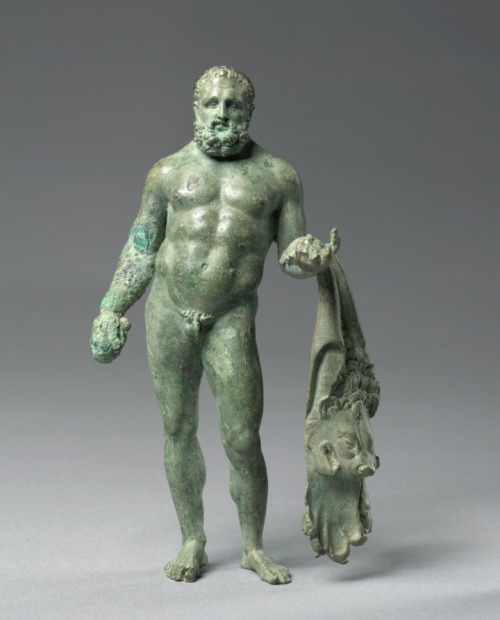
Hercules, c. 30 BC - 20, Cleveland Museum of Art: Greek and Roman Art


Half-human, half-divine, not very bright, but very strong, this hero was the most popular of all mythological figures. His intellectual weakness made him a sympathetic figure while his persistence in undergoing great trials was inspirational. Roman artists often portrayed Hercules as middle-aged, as though greater maturity would increase his power and virility. Hercules slew a monster-lion—the scourge of Nemea—by strangling it and beating it with his olive-wood club. He wears the beast’s pelt as a trophy, and this statuette’s right hand once held a club.

I don’t believe anyone ever suspects


I don’t believe anyone ever suspects how completely unsure I am of my work and myself and what tortures of self-doubting the doubt of others has always given me. - Tennessee Williams


Rubén Blades Bellido de Luna


Artemis

Artemis, dal Tempio di Apollo - Pompei, Museo Archeologico Nazionale, Napol

Artemis is the Greek goddess of the hunt, the wilderness, wild animals, the Moon, and chastity. Artemis is the daughter of Zeus and Leto, and the twin sister of Apollo. She was the patron and protector of young girls and was believed to bring disease upon women and relieve them of it. Artemis was worshipped as one of the primary goddesses of childbirth and midwifery along with Eileithyia. Much like Athena and Hestia, Artemis preferred to remain a maiden and is sworn never to marry. Artemis was one of the most widely venerated of the Ancient Greek deities and her temple at Ephesus was one of the Seven Wonders of the Ancient World. 


Date palm, 1911, Martiros Sarian....look at the depth of these colors! Wow


Have faith


Woman on Steps, Baltimore, Maryland, Photo by Berenice Abbott, 1954


Gelsey Kirkland


Erik Satie – GymnopĂ©die No. 1


The Gymnopédies or Trois Gymnopédies, are three piano compositions written by French composer and pianist Erik Satie. The first and third were published in 1888 and the second in 1895.
Jeunes filles au bord de la mer, 1879 painting by Pierre Puvis de Chavannes, which may have inspired Satie for the atmosphere he wanted to evoke in his Gymnopédies
The work's unusual title comes from the French form of gymnopaedia, the ancient Greek word for an annual festival where young men danced naked – or perhaps simply unarmed. The source of the title has been a subject of debate. Satie and his friend Alexis Roland-Manuel maintained that he adopted it after reading Gustave Flaubert's novel SalammbĂ´, while others see a poem by J. P. Contamine de Latour as the source of Satie's inspiration, since the first GymnopĂ©die was published in the magazine La Musique des familles in the summer of 1888 together with an excerpt of Latour's poem Les Antiques, where the term appears

Oblique et coupant l'ombre un torrent éclatant
Ruisselait en flots d'or sur la dalle polie
OĂą les atomes d'ambre au feu se miroitant
Mêlaient leur sarabande à la gymnopédie

Slanting and shadow-cutting a bursting stream
Trickled in gusts of gold on the shiny flagstone
Where the amber atoms in the fire gleaming
Mingled their sarabande with the gymnopaedia.

However, it remains uncertain whether the poem was composed before the music. Satie may have picked up the term from a dictionary such as Dominique Mondo's Dictionnaire de Musique, where gymnopédie is defined as a "nude dance, accompanied by song, which youthful Spartan maidens danced on specific occasions", following a similar definition from Jean-Jacques Rousseau's Dictionnaire de Musique.]
Later in 1888, the third Gymnopédie was published. The second Gymnopédie did not appear until seven years later, and its impending publication was announced in several editions of the Chat Noir and Auberge du Clou magazines.
Pierre Puvis de Chavannes' symbolist paintings may have been an inspiration for the atmosphere Satie wanted to evoke with his Gymnopédies.
Music
These short, atmospheric pieces are written in 3
4 time, with each sharing a common theme and structure.
Lent et douloureux (D major / D minor)
Lent et triste (C major)
Lent et grave (A minor)
The melodies of the pieces use deliberate, but mild, dissonances against the harmony, producing a piquant, melancholy effect that matches the performance instructions, which are to play each piece "painfully" (douloureux), "sadly" (triste), or "gravely" (grave). The first few bars of Gymnopédie No. 1 (shown below) consist of an alternating progression of two major seventh chords, the first on the subdominant, G, and the second on the tonic, D.