Welcome

Welcome
John William Tuohy lives in Washington DC

Travel, shoot photos, travel, shoot more photos, travel, shot photos ....etc......................


Bithlow Florida


“Travel isn’t always pretty. It isn’t always comfortable. Sometimes it hurts, it even breaks your heart. But that’s okay. The journey changes you; it should change you. It leaves marks on your memory, on your consciousness, on your heart, and on your body. You take something with you. Hopefully, you leave something good behind.” – Anthony Bourdain

                                                                            Bithlow Florida


Ocean City, Maryland

“(We) cannot discover new oceans unless we have the courage to lose sight of the shore.” – Andre Gide

Shopping Plaza, Atlanta Georgia 

  “Better to see something once than hear about it a thousand times”
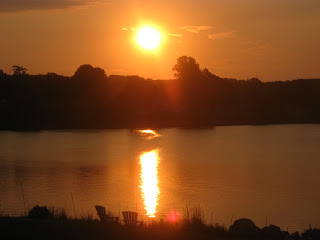
Stonnington Connecticut

“Adventure may hurt you, but monotony will kill you.”


Roadside, Kentucky 


 “The journey not the arrival matters.” – T.S. Eliot


Assateague, Virginia

 “Wanderlust: n. a strong desire for or impulse to wander or travel and explore the world”


Martinsburg, West Virginia 

“Twenty years from now you will be more disappointed by the things that you didn’t do than by the ones you did do. So throw off the bowlines. Sail away from the safe harbor. Catch the trade winds in your sails. Explore. Dream. Discover.”― Mark Twain


Hayfield California 

 “And then there is the most dangerous risk of all — the risk of spending your life not doing what you want on the bet you can buy yourself the freedom to do it later.” – Randy Komisar

Abbott Texas 

  “Remember that happiness is a way of travel – not a destination.” – Roy M. Goodman


Frankfort Kentucky

 “It feels good to be lost in the right direction”

St. Paul, Minnisota 

 “Don’t listen to what they say. Go see.”

Minneapolis, Minnesota  

 “Blessed are curious for they shall have adventures.” – Lovelle Drachman


Northwest Washington DC


“Travel makes one modest. You see what a tiny place you occupy in the world.” -Gustav Flaubert

Northern Maine 

 “I’m in love with cities I’ve never been to and people I’ve never met.” – John Green

Kingston Rhode Island

 “If you’re twenty-two, physically fit, hungry to learn and be better, I urge you to travel – as far and as widely as possible. Sleep on floors if you have to. Find out how other people live and eat and cook. Learn from them – wherever you go.” – Anthony Bourdain


New Hampshire Coast

 “Traveling – it leaves you speechless, then turns you into a storyteller.” – Ibn Battuta

Bar Harbor

 “Travel is the only thing you buy that makes you richer”

St. Charles, Missouri

 “Live your life by a compass not a clock.” – Stephen Covey

St. Louis Mo.

 “Not all those who wander are lost.” – J.R.R. Tolkien

Donegal, Ireland 

“Live life with no excuses, travel with no regret” – Oscar Wilde

Galway, Ireland

“Once a year, go someplace you’ve never been before.” – Dalai Lama

Geneva Florida

“Oh the places you’ll go.” -Dr. Seuss


Chicago

“Adventure is worthwhile.” – Aesop

Convention for the Blind 

“A ship in a harbor is safe, but it not what ships are built for.” – John A. Shedd


Alaska 

“We travel not to escape life, but for life not to escape us.” – Anonymous

South Carolina Shore

 “Travel far enough, you meet yourself” -David Mitchell


Alaska

 “Work, Travel, Save, Repeat”


Bee Cave Texas

  “If you reject the food, ignore the customs, fear the religion and avoid the people, you might better stay at home.” – James Michener

Oatmeal Texas

Travel a lot don’t let your life be disrupted by routine.”

Outside the LBJ ranch, Texas

 “I haven’t been everywhere, but it’s on my list.” – Susan Sontag


“People don’t take trips, trips take people.” – John Steinbeck


 Outside Stonewall Texas

 “Travel is only glamorous in retrospect” – Paul Theroux


 “Perhaps travel cannot prevent bigotry, but by demonstrating that all peoples cry, laugh, eat, worry, and die, it can introduce the idea that if we try and understand each other, we may even become friends” – Maya Angelou


“To travel is to discover that everyone is wrong about other countries” – Aldous Huxley

“A journey of a thousand miles begins with a single step” – Lao Tzu

 “The pleasure we derive from journeys is perhaps dependent more on the mindset with which we travel than on the destination we travel to” – Alain de Botton

“We travel for romance, we travel for architecture, and we travel to be lost.” – Ray Bradbury

 “A person susceptible to “wanderlust” is not so much addicted to movement as committed to transformation.”  – Pico Iyer 

 “Travel doesn’t become adventure until you leave yourself behind” – Marty Rubin


Hye Texas

 “I travel because it makes me realize how much I haven’t seen, how much I’m not going to see, and how much I still need to see.” – Carew Papritz

Roslyn Virginia

 “We travel, some of us forever, to seek other states, other lives, other souls.” – Anais Nin

Georgetown, Washington DC

 “I travel not to go anywhere, but to go. I travel for travel’s sake. The great affair is to move.” – Robert Louis Stevenson

Chicago

 “A good traveler has no fixed plans and is not intent on arriving.” Lao Tzu

Congressional Cemetery, South East DC  

 “There are no foreign lands. It is the traveler only who is foreign” – Robert Louis Stevenson


Washington DC

“Life is short and the world is wide.”


Guilford Connecticut

“It’s not what you look at that matters. It’s what you see.” – Henry David Thoreau

Ansonia Connecticut

 “We wander for distraction, but we travel for fulfillment” – Hilaire Belloc
New Haven Connecticut


 “The real voyage of discovery consists not in seeking new landscapes, but in having new eyes” – Marcel Proust.

South Carolina

 “What you’ve done becomes the judge of what you’re going to do — especially in other people’s minds. When you’re traveling, you are what you are right there and then. People don’t have your past to hold against you. No yesterdays on the road.” – William Least Heat Moon
Charleston South Carolina

 “A journey is best measured in friends rather than miles.” – Tim Cahill

New York

 “Traveling’s not something you’re good at. It’s something you do. Like Breathing.” – Gayle Foreman

Ohio

“Adventure is a path. Real adventure, self-determined, self-motivated, often risky, forces you to have firsthand encounters with the world” – Mark Jenkins


Annapolis Maryland

 “To awaken quite alone in a strange town is one of the pleasantest sensations in the world” – Freya Stark
St. Michaels Maryland


 “Jobs fill your pockets, but adventures fill your soul.” – Jaime Lyn Beatty


Cambridge Maryland

 “Travel light, live light, spread the light, be the light.” – Yogi Bhajan


 “It’s a dangerous business, Frodo, going out your door. You step onto the road, and if you don’t keep your feet, there’s no knowing where you might be swept off to.” – J.R.R Tolkien


Dundalk Maryland

 “Then one day, when you least expect it, the great adventure finds you.” – Ewan McGregor
Baltimore 

“We live in a wonderful world that is full of beauty, charm and adventure. There is no end to the adventures that we can have if only we seek them with our eyes open.” – Jawaharlal Nehru
Minnesota 

“The world is a book, and those who do not travel read only one page.” – Saint Augustine


Mount Pilot, North Carolina 

“Adventures don’t come calling like unexpected cousins calling from out of town. You have to go looking for them.”


Delaware Shore


“Life is an adventure, it’s not a package tour.” – Eckhart Tolle


Baptist Church Service, Southern Virginia

“Instead of trying to make your life perfect, give yourself the freedom to make it an adventure, and go ever upward.” – Drew Houston


“Attitude is the difference between an ordeal and an adventure” – Bob Bitchin


Antietam Battle Field


“If happiness is the goal – and it should be, then adventures should be top priority.”   – Richard Branson


Fort Washington


 “To my mind, the greatest reward and luxury of travel is to be able to experience everyday things as if for the first time, to be in a position in which almost nothing is so familiar it is taken for granted.” – Bill Bryson


“For my part, I travel not to go anywhere but to go. I travel for travel’s sake. The great affair is to move.” – Robert Louis Stevenson


 “All men dream, but not equally. Those who dream by night in the dusty recesses of their minds, wake in the day to find that it was vanity: but the dreamers of the day are dangerous men, for they may act on their dreams with open eyes, to make them possible.” -T.E. Lawrence


 “Because in the end, you won’t remember the time you spent working in the office or mowing your lawn. Climb that goddamn mountain.”– Jack Kerouac


 “Don’t die without embracing the daring adventure your life was meant to be.” – Steve Pavlina

Waco, Texas

 “Life was made for good friends and great adventure” – Proverb


 “If you think adventures are dangerous, try routine: It’s Lethal.” – Paul Coelho

Austin Texas

“Adventure is allowing the unexpected to happen to you. Exploration is experiencing what you have not experienced before.” – Richard Aldington

Dallas Texas


“Live, travel, adventure, bless, and don’t be sorry.” – Jack Kerouac


“Traveling is a brutality. It forces you to trust strangers and to lose sight of all that familiar comfort of home and friends. You are constantly off balance. Nothing is yours except the essential things: air, sleep, dreams, sea, the sky – all things tending towards the eternal or what we imagine of it.” – Cesare Pavese


 Altoona Pennsylvania


My old pal, Emerson


Write it on your heart that every day is the best day in the year.  Ralph Waldo Emerson.


I went to the woods

“I went to the woods because I wished to live deliberately, to front only the essential facts of life, and see if I could not learn what it had to teach, and not, when I came to die, discover that I had not lived.” – Henry David Thoreau


Why worry what others say of you?


Why worry what others say of you? You should know who you are. If someone says you are always a wonderful person, will that make it so? If another says you are a horrible person, will you be that? Should somebody else tell you who you are? No. Don’t worry what others say. If you know yourself, you are free from this botheration. Sri Swami Satchidananda


Karma


With your reaction to each experience, you create the karma that will color your future. It is up to you whether this new karma is positive or negative. You simply have to pay attention at the right moment. Trungram Gyalwa Rinpoche, “The Power of the Third Moment”


Nonviolence


Nonviolence is not some exalted regimen that can be practiced only by a monk or a master; it also pertains to the way one interacts with a child, vacuums a carpet, or waits in line.   

                                                                                      Kenneth Kraft, “Meditation in Action”


God is not a cosmic bellboy


God is not a cosmic bellboy for whom we can press a button to get things. 

                                                                                                        Harry Emerson Fosdick


Sun House...the American sound


hahahahahahaha


The library in the town where I live...


Little Walter....listen to this man play


MOLLY O'RIGGE, AND TOM TREACLE.


At Cork lived Miss Molly O'Rigge,
With a nose like the snout of a pig,
Long carroty locks,
And ten pounds in the stocks,
Was the fortune of Molly O'Rigge,
What a beautiful Molly O'Rigge.

Tom Treacle lov'd Moll O'Rigge,
A pert little tea-dealing prig,
Says he, Molly my dove,
My heart is brim full of love.
Says she, Grocer, I don't care a fig,
What a hard hearted Molly O'Rigge.

I hate men, quoth Molly O'Rigge.
In love they're a mere whirligig:
But Cornelius O'Whack,
Gave her heart such a smack,
That to church they both caper'd a jig,
What a false-hearted Molly O'Rigge.

Says the tea-dealer, Molly O'Rigge,
My heart is with jealousy big,
Says she, hold your clack,
I'm now Mrs O'Whack
I'm no longer Molly O'Rigge,
Good bye, Mistress Molly O'Rigge.

virginia woolf’s house/ Short story: The Mark on the Wall


The Mark on the Wall

PERHAPS it was the middle of January in the present that I first looked up and saw the mark on the wall. In order to fix a date it is necessary to remember what one saw. So now I think of the fire; the steady film of yellow light upon the page of my book; the three chrysanthemums in the round glass bowl on the mantelpiece. Yes, it must have been the winter time, and we had just finished our tea, for I remember that I was smoking a cigarette when I looked up and saw the mark on the wall for the first time. I looked up through the smoke of my cigarette and my eye lodged for a moment upon the burning coals, and that old fancy of the crimson flag flapping from the castle tower came into my mind, and I thought of the cavalcade of red knights riding up the side of the black rock. Rather to my relief the sight of the mark interrupted the fancy, for it is an old fancy, an automatic fancy, made as a child perhaps. The mark was a small round mark, black upon the white wall, about six or seven inches above the mantelpiece.        
  How readily our thoughts swarm upon a new object, lifting it a little way, as ants carry a blade of straw so feverishly, and then leave it.... If that mark was made by a nail, it can’t have been for a picture, it must have been for a miniature—the miniature of a lady with white powdered curls, powder-dusted cheeks, and lips like red carnations. A fraud of course, for the people who had this house before us would have chosen pictures in that way—an old picture for an old room. That is the sort of people they were—very interesting people, and I think of them so often, in such queer places, because one will never see them again, never know what happened next. They wanted to leave this house because they wanted to change their style of furniture, so he said, and he was in process of saying that in his opinion art should have ideas behind it when we were torn asunder, as one is torn from the old lady about to pour out tea and the young man about to hit the tennis ball in the back garden of the suburban villa as one rushes past in the train.   
  But as for that mark, I’m not sure about it; I don’t believe it was made by a nail after all; it’s too big, too round, for that. I might get up, but if I got up and looked at it, ten to one I shouldn’t be able to say for certain; because once a thing’s done, no one ever knows how it happened. Oh! dear me, the mystery of life; The inaccuracy of thought! The ignorance of humanity! To show how very little control of our possessions we have—what an accidental affair this living is after all our civilization—let me just count over a few of the things lost in one lifetime, beginning, for that seems always the most mysterious of losses—what cat would gnaw, what rat would nibble—three pale blue canisters of book-binding tools? Then there were the bird cages, the iron hoops, the steel skates, the Queen Anne coal-scuttle, the bagatelle board, the hand organ—all gone, and jewels, too. Opals and emeralds, they lie about the roots of turnips. What a scraping paring affair it is to be sure! The wonder is that I’ve any clothes on my back, that I sit surrounded by solid furniture at this moment. Why, if one wants to compare life to anything, one must liken it to being blown through the Tube at fifty miles an hour—landing at the other end without a single hairpin in one’s hair! Shot out at the feet of God entirely naked! Tumbling head over heels in the asphodel meadows like brown paper parcels pitched down a shoot in the post office! With one’s hair flying back like the tail of a race-horse. Yes, that seems to express the rapidity of life, the perpetual waste and repair; all so casual, all so haphazard....           
  But after life. The slow pulling down of thick green stalks so that the cup of the flower, as it turns over, deluges one with purple and red light. Why, after all, should one not be born there as one is born here, helpless, speechless, unable to focus one’s eyesight, groping at the roots of the grass, at the toes of the Giants? As for saying which are trees, and which are men and women, or whether there are such things, that one won’t be in a condition to do for fifty years or so. There will be nothing but spaces of light and dark, intersected by thick stalks, and rather higher up perhaps, rose-shaped blots of an indistinct colour—dim pinks and blues—which will, as time goes on, become more definite, become—I don’t know what.... 
  And yet that mark on the wall is not a hole at all. It may even be caused by some round black substance, such as a small rose leaf, left over from the summer, and I, not being a very vigilant housekeeper—look at the dust on the mantelpiece, for example, the dust which, so they say, buried Troy three times over, only fragments of pots utterly refusing annihilation, as one can believe.
  The tree outside the window taps very gently on the pane.... I want to think quietly, calmly, spaciously, never to be interrupted, never to have to rise from my chair, to slip easily from one thing to another, without any sense of hostility, or obstacle. I want to sink deeper and deeper, away from the surface, with its hard separate facts. To steady myself, let me catch hold of the first idea that passes.... Shakespeare.... Well, he will do as well as another. A man who sat himself solidly in an arm-chair, and looked into the fire, so— A shower of ideas fell perpetually from some very high Heaven down through his mind. He leant his forehead on his hand, and people, looking in through the open door,—for this scene is supposed to take place on a summer’s evening—But how dull this is, this historical fiction! It doesn’t interest me at all. I wish I could hit upon a pleasant track of thought, a track indirectly reflecting credit upon myself, for those are the pleasantest thoughts, and very frequent even in the minds of modest mouse-coloured people, who believe genuinely that they dislike to hear their own praises. They are not thoughts directly praising oneself; that is the beauty of them; they are thoughts like this: 
  “And then I came into the room. They were discussing botany. I said how I’d seen a flower growing on a dust heap on the site of an old house in Kingsway. The seed, I said, must have been sown in the reign of Charles the First. What flowers grew in the reign of Charles the First?” I asked—(but, I don’t remember the answer). Tall flowers with purple tassels to them perhaps. And so it goes on. All the time I’m dressing up the figure of myself in my own mind, lovingly, stealthily, not openly adoring it, for if I did that, I should catch myself out, and stretch my hand at once for a book in self-protection. Indeed, it is curious how instinctively one protects the image of oneself from idolatry or any other handling that could make it ridiculous, or too unlike the original to be believed in any longer. Or is it not so very curious after all? It is a matter of great importance. Suppose the looking glass smashes, the image disappears, and the romantic figure with the green of forest depths all about it is there no longer, but only that shell of a person which is seen by other people—what an airless, shallow, bald, prominent world it becomes! A world not to be lived in. As we face each other in omnibuses and underground railways we are looking into the mirror that accounts for the vagueness, the gleam of glassiness, in our eyes. And the novelists in future will realize more and more the importance of these reflections, for of course there is not one reflection but an almost infinite number; those are the depths they will explore, those the phantoms they will pursue, leaving the description of reality more and more out of their stories, taking a knowledge of it for granted, as the Greeks did and Shakespeare perhaps—but these generalizations are very worthless. The military sound of the word is enough. It recalls leading articles, cabinet ministers—a whole class of things indeed which as a child one thought the thing itself, the standard thing, the real thing, from which one could not depart save at the risk of nameless damnation. Generalizations bring back somehow Sunday in London, Sunday afternoon walks, Sunday luncheons, and also ways of speaking of the dead, clothes, and habits—like the habit of sitting all together in one room until a certain hour, although nobody liked it. There was a rule for everything. The rule for tablecloths at that particular period was that they should be made of tapestry with little yellow compartments marked upon them, such as you may see in photographs of the carpets in the corridors of the royal palaces. Tablecloths of a different kind were not real tablecloths. How shocking, and yet how wonderful it was to discover that these real things, Sunday luncheons, Sunday walks, country houses, and tablecloths were not entirely real, were indeed half phantoms, and the damnation which visited the disbeliever in them was only a sense of illegitimate freedom. What now takes the place of those things I wonder, those real standard things? Men perhaps, should you be a woman; the masculine point of view which governs our lives, which sets the standard, which establishes Whitaker’s Table of Precedency, which has become, I suppose, since the war half a phantom to many men and women, which soon—one may hope, will be laughed into the dustbin where the phantoms go, the mahogany sideboards and the Landseer prints, Gods and Devils, Hell and so forth, leaving us all with an intoxicating sense of illegitimate freedom—if freedom exists....         
  In certain lights that mark on the wall seems actually to project from the wall. Nor is it entirely circular. I cannot be sure, but it seems to cast a perceptible shadow, suggesting that if I ran my finger down that strip of the wall it would, at a certain point, mount and descend a small tumulus, a smooth tumulus like those barrows on the South Downs which are, they say, either tombs or camps. Of the two I should prefer them to be tombs, desiring melancholy like most English people, and finding it natural at the end of a walk to think of the bones stretched beneath the turf.... There must be some book about it. Some antiquary must have dug up those bones and given them a name.... What sort of a man is an antiquary, I wonder? Retired Colonels for the most part, I daresay, leading parties of aged labourers to the top here, examining clods of earth and stone, and getting into correspondence with the neighbouring clergy, which, being opened at breakfast time, gives them a feeling of importance, and the comparison of arrow-heads necessitates cross-country journeys to the county towns, an agreeable necessity both to them and to their elderly wives, who wish to make plum jam or to clean out the study, and have every reason for keeping that great question of the camp or the tomb in perpetual suspension, while the Colonel himself feels agreeably philosophic in accumulating evidence on both sides of the question. It is true that he does finally incline to believe in the camp; and, being opposed, indites a pamphlet which he is about to read at the quarterly meeting of the local society when a stroke lays him low, and his last conscious thoughts are not of wife or child, but of the camp and that arrowhead there, which is now in the case at the local museum, together with the foot of a Chinese murderess, a handful of Elizabethan nails, a great many Tudor clay pipes, a piece of Roman pottery, and the wine-glass that Nelson drank out of—proving I really don’t know what. 
  No, no, nothing is proved, nothing is known. And if I were to get up at this very moment and ascertain that the mark on the wall is really—what shall we say?—-the head of a gigantic old nail, driven in two hundred years ago, which has now, owing to the patient attrition of many generations of housemaids, revealed its head above the coat of paint, and is taking its first view of modern life in the sight of a white-walled fire-lit room, what should I gain?— Knowledge? Matter for further speculation? I can think sitting still as well as standing up. And what is knowledge? What are our learned men save the descendants of witches and hermits who crouched in caves and in woods brewing herbs, interrogating shrew-mice and writing down the language of the stars? And the less we honour them as our superstitions dwindle and our respect for beauty and health of mind increases.... Yes, one could imagine a very pleasant world. A quiet, spacious world, with the flowers so red and blue in the open fields. A world without professors or specialists or house-keepers with the profiles of policemen, a world which one could slice with one’s thought as a fish slices the water with his fin, grazing the stems of the water-lilies, hanging suspended over nests of white sea eggs.... How peaceful it is drown here, rooted in the centre of the world and gazing up through the grey waters, with their sudden gleams of light, and their reflections—if it were not for Whitaker’s Almanack—if it were not for the Table of Precedency!          
  I must jump up and see for myself what that mark on the wall really is—a nail, a rose-leaf, a crack in the wood?            
  Here is nature once more at her old game of self-preservation. This train of thought, she perceives, is threatening mere waste of energy, even some collision with reality, for who will ever be able to lift a finger against Whitaker’s Table of Precedency? The Archbishop of Canterbury is followed by the Lord High Chancellor; the Lord High Chancellor is followed by the Archbishop of York. Everybody follows somebody, such is the philosophy of Whitaker; and the great thing is to know who follows whom. Whitaker knows, and let that, so Nature counsels, comfort you, instead of enraging you; and if you can’t be comforted, if you must shatter this hour of peace, think of the mark on the wall.          
  I understand Nature’s game—her prompting to take action as a way of ending any thought that threatens to excite or to pain. Hence, I suppose, comes our slight contempt for men of action—men, we assume, who don’t think. Still, there’s no harm in putting a full stop to one’s disagreeable thoughts by looking at a mark on the wall.         
  Indeed, now that I have fixed my eyes upon it, I feel that I have grasped a plank in the sea; I feel a satisfying sense of reality which at once turns the two Archbishops and the Lord High Chancellor to the shadows of shades. Here is something definite, something real. Thus, waking from a midnight dream of horror, one hastily turns on the light and lies quiescent, worshipping the chest of drawers, worshipping solidity, worshipping reality, worshipping the impersonal world which is a proof of some existence other than ours. That is what one wants to be sure of.... Wood is a pleasant thing to think about. It comes from a tree; and trees grow, and we don’t know how they grow. For years and years they grow, without paying any attention to us, in meadows, in forests, and by the side of rivers—all things one likes to think about. The cows swish their tails beneath them on hot afternoons; they paint rivers so green that when a moorhen dives one expects to see its feathers all green when it comes up again. I like to think of the fish balanced against the stream like flags blown out; and of water-beetles slowly raiding domes of mud upon the bed of the river. I like to think of the tree itself:—first the close dry sensation of being wood; then the grinding of the storm; then the slow, delicious ooze of sap. I like to think of it, too, on winter’s nights standing in the empty field with all leaves close-furled, nothing tender exposed to the iron bullets of the moon, a naked mast upon an earth that goes tumbling, tumbling, all night long. The song of birds must sound very loud and strange in June; and how cold the feet of insects must feel upon it, as they make laborious progresses up the creases of the bark, or sun themselves upon the thin green awning of the leaves, and look straight in front of them with diamond-cut red eyes.... One by one the fibres snap beneath the immense cold pressure of the earth, then the last storm comes and, falling, the highest branches drive deep into the ground again. Even so, life isn’t done with; there are a million patient, watchful lives still for a tree, all over the world, in bedrooms, in ships, on the pavement, lining rooms, where men and women sit after tea, smoking cigarettes. It is full of peaceful thoughts, happy thoughts, this tree. I should like to take each one separately—but something is getting in the way.... Where was I? What has it all been about? A tree? A river? The Downs? Whitaker’s Almanack? The fields of asphodel? I can’t remember a thing. Everything’s moving, falling, slipping, vanishing.... There is a vast upheaval of matter. Someone is standing over me and saying—
  “I’m going out to buy a newspaper.”        
  “Yes?”          
  “Though it’s no good buying newspapers.... Nothing ever happens. Curse this war; God damn this war!... All the same, I don’t see why we should have a snail on our wall.”       

  Ah, the mark on the wall! It was a snail.