Welcome

Welcome
John William Tuohy lives in Washington DC

*** OPPORTUNITIES FOR PLAYWRIGHTS ***


The Frank Moffett Mosier Fellowship for Works in Heightened LanguageMonetary award to playwright: $3000 for works with a running time of at least 40 minutes.Submissions must be in a heightened version of the English language in order to provide a meaningful challenge to the actors. This includes, but is not limited to, works using meter, verse, rhyming schemes, pidgins, creoles, and code-switching.***The 2022 Sylvia Sprinkle-Hamlin Rolling World Premiere Award will facilitate five rolling world premieres for the winning play at the following theatres: Hattiloo Theatre in Memphis, NC Black Rep, The Ensemble Theatre in Houston, St. Louis Black Rep, and Westcoast Theatre Troupe in Sarasota. The award was created to assist in Black Theatres working together to discover and nurture the next generation of great African-American playwrights.***For our third season, the Denizens Theater Company will be exploring the theme "Fear the Future", an examination of how people react to and navigate change. This includes:-Personal vs Social changes-Re-entering the world, post-covid-All the ways tech helps or destroys-What it means to be on the "right" or "wrong" side of history-What stays the same as things change.-How change ties into race, identity, politics, relationships, revolutions*** FOR MORE INFORMATION about these and other opportunities see the web site at https://www.nycplaywrights.org ****** UNARMED STAGE COMBAT ***“It’s okay, just slap me.  I don’t mind.”Those words strike fear into the heart of every fight director I know.Right now there is a trend that I have been seeing, one which might be called an attempt at "realism" in theatre, or more likely a money-saving attempt by a theater company to cut the "staged" part out of staged combat moments.  In other words, when it comes time to slap someone on stage, directors, actors, producers, choreographers, whoever are becoming more and more comfortable with really doing it.I have met very few fight directors who approve of this measure, so my only way of justifying it is to say that theaters are less and less willing to hire a fight director for a show.  A notion that I get suspicious about especially at Equity theaters where they are required to do so.  Often I find the director is trained, or even "trained" and does it for his or herself.  Now I'm not one to doubt the abilities of someone, but as a fight director, I will simply say this: I hope you're the Michael Bennett of staged combat if you're going to play that card.More...https://www.neddonovan.com/blog/the-art-of-the-stage-slap-a-call-to-arms
***Actors are often taught that all one needs to do to safely slap someone in the face is to cup the hand slightly, keep the fingers and wrist very relaxed, and go for the fleshy part of the cheek. It is true that most of the time it causes no injury, which is why many assume that it is safe. But when this contact technique goes wrong, the results are devastating.In a perfect world, the slapping hand will strike at exactly the same spot every single time, but that is simply unrealistic. If the hand is perfectly flat, the hand is also tense, therefore has become rigid. When a hand is relaxed, the palm forms a slightly shallow cup shape. When that cup strikes the cheek, the air inside becomes pressurized and searches for release in the line of least resistance, which makes that satisfying popping sound as it slips by the fleshy skin of the cheek. However, if the hand drifts a mere inch closer to the victim, the ear is now inside the coverage of the hand. The pressurized air is still looking for a means of escape, and it’s found it – right down the ear canal. At the bottom of the canal is the tympanic membrane – the ear drum – which easily bursts. If the membrane doesn’t heal properly [all too common even with immediate medical attention] or if an infection develops [which is highly probable] the actor can expect temporary or permanent, partial or complete, hearing loss in the affected ear. Even one finger tip tapping the ear canal can pop an eardrum.More...https://weaponsofchoice.com/extras/stage-slap/
***
It’s important to remember that few people want to fight. What they want is to win. Acting a fight requires careful investigation of all the beats leading up to the moment violence becomes a necessary tactic. Often the moments before and after a burst of violence are just as if not more important than the violence itself.Good acting is vital to playing a fight. The moment a character shifts from using their words as weapons to using their fists is similar to the transition from text to song in musicals. In both cases, speaking alone is no longer enough to accomplish one’s objective, so a dramatic shift is necessary.Consider the following questions before you embark on the physical elements of a fight.How many times does my character try not fighting?What is the trigger that causes my character to fight?Does my character know how to fight?Has my character ever fought before?How is my character different at the end of the fight? What has been learned? What has changed?More...https://dramatics.org/slaps-punches-and-kicks/
***It has only been six weeks into the semester and I have learned a great deal in my Combat for Actors class thus far. Not only do I know how to throw a fake punch now (having taken karate in the past puts all these new skills into perspective—i.e.: Don't hit your scene partner!), but I have also gained some general rules to follow in life. Most of these are lessons I have already acquired through the years, but these five have particularly made an impact on my everyday life—as well as on my midterm scene as Kate from Taming of the Shrew.Life Lesson #5: Sell, Sell, Sell.The ability of making something look good even when it doesn't look great is a tremendous skill. Even if a punch doesn't look great, if you sell the impact, the action is sold. I hear a lot about plays that are not-so-well-written, but under certain circumstances, they can be transformed into remarkable productions. Being able to sell a scene evokes a kind of confidence unlike any other. Knowing that you've hit the mark, or brought an audience to tears or to their knees with laughter, is like a hit of caffeine or adrenaline into your system. However, it doesn't work in reverse: a wonderful play that isn't well-produced will not have good reception—same with a punch. A great punch that isn't sold is, well… Like my professor says, "A punch without a knap (the sound that sells an attack) is like a day without sunshine."More...https://www.theatermania.com/philadelphia-theater/news/five-life-lessons-ive-learned-from-stage-combat_63140.html
***“In Australia, we are really physical. We’re really open as people in general. We’re enthusiastic, we’re engaged, we’re energetic, and we have a great sense of humour. And, I’ve found there’s much more movement here, many more physical performances as opposed to talking heads. So, we should be really leading in areas like motion capture performance.”But part of the current problem, she suggests, is a lack of appreciation or understanding of what goes into a good, choreographed stage fight.Dr Grant recounts an anecdote that she believes highlights the lack of attention to craft. An actor, who shall remain nameless, went against her advice and insisted that an actress actually slap him in the face, refusing to use stage combat techniques, even though the story didn’t require a slap.To Dr Grant’s mind, this was largely down to ignorance about the craft and how it’s used. As well as a cultural tendency for some actors to want to come across as ‘tough’ – feeling that they don’t need ‘choreographed’ violence. The actress, however, was quite distressed at being asked to slap another actor.“He ended up saying ‘Well, if I can’t do an actual slap to the face, I want to take it out then’. So, I said ‘Great. I think that’s a great idea. Let’s take out that slap’, which didn’t need to be there in the first place.”More..https://pursuit.unimelb.edu.au/articles/pulling-no-punches-the-underrated-art-of-stage-fighting
***Dear directors,If you ever hear yourself say the words “it’s just a slap,” please pause. Reflect. Then google “fight director [your city].”I understand the temptation not to. It’s one slap in a two-hour show.  There’s probably someone in the cast who could figure it out. If they put together a good-looking stage slap, where everyone feels safe and in control, great! But if it doesn’t look good, you may be tempted to scrap it — or maybe there seems to be no way to hide a stage slap in the first place.I am writing to tell you that a contact (“real”) slap is not your only recourse. Hand meeting face on stage isn’t a real slap, anyway; it requires more control than a non-contact slap, and more rehearsal, not less. The motion is so close to being natural, it’s usually happening in an emotional moment, and there’s less than an inch of leeway in each direction: you don’t want to hit the ear in the back, the nose in front, the eye above, or the jaw below. If a contact slap is really the best choice, a fight director will take your actors through a series of lead-ups and help them communicate in order to keep them comfortable and safe — yes, both of them: the slapper needs confidence in the process as much as the slappee. It’s also entirely possible that a small adjustment to the orientation or hand placement will make a stage slap work.More...https://notgonnahityou.wordpress.com/2013/04/08/the-just-a-slap-fallacy/***A guide to slapping a character on stage.  This video includes demonstrations and proper techniques for safety, knaps, and partner connection so that you can effectively and safely create the illusion of violence on stage.https://www.youtube.com/watch?v=jefgy6sM2iQ

--You received this message because you are subscribed to the Google Groups "NYCPlaywrights" group.To unsubscribe from this group and stop receiving emails from it, send an email to nycplaywrights_group+unsubscribe@googlegroups.com.To view this discussion on the web visit https://groups.google.com/d/msgid/nycplaywrights_group/8f8072a2-145f-4061-93df-a787bf29b9d1n%40googlegroups.com.

‘Tobermory’ A short story by Saki


It was a chill, rain-washed afternoon of a late August day, that indefinite season when partridges are still in security or cold storage, and there is nothing to hunt - unless one is bounded on the north by the Bristol Channel, in which case one may lawfully gallop after fat red stags. Lady Blemley's house-party was not bounded on the north by the Bristol Channel, hence there was a full gathering of her guests round the tea-table on this particular afternoon. And, in spite of the blankness of the season and the triteness of the occasion, there was no trace in the company of that fatigued restlessness which means a dread of the pianola and a subdued hankering for auction bridge. The undisguised open-mouthed attention of the entire party was fixed on the homely negative personality of Mr. Cornelius Appin. Of all her guests, he was the one who had come to Lady Blemley with the vaguest reputation. Some one had said he was "clever," and he had got his invitation in the moderate expectation, on the part of his hostess, that some portion at least of his cleverness would be contributed to the general entertainment. Until tea-time that day she had been unable to discover in what direction, if any, his cleverness lay. He was neither a wit nor a croquet champion, a hypnotic force nor a begetter of amateur theatricals. Neither did his exterior suggest the sort of man in whom women are willing to pardon a generous measure of mental deficiency. He had subsided into mere Mr. Appin, and the Cornelius seemed a piece of transparent baptismal bluff. And now he was claiming to have launched on the world a discovery beside which the invention of gunpowder, of the printing-press, and of steam locomotion were inconsiderable trifles. Science had made bewildering strides in many directions during recent decades, but this thing seemed to belong to the domain of miracle rather than to scientific achievement.

     "And do you really ask us to believe," Sir Wilfrid was saying, "that you have discovered a means for instructing animals in the art of human speech, and that dear old Tobermory has proved your first successful pupil?"

     "It is a problem at which I have worked for the last seventeen years," said Mr. Appin, "but only during the last eight or nine months have I been rewarded with glimmerings of success. Of course I have experimented with thousands of animals, but latterly only with cats, those wonderful creatures which have assimilated themselves so marvellously with our civilization while retaining all their highly developed feral instincts. Here and there among cats one comes across an outstanding superior intellect, just as one does among the ruck of human beings, and when I made the acquaintance of Tobermory a week ago I saw at once that I was in contact with a `Beyond-cat' of extraordinary intelligence. I had gone far along the road to success in recent experiments; with Tobermory, as you call him, I have reached the goal."

     Mr. Appin concluded his remarkable statement in a voice which he strove to divest of a triumphant inflection. No one said "Rats," though Clovis's lips moved in a monosyllabic contortion which probably invoked those rodents of disbelief.

     "And do you mean to say," asked Miss Resker, after a slight pause, "that you have taught Tobermory to say and understand easy sentences of one syllable?"

     "My dear Miss Resker," said the wonder-worker patiently, "one teaches little children and savages and backward adults in that piecemeal fashion; when one has once solved the problem of making a beginning with an animal of highly developed intelligence one has no need for those halting methods. Tobermory can speak our language with perfect correctness."

     This time Clovis very distinctly said, "Beyond-rats!" Sir Wilfrid was more polite, but equally sceptical.

     "Hadn't we better have the cat in and judge for ourselves?" suggested Lady Blemley.

     Sir Wilfrid went in search of the animal, and the company settled themselves down to the languid expectation of witnessing some more or less adroit drawing-room ventriloquism.

     In a minute Sir Wilfrid was back in the room, his face white beneath its tan and his eyes dilated with excitement. "By Gad, it's true!"

     His agitation was unmistakably genuine, and his hearers started forward in a thrill of awakened interest.

     Collapsing into an armchair he continued breathlessly: "I found him dozing in the smoking-room and called out to him to come for his tea. He blinked at me in his usual way, and I said, 'Come on, Toby; don't keep us waiting'; and, by Gad! he drawled out in a most horribly natural voice that he'd come when he dashed well pleased! I nearly jumped out of my skin!"

     Appin had preached to absolutely incredulous hearers; Sir Wilfred's statement carried instant conviction. A Babel-like chorus of startled exclamation arose, amid which the scientist sat mutely enjoying the first fruit of his stupendous discovery.

     In the midst of the clamour Tobermory entered the room and made his way with velvet tread and studied unconcern across to the group seated round the tea-table.

     A sudden hush of awkwardness and constraint fell on the company. Somehow there seemed an element of embarrassment in addressing on equal terms a domestic cat of acknowledged mental ability.

     "Will you have some milk, Tobermory?" asked Lady Blemley in a rather strained voice.

     "I don't mind if I do," was the response, couched in a tone of even indifference. A shiver of suppressed excitement went through the listeners, and Lady Blemley might be excused for pouring out the saucerful of milk rather unsteadily.

     "I'm afraid I've spilt a good deal of it," she said apologetically.

     "After all, it's not my Axminster," was Tobermory's rejoinder.

     Another silence fell on the group, and then Miss Resker, in her best district-visitor manner, asked if the human language had been difficult to learn. Tobermory looked squarely at her for a moment and then fixed his gaze serenely on the middle distance. It was obvious that boring questions lay outside his scheme of life.

     "What do you think of human intelligence?" asked Mavis Pellington lamely.

     "Of whose intelligence in particular?" asked Tobermory coldly.

     "Oh, well, mine for instance," said Mavis, with a feeble laugh.

     "You put me in an embarrassing position," said Tobermory, whose tone and attitude certainly did not suggest a shred of embarrassment. "When your inclusion in this house-party was suggested, Sir Wilfrid protested that you were the most brainless woman of his acquaintance, and that there was a wide distinction between hospitality and the care of the feeble-minded. Lady Blemley replied that your lack of brain-power was the precise quality which had earned you your invitation, as you were the only person she could think of who might be idiotic enough to buy their old car. You know, the one they call 'The Envy of Sisyphus,' because it goes quite nicely up-hill if you push it."

     Lady Blemley's protestations would have had greater effect if she had not casually suggested to Mavis only that morning that the car in question would be just the thing for her down at her Devonshire home.

     Major Barfield plunged in heavily to effect a diversion.

     "How about your carryings-on with the tortoise-shell puss up at the stables, eh?"

     The moment he had said it every one realized the blunder.

     "One does not usually discuss these matters in public," said Tobermory frigidly. "From a slight observation of your ways since you've been in this house I should imagine you'd find it inconvenient if I were to shift the conversation on to your own little affairs."

     The panic which ensued was not confined to the Major.

     "Would you like to go and see if cook has got your dinner ready?" suggested Lady Blemley hurriedly, affecting to ignore the fact that it wanted at least two hours to Tobermory's dinner-time.

     "Thanks," said Tobermory, "not quite so soon after my tea. I don't want to die of indigestion."

     "Cats have nine lives, you know," said Sir Wilfrid heartily.

     "Possibly", answered Tobermory; "but only one liver."

     "Adelaide!" said Mrs. Cornett, "do you mean to encourage that cat to go out and gossip about us in the servants' hall?"

     The panic had indeed become general. A narrow ornamental balustrade ran in front of most of the bedroom windows at the Towers, and it was recalled with dismay that this had formed a favourite promenade for Tobermory at all hours, whence he could watch the pigeons - and heaven knew what else besides. If he intended to become reminiscent in his present outspoken strain the effect would be something more than disconcerting. Mrs. Cornett, who spent much time at her toilet table, and whose complexion was reputed to be of a nomadic though punctual disposition, looked as ill at ease as the Major. Miss Scrawen, who wrote fiercely sensuous poetry and led a blameless life, merely displayed irritation; if you are methodical and virtuous in private you don't necessarily want every one to know it. Bertie van Tahn, who was so depraved at seventeen that he had long ago given up trying to be any worse, turned a dull shade of gardenia white, but he did not commit the error of dashing out of the room like Odo Finsberry, a young gentleman who was understood to be reading for the Church and who was possibly disturbed at the thought of scandals he might hear concerning other people. Clovis had the presence of mind to maintain a composed exterior; privately he was calculating how long it would take to procure a box of fancy mice through the agency of the Exchange and Mart as a species of hush-money.

     Even in a delicate situation like the present, Agnes Resker could not endure to remain too long in the background.

     "Why did I ever come down here?" she asked dramatically.

     Tobermory immediately accepted the opening.

     "Judging by what you said to Mrs. Cornett on the croquet-lawn yesterday, you were out for food. You described the Blemleys as the dullest people to stay with that you knew, but said they were clever enough to employ a first-rate cook; otherwise they'd find it difficult to get any one to come down a second time."

     "There's not a word of truth in it! I appeal to Mrs. Cornett--" exclaimed the discomfited Agnes.

     "Mrs. Cornett repeated your remark afterwards to Bertie van Tahn," continued Tobermory, "and said, 'That woman is a regular Hunger Marcher; she'd go anywhere for four square meals a day,' and Bertie van Tahn said--"

     At this point the chronicle mercifully ceased. Tobermory had caught a glimpse of the big yellow Tom from the Rectory working his way through the shrubbery towards the stable wing. In a flash he had vanished through the open French window.

     With the disappearance of his too brilliant pupil Cornelius Appin found himself beset by a hurricane of bitter upbraiding, anxious inquiry, and frightened entreaty. The responsibility for the situation lay with him, and he must prevent matters from becoming worse. Could Tobermory impart his dangerous gift to other cats? was the first question he had to answer. It was possible, he replied, that he might have initiated his intimate friend the stable puss into his new accomplishment, but it was unlikely that his teaching could have taken a wider range as yet.

     "Then," said Mrs. Cornett, "Tobermory may be a valuable cat and a great pet; but I'm sure you'll agree, Adelaide, that both he and the stable cat must be done away with without delay."

     "You don't suppose I've enjoyed the last quarter of an hour, do you?" said Lady Blemley bitterly. "My husband and I are very fond of Tobermory - at least, we were before this horrible accomplishment was infused into him; but now, of course, the only thing is to have him destroyed as soon as possible."

     "We can put some strychnine in the scraps he always gets at dinner-time," said Sir Wilfrid, "and I will go and drown the stable cat myself. The coachman will be very sore at losing his pet, but I'll say a very catching form of mange has broken out in both cats and we're afraid of its spreading to the kennels."

     "But my great discovery!" expostulated Mr. Appin; "after all my years of research and experiment--"

     "You can go and experiment on the short-horns at the farm, who are under proper control," said Mrs. Cornett, "or the elephants at the Zoological Gardens. They're said to be highly intelligent, and they have this recommendation, that they don't come creeping about our bedrooms and under chairs, and so forth."

     An archangel ecstatically proclaiming the Millennium, and then finding that it clashed unpardonably with Henley and would have to be indefinitely postponed, could hardly have felt more crestfallen than Cornelius Appin at the reception of his wonderful achievement. Public opinion, however, was against him - in fact, had the general voice been consulted on the subject it is probable that a strong minority vote would have been in favour of including him in the strychnine diet.

     Defective train arrangements and a nervous desire to see matters brought to a finish prevented an immediate dispersal of the party, but dinner that evening was not a social success. Sir Wilfrid had had rather a trying time with the stable cat and subsequently with the coachman. Agnes Resker ostentatiously limited her repast to a morsel of dry toast, which she bit as though it were a personal enemy; while Mavis Pellington maintained a vindictive silence throughout the meal. Lady Blemley kept up a flow of what she hoped was conversation, but her attention was fixed on the doorway. A plateful of carefully dosed fish scraps was in readiness on the sideboard, but sweets and savoury and dessert went their way, and no Tobermory appeared either in the dining-room or kitchen.

     The sepulchral dinner was cheerful compared with the subsequent vigil in the smoking-room. Eating and drinking had at least supplied a distraction and cloak to the prevailing embarrassment. Bridge was out of the question in the general tension of nerves and tempers, and after Odo Finsberry had given a lugubrious rendering of "Melisande in the Wood" to a frigid audience, music was tacitly avoided. At eleven the servants went to bed, announcing that the small window in the pantry had been left open as usual for Tobermory's private use. The guests read steadily through the current batch of magazines, and fell back gradually on the "Badminton Library" and bound volumes of Punch. Lady Blemley made periodic visits to the pantry, returning each time with an expression of listless depression which forestalled questioning.

     At two o'clock Clovis broke the dominating silence.

     "He won't turn up tonight. He's probably in the local newspaper office at the present moment, dictating the first instalment of his reminiscences. Lady What's-her-name's book won't be in it. It will be the event of the day."

     Having made this contribution to the general cheerfulness, Clovis went to bed. At long intervals the various members of the house-party followed his example.

     The servants taking round the early tea made a uniform announcement in reply to a uniform question. Tobermory had not returned.

     Breakfast was, if anything, a more unpleasant function than dinner had been, but before its conclusion the situation was relieved. Tobermory's corpse was brought in from the shrubbery, where a gardener had just discovered it. From the bites on his throat and the yellow fur which coated his claws it was evident that he had fallen in unequal combat with the big Tom from the Rectory.

     By midday most of the guests had quitted the Towers, and after lunch Lady Blemley had sufficiently recovered her spirits to write an extremely nasty letter to the Rectory about the loss of her valuable pet.

     Tobermory had been Appin's one successful pupil, and he was destined to have no successor. A few weeks later an elephant in the Dresden Zoological Garden, which had shown no previous signs of irritability, broke loose and killed an Englishman who had apparently been teasing it. The victim's name was variously reported in the papers as Oppin and Eppelin, but his front name was faithfully rendered Cornelius.

     "If he was trying German irregular verbs on the poor beast," said Clovis, "he deserved all he got."

The works of Deborah Turbeville, photographer

Animals I've known or, at the least, let me take their picture

Just a minute Invisible Fish A poem by Joy Harjo

Gudrun Bojesen


Gustav Holst – The Planets, Op. 32: Jupiter, the Bringer of Jollity


“Bettering Myself” a short story by Ottessa Moshfegh


My classroom was on the first floor, next to the nuns’ lounge. I used their bathroom to puke in the mornings. One nun always dusted the toilet seat with talcum powder. Another nun plugged the sink and filled it with water. I never understood the nuns. One was old and the other was young. The young one talked to me sometimes, asked me what I would do for the long weekend, if I’d see my folks over Christmas, and so forth. The old one looked the other way and twisted her robes in her fists when she saw me coming.

My classroom was the school’s old library. It was a messy old library room, with books and magazines splayed out all over the place and a whistling radiator and big fogged-up windows overlooking Sixth Street. I put two student desks together to make up my desk at the front of the room, next to the chalkboard. I kept a down-filled sleeping bag in a cardboard box in the back of the room and covered the sleeping bag with old newspapers. Between classes I took the sleeping bag out, locked the door, and napped until the bell rang. I was usually still drunk from the night before. Sometimes I had a drink at lunch at the Indian restaurant around the corner, just to keep me going — sharp wheat ale in a squat, brown bottle. McSorley’s was there but I didn’t like all that nostalgia. That bar made me roll my eyes. I rarely made my way down to the school cafeteria, but when I did, the principal, Mr. Kishka, would stop me and smile broadly and say, “Here she comes, the vegetarian.” I don’t know why he thought I was a vegetarian. What I took from the cafeteria were prepackaged digits of cheese, chicken nuggets, and greasy dinner rolls.

I had one student, Angelika, who came and ate her lunch with me in my classroom.

“Miss Mooney,” she called me. “I’m having a problem with my mother.”

She was one of two girlfriends I had. We talked and talked. I told her that you couldn’t get fat from being ejaculated into.

“Wrong, Miss Mooney. The stuff makes you thick in the middle. That’s why girls get so thick in the middle. They’re sluts.”

She had a boyfriend she visited in prison every weekend. Each Monday was a new story about his lawyers, how much she loved him, and so forth. She always had the same face on. It was like she already knew all the answers to her questions.

I had another student who drove me crazy. Popliasti. He was a wiry, blond, acned sophomore with a heavy accent. “Miss Mooney,” he’d say, standing up at his desk. “Let me help you with the problem.” He’d take the chalk out of my hand and draw a picture of a cock-and-balls on the board. This cock-and-balls became a kind of insignia for the class. It appeared on all their homework, on exams, etched into every desk. I didn’t mind it. It made me laugh. But Popliasti and his incessant interruptions, a few times I lost my cool.

“I cannot teach you if you act like animals!” I screamed.

We cannot learn if you are crazy like this, screaming, with your hair messy,” said Popliasti, running around the room, flipping books off window ledges. I could have done without him.

But my seniors were all very respectful. I was in charge of preparing them for the SAT. They came to me with legitimate questions about math and vocabulary, which I had a hard time answering. A few times in calculus, I admitted defeat and spent the hour jabbering on about my life.

“Most people have had anal sex,” I told them. “Don’t look so surprised.”

And, “My boyfriend and I don’t use condoms. That’s what happens when you trust somebody.”

Something about that old library room made Principal Kishka keep his distance. I think he knew if he ever set foot in there, he’d be in charge of cleaning it up and getting rid of me. Most of the books were useless mismatched sets of outdated encyclopedias, Ukrainian bibles, Nancy Drew. I even found some girlie magazines, under an old map of Soviet Russia folded up in a drawer marked Sister Koszinska. One good thing I found was an old encyclopedia of worms. It was a coverless, fist-thick volume of brittle paper chipped at the corners. I tried to read it between classes when I couldn’t sleep. I tucked it into the sleeping bag with me, plied open the binding, let my eyes roll over the small, musty print. Each entry was more unbelievable than the last. There were roundworms and horseshoe worms and worms with two heads and worms with teeth like diamonds and worms as large as house cats, worms that sang like crickets or could disguise themselves as small stones or lilies or could stretch their jaws to accommodate a human baby. What is this trash they’re feeding children these days, I thought. I slept and got up and taught algebra and went back into the sleeping bag. I zipped it up over my head. I burrowed deep down and pinched my eyes closed. My head throbbed and my mouth felt like wet paper towels. When the bell rang, I got out and there was Angelika with her brown-bag lunch saying, “Miss Mooney, there’s something in my eye and that’s why I’m crying.”

“Okay,” I said. “Close the door.” The floor was black-and-piss-colored checkerboard linoleum. The walls were shiny, cracking, piss-colored walls.

I had a boyfriend who was still in college. He wore the same clothes every single day: a blue pair of Dickies and a paper-thin button down. The shirt was western style with opalescent snaps. You could see his chest hair and nipples through it. I didn’t say anything. He had a nice face, but fat ankles and a soft, wrinkly neck. “Lots of girls at school want to date me,” he said often. He was studying to be a photographer, which I didn’t take seriously at all. I figured he would work in an office after he graduated, would be grateful to have a real job like that, would feel happy and boastful to be employed, a bank account in his name, a suit in his closet, et cetera, et cetera. He was sweet. One time his mother came to visit from South Carolina. He introduced me as his “friend who lives downtown.” The mother was horrible. A tall blonde with fake boobs.

“What do you use on your face at night?” is what she asked me when the boyfriend went to the toilet.

 I was thirty. I had an ex-husband. I got alimony and had decent health insurance through the Archdiocese of New York. My parents, upstate, sent me care packages full of postage stamps and decaffeinated teas. I called my ex-husband when I was drunk and complained about my job, my apartment, the boyfriend, my students, anything that came to mind. He was remarried already, in Chicago. He did something with law. I never understood his job, and he never explained anything to me.

The boyfriend came and went on weekends. Together we drank wine and whiskey, romantic things I liked. He could handle it. He looked the other way, I guess. But he was one of those idiots about cigarettes.

“How can you smoke like that?” he’d say. “Your mouth tastes like Canadian bacon.”

“Ha ha,” I said from my side of the bed. I went under the sheets. Half my clothes, books, unopened mail, cups, ashtrays, half my life was stuffed between the mattress and the wall.

“Tell me all about your week,” I said to the boyfriend. “Well Monday I woke up at eleven-thirty a.m.,” he’d start. He could go on all day. He was from Chattanooga. He had a nice, soft voice. It had a nice sound to it, like an old radio. I got up and filled a mug with wine and sat on the bed.

“The line at the grocery store was average,” he was saying.

Later: “But I don’t like Lacan. When people are so incoherent, it means they’re arrogant.”

“Yeah.”

By the time he was done talking we could go out for dinner. We could get drinks. All I had to do was walk around and sit down and tell him what to order. He took care of me that way. He rarely poked his head into my private life. When he did, I turned into an emotional woman.

“Why don’t you quit your job?” he asked. “You can afford it.”

“Because I love those kids,” I answered. My eyes welled up with tears. “They’re all such beautiful people. I just love them.” I was drunk.

I bought all my beer from the bodega on the corner of East Tenth and First Avenue. The Egyptians who worked there were all very handsome and complimentary. They gave me free candy — individually wrapped Twizzlers, Pop Rocks. They dropped them into the paper bag and winked. I’d buy two or three forties and a pack of cigarettes on my way home from school each afternoon and go to bed and watch Married…with Children and Sally Jessy Raphael on my small black-and-white television, drink and smoke and snooze. When it got dark I’d go out again for more forties and, on occasion, food. Around ten p.m. I’d switch to vodka and would pretend to better myself with a book or some kind of music, as though God were checking up on me.

“All good here,” I pretended to say. “Just bettering myself, as always.”

Or sometimes I went to this one bar on Avenue A. I tried to order drinks that I didn’t like so that I would drink them slower. I’d order gin and tonic or gin and soda or a gin martini or Guinness. I’d told the bartender — an old Polish lady — at the beginning, “I don’t like talking while I drink, so I may not talk to you.”

 “Okay,” she’d said. “No problem.” She was very respectful.

Every year, the kids had to take a big exam that let the state know just how badly I was at doing my job. The exams were designed for failure. Even I couldn’t pass them.

The other math teacher was a little Filipina who I knew made less money than me for doing the same job and lived in a one-bedroom apartment in Spanish Harlem with three kids and no husband. She had some kind of respiratory disease and a big mole on her nose and wore her blouses buttoned to the throat with ridiculous bows and brooches and lavish plastic pearl necklaces. She was a very devout Catholic. The kids made fun of her for that. They called her the “little Chinese lady.” She was a much better math teacher than me, but she had an unfair advantage. She took all the students who were good at math, all the kids who back in the Ukraine had been beaten with sticks and made to learn their multiplication tables, decimal places, exponents, all the tricks of the trade. Whenever anyone talked about the Ukraine, I pictured either a stark, gray forest full of howling black wolves or a trashy bar on a highway full of tired male prostitutes.

My students were all horrible at math. I got stuck with the dummies. Popliasti, worst of all, could barely add two and two. There was no way my kids could ever pass that big exam. When the day came to take the test, the Filipina and I looked at each other like, Who are we kidding? I passed out the tests, had them break the seals, showed them how to fill in the bubbles properly with the right pencils, told them, “Try your best,” and then I took the tests home and switched all their answers. No way those dummies would cost me my job.

“Outstanding!” said Mr. Kishka when the results came in. He’d wink and give me the thumbs-up and cross himself and slowly shut the door behind him.

Every year it was the same.

I had this one other girlfriend, Jessica Hornstein, a homely Jewish girl I’d met in college. Her parents were second cousins. She lived with them on Long Island and took the LIRR into the city some nights to go out with me. She showed up in normal jeans and sneakers and opened her backpack and pulled out cocaine and an ensemble suitable for the cheapest prostitute on the Vegas strip. She got her cocaine from some high-school kid in Bethpage. It was horrible. Probably cut with powdered laundry detergent. And Jessica had wigs of all colors and styles: a neon-blue bob, a long blonde Barbarella-type do, a red perm, a jet-black Japanese one. She had one of those colorless, bug-eyed faces. I always felt like Cleopatra next to Opie when I went out with her. “Going clubbing” was always her request, but I couldn’t stand all that. A night under a colored lightbulb over twenty-dollar cocktails, getting hit on by skinny Indian engineers, not dancing, a stamp on the back of my hand I couldn’t scrub off. I felt vandalized.

But Jessica Hornstein knew how to “bump and grind.” Most evenings she bid me adieu on the arm of some no-face corporate type to show him “the time of his life” back at his condo in Murray Hill or wherever those people lived. Occasionally I took one of the Indians up on his offer, stepped into an unmarked cab to Queens, looked through his medicine cabinet, got some head, and took the subway home at six in the morning just in time to shower, call my ex-husband, and make it to school before the second bell. But mostly I left the club early and got myself on a seat in front of my old Polish lady bartender, Jessica Hornstein be damned. I dipped a finger in my beer and rubbed off my mascara. I looked around at the other women at the bar. Makeup made a girl look so desperate, I thought. People were so dishonest with their clothes and personalities. And then I thought, Who cares? Let them do what they want. It’s me I should worry about. Now and then I cried out to my students. I threw my arms in the air. I put my head on my desk. I asked them for help. But what could I expect? They turned around at their desks to talk to one another, put on their headphones, pulled out their books, potato chips, looked out the window, did anything but try to console me.

Oh, okay, there were a few fine times. One day I went to the park and watched a squirrel run up a tree. A cloud flew around in the sky. I sat down on a patch of dry yellow grass and let the sun warm my back. I may have even tried to do a crossword puzzle. Once, I found a twenty-dollar bill in a pair of old jeans. I drank a glass of water. It got to be summer. The days got intolerably long. School let out. The boyfriend graduated and moved back to Tennessee. I bought an air conditioner and paid a kid to carry it down the street and up the stairs to my apartment. Then my ex-husband left a message on my machine: “I’m coming into town,” he said. “Let’s have lunch, or dinner. We can have drinks. Next week. No big deal,” he said. “Talk.”

No big deal. I’d see about that. I dried out for a few days, did some calisthenics on the floor of my apartment. I borrowed a vacuum from my neighbor, a middle-aged gay with long, acne-scarred dimples, who eyed me like a worried dog. I took a walk to Broadway and spent some of my money on new clothes, high-heeled shoes, silk panties. I had my makeup done and bought whatever products they suggested. I had my hair cut. I got my nails polished. I took myself out to lunch. I ate a salad for the first time in years. I went to the movies. I called my mom. “I’ve never felt better,” I said. “I’m having a great summer. A great summer holiday.” I tidied up my apartment. I filled a vase with bright flowers. Anything good I could think to do, I did. I was filled with hope. I bought new sheets and towels. I put on some music. “Bailar,” I said to myself. Look, I’m speaking Spanish. My mind is fixing itself, I thought. Everything is going to be okay.

And then the day came. I went to meet my ex-husband at a fashionable bistro on MacDougal Street where the waitresses wore pretty dresses with white lace–trimmed collars. I got there early and sat at the bar and watched the waitresses move around so gingerly with their round, black trays of colored cocktails and small plates of bread and bowls of olives. A short sommelier came in and out like the conductor of an orchestra. The nuts on the bar were flavored with sage. I lit a cigarette and looked at the clock. I was so early. I ordered a drink. A scotch and soda. “Jesus Christ,” I said. I ordered another drink, just scotch this time. I lit another cigarette. A girl sat down next to me. We started talking. She was waiting, too. “Men,” she said. “They like to torture us.”

 “I have no idea what you’re talking about,” I said, and turned around on my stool.

Then it was eight o’clock and my ex-husband walked in. He spoke to the maître d’ and nodded in my direction and followed a girl to a table by the window and just waved me over. I took my drink.

“Thank you for meeting me,” he said, removing his jacket.

I lit a cigarette and opened the wine list. My ex cleared his voice but said nothing for a while. Then he did his usual hem and haw about the restaurant, how he’d read about the chef in whatever magazine, how the food on the plane was awful, the hotel, how the city had changed, the menu was interesting, the weather here, the weather there, and so on. “You look tired,” he said. “Order whatever you want,” he told me, as though I was his niece, some babysitter character.

“I will, thank you,” I said.

A waitress came over and told us the specials. My ex charmed her. He was always kinder to the waitress than he was to me. “Oh, thank you. Thank you so much. You’re the best. Wow. Wow, wow, wow. Thank you, thank you, thank you.”

I made up my mind to order then pretend to go to the bathroom and walk out. I took off my dangly earrings and put them in my purse. I uncrossed my legs. I looked at him. He didn’t smile or do anything. He just sat there with his elbows on the table. I missed the boyfriend. He’d been so easy. He’d been very respectful.

“And how’s Vivian?” I asked.

“She’s fine. She got a promotion, busy. She’s okay. Sends her regards.”

“I’m sure. Send her my regards, too.”

“I’ll tell her.”

“Thanks,” I said.

“You’re welcome,” he said.

The waitress came back with another drink and took our order. I ordered a bottle of wine. I thought, I’ll stay for the wine. The whiskey was wearing off. The waitress went away and my ex got up to use the men’s room, and when he got back he asked me to stop calling him.

“No, I think I’ll keep calling,” I said.

“I’ll pay you,” he said.

“How much money are we talking?”

He told me.

“Okay,” I said. “I’ll take the deal.”

Our food came. We ate in silence. And then I couldn’t eat anymore. I got up. I didn’t say anything. I went home. I went back and forth to the bodega. My bank called. I wrote a letter to the Ukrainian Catholic school. Dear Principal Kishka, I wrote. Thank you for letting me teach at your school.

Please throw away the sleeping bag in the cardboard box in the back of my classroom. I have to resign for personal reasons. Just so you know, I’ve been fudging the state exams. Thanks again. Thank you, thank you, thank you.

There was a church attached to the back of the school — a cathedral with great big mosaics of people holding up a finger as though to say, Be quiet. I thought I’d go in there and leave my letter of resignation with one of the priests. Also I wanted a little tenderness, I think, and I imagined the priest putting his hand on my head and calling me something like “my dear,” or “my sweet,” or “little one.” I don’t know what I was thinking. “My pet.”

I’d been up on bad cocaine and drinking for days. I’d roped a few men back to my apartment and showed them all my belongings, stretched out flesh-colored tights and proposed we take turns hanging each other. Nobody lasted more than a few hours. The letter to Principal Kishka sat on the bedside table. It was time. I checked my reflection in my bathroom mirror before I left the house. I thought I looked pretty normal. That couldn’t be possible. I put the last of the stuff up my nose. I put on a baseball cap. I put on some more ChapStick.

On the way to church I stopped at McDonald’s for a Diet Coke. I hadn’t been around people in weeks. There were whole families sitting down together, sipping on straws, sedate, mulling with their fries like broken horses at hay. A homeless person, man or woman I couldn’t tell, had gotten into the trash by the entrance. At least I wasn’t completely alone, I thought. It was hot out. I wanted that Diet Coke. But the lines to order made no sense. Most people were huddled in random patterns, gazing up at the menu boards, eyes glazed over, touching their chins, pointing, nodding.


“Are you in line?” I kept asking them. Nobody would answer me.

Finally I just approached a young black boy in a visor behind the counter. I ordered my Diet Coke.

“What size?” he asked me.

He pulled out four cups in ascending order of size. The largest size stood about a foot high off the counter.

“I’ll take that one,” I said.

This felt like a great occasion. I can’t explain it. I felt immediately employed with great power. I plunked my straw in and sucked. It was good. It was the best thing I’d ever tasted. I thought of ordering another one, for when I’d finished that one. But that would be exploitive, I thought. Better let this one have its day. Okay, I thought. One at a time. One Diet Coke at a time. Now off to the priest.

The last time I’d been in that church was for some Catholic holiday. I’d sat in the back and done my best to kneel, cross myself, move my mouth at the Latin sayings, and so forth. I had no idea what any of it meant, but it had some effect on me. It was cold in there. My nipples stood on end, my hands were swollen, my back hurt. I must have stunk of alcohol. I watched the students in their uniforms line up for the Eucharist. The ones who genuflected at the altar did it so deeply, wholly, they broke my heart. Most of the liturgy was in Ukrainian. I saw Popliasti play with the padded bar you knelt on, lifting it up and letting it slam down. There were beautiful stained glass windows, a lot of gold.

 But when I got there that day with the letter, the church was locked. I sat down on the damp stone steps and finished my Diet Coke. A shirtless bum walked by.

“Pray for rain,” he said.

“Okay.”

I went to McSorley’s and ate a bowl of pickled onions. I tore the letter up.

The sun shone on.


Red Mitchell, Jazzman


Just a minute: Art for the pop of it

Just a minute: A stroll through the Smithsonian

The artists studio

                                        Claude Monet in His Studio at Giverny, 1899


Picasso


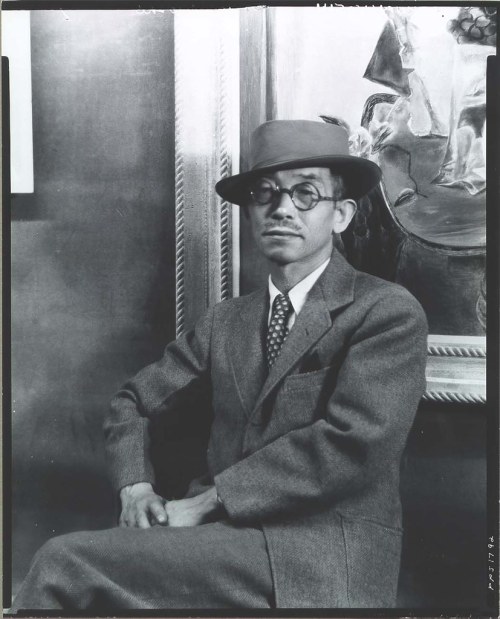
                                                           Yasuo Kuniyoshi.

Just a minute A Masseria mob wipe out

The death of Mrs Trigger Mike Coppola

Publish


The myth of the Cyclops

When fiction becomes fact: Thomas Jefferson fathered dozens of children with his slaves.


The story that Jefferson slept with his slaves appears to be mostly rumor since the entire story is completely unsubstantiated. Recent DNA tests show that members of the Jefferson family, which was large and extended, more than probably fathered children with slaves, but there is no evidence the children were Thomas Jefferson’s offspring.


When fiction becomes fact: A cemetary in King’s County Washington.


No. No monsters. Not in that sense.  A child, bearing the surname Monster, was born in Washington state on October 23, 1888, and died about four months later on February 3, 1889. A photo of the child’s gravestone. Reading “Baby monster” was passed around the internet, but only after the top portion of the photo which showed the child’s father’s name “John C. Monster” was cropped out. The monster family was prominent in the region for many decades. This family happened to be of English ancestry, but the name probably derived from the Latin word Monasterium, meaning monastery.

Ponder this simple thought by Marcus Aurelius.


The happiness of your life depends upon the quality of your thoughts. 


Natalia Bessmertnova, prima ballerina


Giuseppe Verdi – Nabucco: Chorus of the Hebrew Slaves (Va', Pensiero, Sull'ali Dorate)