Welcome

Welcome
John William Tuohy lives in Washington DC

POSITIVE WORDS

LIST OF POSITIVE WORDS
 Find below currently 1,109 positive words!


Positive Words starting with letter A
ABLE,   ACCEPT – ACCEPTANCE – ACCEPTABLE – ACCEPTED – ACCEPTING,   ACTION,   ACTIVATE,   ACTIVE,   ADD,   ADDITION,   ADMIRABLE,   ADORABLE,   ADVANTAGE,   AFFIRM,   AGELESS,   AGREE,   AGREEABLE,   AID,   AIM,   ABUNDANCE,   ACCOUNTABILITY,   ACCOMPLISHMENT – ACCOMPLISH,   ACCURACY,   ACHIEVEMENT – ACHIEVE,   ACKNOWLEDGEMENT,   ADAPTABILITY,   ADVENTURE – ADVENTUROUS,   AGILITY,   ALERTNESS,   AMBITION,   ANTICIPATION,    APPRECIATE – APPRECIATION – APPRECIATIVE – APPRECIATIVENESS,   ASSERTIVENESS – ASSERTIVE,   ATTENTIVENESS,   AUDACITY,   AWARE – AWARENESS,   AUTHENTIC – AUTHENTICITY,   ABRACADABRA,   ATTRACTION,   ALLOW – ALLOWING,   AFFECTION – AFFECTIONATE,   ABSORBED,   ALERT,   AMAZED,   AWE – AWED,   ANIMATE – ANIMATED – ANIMATING – ANIMATION – ANIMATENESS,   ARDENT,   AMAZING,   AWESOME – AWESOMENESS,   AROUSED,   ASTONISHED – ASTONISHING,   AMUSED,   AIR – AIRNESS,   ALOHA,   ADORE,    ADMIRE,   ADMIRABLE,   ALLURE,    ANGEL – ANGELIC,    ALTRUISM – ALTRUISTIC,   ABOUNDING,   ABSOLUTE – ABSOLUTELY, ACCESSIBLE,   ACCLAIMED,   ACCOMMODATE – ACCOMMODATED – ACCOMMODATION – ACCOMMODATING,    AMPLE,   APPRECIATIVE JOY,   AMIN,   ACCENTUACTIVITY,   ACTABILITY,   AFFABLE,   ALACRITY,   ALTRUCAUSE,   AMIABLE, ASTOUNDING, ATTRACTIVE,ALIVE – ALIVENESS


Positive Words starting with letter B
BEATIFY,   BEATITUDE,   BENEFICIAL,   BENEFIT,   BENEVOLENT,   BELOVED,   BEST,   BETTER,   BLESS – BLESSING – BLESSED,   BLISS – BLISSFULNESS – BLISSFUL,   BLOOM,   BLOSSOM,   BALANCE – BALANCED,   BEAUTY – BEAUTIFUL,   BELONG – BELONGING,   BOLDNESS,   BRAVERY,   BRILLIANCE – BRILLIANT,   BLISS ON TAP,   BEYOND FABULOUS,   BIOPHILIA,   BRIGHT,   BRIGHTNESS, BALISTIC, BLASTING, BLAZING, BLINDING, BREATHTAKING, BUBBLING, BUSTING, BLISSCIPLINE, BUYANCY, BULLISHNESS, BRISKNESS, BUOYANCY, BREEZINESS, BRIO


Positive Words starting with letter C
CARE – CARING,   CALM,   CREATE,   CREATIVE – CREATIVITY – CREATIVENESS ,   CAPABLE – CAPABILITY,   CELEBRATE – CELEBRATION,   CERTAIN – CERTAINTY,   CHARITABLE – CHARITY,   CHARM – CHARMING – CHARMER,   CHOICE,   CLEAN – CLEANLINESS,   COMFORT – COMFORTABLE – COMFORTING,   CALM,   CUDDLE – CUDDLING,   CANDOR,   CAREFULNESS,   CHALLENGE,   CHANGE,   CHEERFUL – CHEERFULNESS,   CLARITY,   COLLABORATION,   COMMITMENT,   COMMUNICATION,   COMMUNITY,   COMPASSION – COMPASSIONATE,   COMPETENT – COMPETENCE – COMPETENCY,   CONCENTRATION,   CONFIDENT – CONFIDENCE,   CONSCIOUSNESS,   CONSISTENCY – CONSISTENT,   CONTENT – CONTENTMENT,   CONTINUITY – CONTINUOUS,   CONTRIBUTION,   CONVICTION – CONVINCING,   COOPERATION,   COURAGE,   COURTESY – COURTEOUS,    CURIOUS – CURIOSITY,   CHAKRA,   COOL,   CLEAR HEADED,   CENTERED,   CLOSENESS,   COMPANIONSHIP,   CONSIDERATE – CONSIDERATION,   COMMUNION,   CONNECT – CONNECTED – CONNECTION – CONNECTEDNESS,   CONQUER,   CUTE,   CHARISMA – CHARISMATIC,   COLLECTED,   CHEERFUL WILLINGNESS,   CHEERS,   CONGRUENCE,   CORDIAL,   CRANK (UP), CAPITAL, CORKING


Positive Words starting with letter D
DIRECTION,   DELICATE,   DECENT,   DESIRABLE,   DELICIOUS – DELICIOUSNESS,   DO,   DREAM – DREAMY,   DYNAMIC,   DARING,   DECISIVENESS,   DELIGHT – DELIGHTED – DELIGHTFUL,   DEPENDABILITY,   DESIRE,   DETERMINATION,   DEVOTION,   DIGNITY,   DILIGENCE,   DISCIPLINE,   DISCOVERY,   DISCRETION,   DIVERSITY,   DRIVE,   DUTY,   DIVINE,   DAZZLED,   DISNEY,   DEVOTED,   DANDY,   DAIMON,   DEBONAIR,   DETACHMENT

Positive Words starting with letter E
EMPATHY – EMPATHIZE – EMPHATIC,   EASY – EASILY,   EDUCATE – EDUCATION – EDUCATED,   EFFICIENT,   ENABLE – ENABLED,   ENERGETIC – ENERGIZE – ENERGY,   ENGAGE – ENGAGING – ENGAGED,   ENJOY – ENJOYMENT,   ENOUGH,   EAGER – EAGERNESS,   EFFECTIVENESS,   EFFICIENCY,   ELATION,   ELEGANCE,   ENCOURAGE – ENCOURAGEMENT – ENCOURAGED,   ENDURANCE,   EQUALITY,   EXCELLENCE – EXCELLENT,   EXCITE – EXCITEMENT – EXCITED,   EXPERIENCE,   EXPERTISE,   EXPLORATION,   EXPRESSIVENESS – EXPRESSING,   ENLIGHTENMENT,   ETERNAL,   EXALTATION,   EMULATE,   EMPOWER – EMPOWERING – EMPOWERED,   EXPANSIVE,   EXHILARATING,   ENTHUSIASTIC – ENTHUSIASM,   ENGROSSED,   ENCHANTED,   ENTRANCED,   ECSTATIC,   ELATED,   ENTHRALLED,   EXUBERANT – EXUBERANCE,   EXPECTANT,   EQUANIMOUS,   ENLIVENED,   EFFICACY,   EASE,   EXEMPLARY,   EXTRAORDINARY,   EARNEST,   ELEVATE – ELEVATED,   EQUANIMITY,   EASE-OF-MIND,   EXCITED ANTICIPATION,   EXTRA,   EQUITY – EQUITABLY – EQUITABLE,   EASY TO TALK TO,   EASY TO APPROACH,   ECSTATIFY,      EUDAEMONISM,   EUDAEMONIST,   EUDAEMONISTIC,   EUDAIMONIA,   EUDAMONIA,   EVOLVE,   EXALTING,   EXSTATISFY,   EXULTANT, ASTRONOMICAL, CHAMPION, CHAMP’, ELECTRIC, ENORMOUS , EXCEPTIONAL, EXCITING, EXQUISITE,   EFFORTLESSNESS, EUNOIA,  ECOSOPHY, EBULLIENCE


Positive Words starting with letter F
FANTASTIC,   FEEL GOOD – FEELING GOOD,   FLOW – FLOWING,   FABULOUS,   FAIR,   FAITH,   FAITHFUL,   FAME,   FAVORITE,   FAIRNESS,   FAMILY,   FIDELITY,   FLEXIBILITY,   FOCUS,   FLOURISH,   FORGIVE – FORGIVING – FORGIVENESS,   FORTITUDE,   FREE – FREEDOM,     FRUGALITY,   FUN,   FUTURE,   FRIEND – FRIENDLY – FRIENDSHIP – FRIENDLINESS,   FASCINATE – FASCINATED,   FULFILL – FULFILLED,   FOOD,   FEISTY – FEISTINESS,   FESTIVE,   FEASIBLE,   FINE,   FEARLESS,  FESTIVE – FESTIVENESS,   FIT, FANTABULOUS, FREECYCLE, FUNERIFIC, FUNOLOGY, FLAWLESS


Positive Words starting with letter G
GLOW,  GENEROUS – GENEROSITY,   GENERATE,   GENIAL,   GENIUS,   GENUINE,   GIFT,   GIVE – GIVING,   GOOD,   GOODNESS,   GIVING,   GOING THE EXTRA MILE,   GRACE,   GRATITUDE – GRATEFULNESS,   GROW – GROWTH,   GUIDE – GUIDING – GUIDANCE,   GOD,   GROUNDED,   GLORY,   GODLINESS,   GOOD-FEELING,   GROOVY,   GIDDY,   GLAD,   GOOD HEALTH,   GLAMOR,   GIGGLING,   GODDESS,   GORGEOUS – GORGEOUSNESS,   GRANDIOSITY, GENERAVITY, GENTLEMAN, GARGANTUAN, GRAND, GREAT, GINGER


Positive Words starting with letter H
HOPE – HOPEFULNESS,   HAPPINESS – HAPPY – HAPPILY,   HARMONIOUS – HARMONIZE – HARMONY,   HEALTH – HEALTHY,   HEART,   HELLO,   HELP – HELPFUL – HELPING,   HOT – HONEST – HONESTY,   HUMAN,   HUMOR,   HELPFULNESS,   HERO – HEROISM,   HOLY – HOLINESS,   HONESTY,   HONOR,   HOSPITALITY,   HUMBLE,  HEAVEN – HEAVENLY,   HALO,   HEARTFELT,   HEARTWARMING,   ONE-POINTEDNESS,   HAPPY HEARTED, HEEDFUL, HANDSOME, HUGE, HIGH-SPIRITEDNESS


Positive Words starting with letter I
IMAGINATION,   INSPIRE – INSPIRATION – INSPIRED – INSPIRATIONAL,   IN-LOVE,   IDEA,   INCREDIBLE,   INNOVATE – INNOVATION,   INTERESTING – INTEREST – INTERESTED,   IMPROVEMENT,   INDEPENDENCE,   INFLUENCE,   INGENUITY,   INNER PEACE,   INSIGHT – INSIGHTFULNESS – INSIGHTFUL,   INTEGRITY,   INTELLIGENCE – INTELLIGENT,   INTENSITY,   INTIMACY,   INTUITIVENESS,   INVENTIVENESS,   INVESTING,   INTENTION,   INVIGORATE – INVIGORATED,   INTRIGUED,   INVOLVE – INVOLVED,   INCLUSION,   INNOCENT,   INEFFABLE,   INTREPID, IDEALISM, ILLUMINATION – ILLUMINATED, INCOMPARABLE, INVINCIBLE,   INQUISITIVE,   INFINITE,   INFINITY

Positive Words starting with letter J
JOY – JOYFUL – JOYOUS,   JOKE,   JOLLY,   JOVIAL,   JUST,   JUSTICE,   JUBILANT,   JUVENESCENT,   JUMPY,   JAMMIN’,    JUBILINGO


Positive Words starting with letter K
KINDNESS – KIND – KIND-HEART – KINDLY,   KEEP-UP,   KISS,   KNOWLEDGE,   KITTENS,   KEEN


Positive Words starting with letter L
LIKE,   LAUGH – LAUGHING,   LEARN – LEARNING,   LIFE,   LIVE – LIVING,   LUXURY,   LONGEVITY,   LOYALTY – LOYAL,   LOVE – LOVABLE – LOVING,   LIBERTY,   LOGIC,   LEADER – LEADERSHIP,   LUCK – LUCKY,   LIGHT,   LOVING-KINDNESS,   LIVELY,    LIFE OF THE PARTY,   LOVELY,   LOVING ACCEPTANCE,   LOVING FEELINGS, LIGHTWORKER

ositive Words starting with letter M
MEANING – MEANINGFUL,   MORE,   MAGNIFICENT,   MAJESTY,   MANY,   MARVELOUS,   MERIT,   MOTIVATE,   MIRACLE,   MAGIC,   MAKING A DIFFERENCE,   MASTERY,   MATURITY,   MEANING, MERIT,   MINDFUL – MINDFULNESS,   MODESTY,   MOTIVATION – MOTIVATIONAL,   MERCY,   MEDITATION,   MIND-BLOWING,   MELLOW,   MOVED,   MOVEMENT,   MUTUALITY,   MOURNING, MELIORISM, MENCH, MIDSIGHT, MINDSIGHT, MAJOR

Positive Words starting with letter N
NOBLE,   NURTURING – NURTURE,   NON-RESISTANCE – NON-RESISTANT,   NEW,   NICE,   NIRVANA,   NOBLE, NEAT,   NATURE-MADE,   NOURISH – NOURISHED – NOURISHING – NOURISHMENT,   NAMASTE, NEOTENY

Positive Words starting with letter O
OPTIMIST – OPTIMISTIC,   OUTSTANDING,   OK,   ON,   ONWARDS,   OPEN – OPENLY – OPENING,   OPEN-MINDED,   OPPORTUNITY,   ORIGINAL,   OPENNESS,   OPPORTUNITY,   OPTIMISM,   ORDER,   ORGANIZATION,   ORIGINALITY,   OUTCOME,   ORIENTATION,   OBEDIENT,   OPEN HEARTED,   OMG,   OVERCOME,   OM MANI PADME HUM,   OUTGOING, ONENESS, OUTERNATIONALIST

Positive Words starting with letter P
PERFECT – PERFECTION,   POSITIVE ENERGY,   POSITIVE THOUGHTS,   POSITIVE EVENTS,   POSITIVE CIRCUMSTANCES,   POSITIVE BELIEFS,   PEACE – PACIFY,   PARADISE – PARADISIAC,   PASSION – PASSIONATE,   PLEASE,   PURE,   PEACE,   PERCEPTIVENESS,   PERSEVERANCE,   PERSISTENCE,   PERSONAL GROWTH,   PLEASURE,   POSITIVE ATTITUDE,   POSITIVE WORDS,   POWER – POWERFUL,   PRACTICALITY,   PRECISION,   PREPAREDNESS,   PRESENCE,   PRESERVATION,   PRIVACY,   PROACTIVITY – PROACTIVE,   PROGRESS,   PROSPERITY PROSPEROUS,    PUNCTUALITY – PUNCTUAL,   PATIENCE,   PROUD,   PLEASED,   PRESENCE,   PLAY – PLAYFUL – PLAYFULNESS,   PARTICIPATION,   PURPOSE,   PICK-ME-UP,   PRONIA,   PIOUS,   PUPPIES,   POLITE,   POSITIVE MIND,   POSITIVE THINKING,    POSITIVE WORDS,   PRETTY,   PRECIOUS, PARDON, PERKINESS, PIQUANCY,  POSICHOICE, POSIDRIVING, POSIFIT, POSILENZ, POSIMASS, POSIMINDER, POSIRATIO, POSIRIPPLE, POSIRIPPLER, POSIRIPPLES, POSISINGER, POSISITE, POSISTRENGTH, POSITIBILITARIAN, POSITRACTION, POSITUDE, POSIVALUES, POSIWORD, POSSIBILITARIAN, PROMPTNESS, PROTO, PRICELESS, PEP – PEPPINESS

Positive Words starting with letter Q
QUALITY,   QUIET – QUIETNESS,   QUAINT,   QUIESCENT, QUEENLY, QUICKENING, QUIDDITY

Positive Words starting with letter R
RESPECT,   RADIANT,   READY – READINESS,   REAL – REALITY,   REASON,   RECOMMEND,   REFRESH – REFRESHED,   RELAX – RELAXED,   RELIEF,   RELIEVE – RELIEVED,   REMARKABLE,   RATIONALITY,   RECOGNITION,   RELATIONSHIPS,   RELIABLE – RELIABILITY,   RELIGION,   RESOURCEFULNESS,   RESPECT,   RESPONSIBILITY,   RIGHTEOUSNESS,   RISK-TAKING,   ROMANCE,   REVELATION,   REVIVED,   RESTORE – RESTORED,   REST – RESTED,   RENEW – RENEWED,   REJUVENATE – REJUVENATED,   RAPTURE – RAPTUROUS,   RESILIENT – RESILIENCE,   REVERENCE,    RIPE,   REBORN,   RELATEDNESS,   RASASVADA,   REPOSE, ROSINESS

Positive Words starting with letter S
SCOPE,   SMILE – SMILING,   SOULMATE,   SOUL – SOULFUL,   SACRED,   SAFE – SAFETY,   SECURE – SECURED – SECURITY,   SUSTAIN – SUSTAINED,   SAVE, SAVINGS,   SIMPLE – SIMPLIFY,    SELFLESSNESS,   SELF-ESTEEM,   SERVICE,   SIMPLICITY,   SINCERITY,   SKILL – SKILLED,   SPIRIT,   SERENE – SERENITY,   STABILITY,   STRENGTH,   STYLE,   SYSTEMATIZATION,   SELF-LOVE,   STRIVE,   SERVICE,   SALVATION,   SELF-RESPECT,   SELF-FORGIVENESS,   SERVE,   SYMPATHETIC,   SELF-COMPASSION,   SELF-KINDNESS,   SPELLBOUND,   STIMULATED – STIMULATING – STIMULATION,  SATISFIED,   STILL,   SURPRISED,   SLEEP,   SEXUAL EXPRESSION,   SHELTER,   SELF-EXPRESSION,   STABILITY,   SUPPORT,   SPACE – SPACIOUS, SPONTANEITY – SPONTANEOUS, SUNSHINE, SPARK – SPARKLE – SPARKLES,   SWEET – SWEETNESS,    SUPPORT – SUPPORTING – SUPPORTED,   SEXY – SEXINESS,   SUPREME,   SUCCULENT,   SWEETHEART,   STUDY – STUDIOUS,   SELFLESSNESS,    SAVOUR – SAVOURING,   SUFFICIENT,   STUPENDUOS,   SWAG – SWAGGY,   SPLENDID,   SMART,   SPECTACULAR,   SPECIAL,   SERENDIPITY,   SYNERGY, SHINE – SHINING, START, STEADFASTNESS, SUBLIME, SUNNINESS,   SWEET,   SUPERPOWER

Positive Words starting with letter T
TRUE,   TRUST – TRUSTING ,   TACT,   TEACH – TEACHABLE,   TEAM,   THANKFUL – THANK – THANK-YOU – THANKFULNESS,   THERAPY,   TIME,   TEAMWORK,   TIMELINESS,   TOLERANCE,   TRADITION,   TRANQUIL – TRANQUILITY,   TRUST,   TRUTH – TRUTHFULNESS,   TENDER,   THRILLED,   TOUCH – TOUCHED,   TICKLED,   TO MATTER,   TO KNOW,   TO BE KNOWN,   TO BE SEEN,   TRANSFORMATIVE – TRANSFORMATION – TRANSFORM,   TRIUMPH,   TEAMWORK,   THRIVE – THRIVING, TENACITY

Positive Words starting with letter U
UNIFICATION,   UNIQUE,   UPLIFT,   ULTIMATE,   UNCONDITIONAL,   UPGRADE,   USEFUL,   USER-FRIENDLY,    UNITY,   UNDERSTAND – UNDERSTANDING – UNDERSTOOD,   UNIFICATION OF MIND,    UP, UPOWER, UPSKILL

Positive Words starting with letter V
VITALITY,   VALUE – VALUES – VALUABLE,   VIRTUOUS,   VALID,   VERIFY,   VERY,   VIABLE,   VIRTUE,   VICTORY – VICTORIOUS,   VARIETY,   VULNERABILITY – VULNERABLE,   VIBRANT,   VOW,   VIM,    VIGOR, VENERATION, VOCABULEVERAGE

Positive Words starting with letter W
WORTH – WORTHY – WORTHINESS,   WEALTH,   WARM – WARMTH,   WELCOME,   WILL- WILLING – WILLINGNESS ,   WISDOM,   WISE,   WON,   WONDERFUL,   WELL-BEING,   WHOLEHEARTEDNESS,   WOW,   WONDER,   WATER,   WELL,   WELLNESS,   WELFARE,    WHOLE,   WONDER-WORKING,   WIN – WINNABLE – WINNING

Positive Words starting with letter X
XO,   X-RAY VISION,   XENOPHILIA,    XENODOCIAL,   Xfactor,  XENOPHILE,   XENIAL

Positive Words starting with letter Y
YES,   YOUTH – YOUTHFUL,   YOUNG,   YOUNG- AT-HEART,   YIPPEE,   YAY,   YEARN,   YEA,   YEAH,   YUMMY,   YEN,    YESABILITY,    YUGEN
Positive Words starting with letter Z
ZEALOUS,    ZEAL,    ZEST – ZESTY – ZESTFUL,   ZIPPY,   ZING,   ZAPPY,   ZANY


My ancestor "Padrick "Punchy Paddy" Tuohy


                                                                               (its me)

The Connecticut Irish: Patsy Touhye of East Haddam

The Connecticut Irish: Patsy Touhye of East Haddam: The “Only Patsy Touhey” among his admirers, and they are legion, is the youngest of the many distinguished pipers who hailed from Galway. ...

Independent Bookstore Day!


“We feel a bond with other indies…Heck, Amazon has even made Barnes & Noble seem like a relative—what dark magic does that? We are pleased to celebrate shared DNA with our sibling stores.”— John Marshall co-owner of Seattle’s Open Books on Independent Bookstore Day


Independent Bookstore Day Is an Opportunity for Us to Thank You.

In the recent wave of shop local movements, it can be easy to feel lost in the stream of independent businesses frantically waving their arms for attention. Working at (or owning) an independently owned business comes with a whole bushel of stresses that are far too familiar to most of us in this shaky economy. So what makes this Saturday, National Independent Bookstore Day, any different from the myriad of indie campaigns sweeping the nation?
Well, this one belongs to you. Instead of looking at Saturday as a way to drive more business, let’s think about it as a party in honor of Jackson, MS; a shindig to thank our patrons of 40 years. Without all of you there would be no independent bookstore to celebrate, no haven for weary college students, no well-trod path for the kids running from the front desk to the children’s room, no $1 beer or chatting with visiting authors. We at Lemuria are so grateful that you’ve let us into your lives, and want you to know how much you have touched our lives as well.
By being friends of the bookstore and not just nameless customers, you have pulled us into the Jackson community and made us more than a business; you’ve made us family. To thank you for that tremendous honor, we’ve got a pretty awesome Saturday planned to officially celebrate National Independent Bookstore Day (and the beginning of our 40th birthday year!).
The first fifty customers will receive a free tote bag with their purchase, and 5% of all sales throughout the day will be donated to future Mississippi Book Festivals. “Jackson: Photographs by Ken Murphy” will be 10% off all day long, and we’ll have coolers full of ice cold beer for just $1! Come by and chat with some of our special guest booksellers who will be participating in special Author Challenges between 11:00 and 2:00 (there may or may not be a marshmallow eating contest). We’ll have a special singing story time at 11:00 with Katie Hathcock and Paul from Beanfruit Coffee Company will get here at 10:00 to brew up some delicious hot drinks. Balloons for babies, candy for kids, beer and coffee for grown ups, and good cheer all ‘round.
You have given us the best jobs we could have hoped for, and an amazing seat at Jackson’s family table. Thank you.


Happiness


Common Cents by Tom and John Mills

Nearly 20 years ago, I wrote about some ideas for happiness:
— Plan ahead. If nothing else, plan to write everything down. No surprises. Not only will I write in my well-worn calendar/planner, but I will actually use it as it was designed to be used.
— Keep a budget. Budgeting is not just for those starting out in life.
— Save a little each month. Do it in some account: savings, 401(k), college funds. It doesn’t matter.
— Pay off credit cards early. Those evil plastic demons are modern man’s albatross. Use them sparingly. When used, try to pay the balance off as soon as possible.
— Get a health checkup. With good health you can be productive. Without it, you may not be.
— Review insurance — life, disability, medical or nursing home. Being over-insured is almost as bad as being under-insured.
— Recognize those who make you look good. We all have them and most of us take them for granted. It may be a spouse, partner or a co-worker. Most of us would not be where we are today if it weren’t for the help of another significant person or two.
— Since I’m on a roll here, end relationships that cause you pain. There may be a few people in your business or personal life who cause serious pain.
— Improve relationships that give you joy. Relationships are like bank accounts. If we overdraw, we pay a serious price. If we make regular deposits, we earn the privilege to make withdrawals. How’s your bank account with those who bring you joy? When was your last deposit?
— Avoid procrastination. Every aspect of one’s life is hampered by this nasty habit. If you put it off, it may put you out. Don’t wait. Make the list and do it. You know the areas of your life that need work.
— Clean up the clutter. This is important. Most of us do this. We have too many projects. Undone projects create clutter. It is essential to decide what is unimportant and put those things away.
— Be grateful. Grateful for those who have helped you get where you are. It may be to a higher power or to an important person. Whomever. Show your appreciation regularly and often.
I hope this year will be another year of prosperity for me and for you.

Tom and John Mills are registered investment advisers and certified financial planners. Reach them at 254-0155, MillsWealth.com. Securities offered through LPL Financial, Member FINRA/SIPC. Opinions expressed here do not necessarily reflect the views of LPL Financial. Investment advice offered through Strategic Wealth Advisors Group (SWAG), a registered investment adviser. Mills Wealth Management and SWAG are separate entities from LPL Financial.


From a Buddhist perspective

Dear friends

How much do we really know about happiness? From a Buddhist perspective, all sentient beings, including animals, seek happiness. We have a subconscious instinct to seek happiness - even though many of us don't have a clear idea what it is, or how to achieve it.
From a Buddhist perspective, there are two types of happiness: Emotional Happiness and Timeless Happiness. Emotional Happiness could be described as seeking relief from the cold, or searching for sources of earning, position, or status. Although there is nothing wrong with this type of 'worldly' happiness, when we reflect on it, we might understand that all of these examples, by their very nature, are temporary. Emotional Happiness does not last. Therefore, Timeless Happiness becomes something very important to seek.
Timeless Happiness
Timeless Happiness is gained from understanding our own inherent qualities, such as compassion and loving kindness, and gaining wisdom about our true nature. When we reflect on the nature of this type of happiness, we find something unchanging, permanent - and therefore worthwhile to seek.
We might find ourselves confused about 'Timeless Happiness.' We are, after all, so closely connected to Emotional Happiness, and get an instant reward from it every day. Timeless Happiness might sound noble, even wonderful, but is it visible, attainable in everyday life? Actually, yes.
Happiness in Family
My late grandmother led a very simple life, as a mother to my father. But the way she lived her life is something that will stay with me always, and is perhaps my greatest personal example of Timeless Happiness. Without having particular responsibilities that one might consider 'amazing' or 'newsworthy' - but simply by being a mother, just practicing loving kindness, and other basic qualities of life, and of herself - what I witnessed is that no matter who approached her, no matter what kind of situations she was in, she had an unaltering attitude towards life. Whomever she met, she had the attitude of kindness and care - just like a mother. Visibly, you could see it, verbally, you could hear it. All of her words were extremely warm and gentle. And of course, all of these qualities stemmed from her own consciousness.
As Karmapa, I of course lead my life as a spiritual practitioner, but I learn so much from the way she carried herself, the way she carried her attitude to life. This memory for me is very precious because it helps remind me that Timeless Happiness is visible and evident in all of us. The happiness we are seeking is already here. So this example always helps me, always puts a smile on my face, and in my heart.
Buddha and Happiness
I am sure that every one of you have similar experiences, memories, that you can recall. From a Buddhist perspective, it is said that the potential, the seed and the quality of true happiness or enlightenment, are all there within every sentient being's centre.
Therefore, it is important not to consider Timeless Happiness as something that is distant or unattainable, or something to be celebrated on special occasions, and put on the shelf for the rest of the year. Instead, Timeless Happiness is something that we can really get involved in, take part in, no matter what type of life we are living, no matter what type of conditions we might have. But first we have to notice it.
The benefit from taking the first step of achieving Timeless Happiness is captured in the word 'timeless' itself. From a Buddhist perspective, the benefits are noble, decent and virtuous from the very beginning. It is noble, decent and virtuous in the middle. And it is noble, decent and virtuous at the end as well - not just in this life, not just later on, but until the end, until we have given full rise, full realisation to Timeless Happiness.
From a Buddhist viewpoint, the best example of this unchanging happiness would be none other than Buddha himself. Buddha means 'Enlightened Being' - a fully awakened being. Now if we reflect on the way he sought and ultimately achieved Timeless Happiness, it is the same as we are doing today: reflecting on and examining the causes and conditions of happiness.
The Happiness Exam
The only way in which we can truly examine happiness, is by looking deep into ourselves: our way of being; the way we carry ourselves; our everyday behaviour and habits. By doing so, it helps us understand more about ourselves. If we understand more about ourselves, we understand more about others.
All of us have the basic qualities to attain happiness, we all share the potential - simply because we all have consciousness. We all have the same wish and aspirations, as we are all searching for happiness.
If you look at Buddha's life story, it is clear that he could have had, and indeed he did have, everything he could wish for from worldly life. But after examining it, he could see that - no matter how pleasant or satisfactory a feeling or situation he was experiencing - these were all temporary. He saw that it was not the ultimate goal or priority to attain this type of experience, what we are calling Emotional Happiness. Therefore, he left that life in search of something that is lasting, something that is unchangeable. This is what students of Buddha's way and path are practicing: the practice of Timeless Happiness.
Having said all of this, to seek happiness, do we need to suddenly change the way we live? Do we need to renounce and abandon things from our lives? We may naturally have these kind of questions and doubts. I would say that it is all about the attitude - how we want to live our lives. It all depends on our priority, our ultimate goal. If our priority is to seek Timeless Happiness, the first thing we must do is reflect.
Five minutes a day
It is beneficial to reflect every day on what we are really seeking, the conditions that we have been gathering, and the methods that we have been applying. There is no harm in taking a little time every day from our schedules. We can start by taking just five minutes a day - it's not much - and the practice itself doesn't need to involve intensive methods or rigorous procedures. All we need to do is sit, or stand in a place where we feel comfortable, quiet and peaceful.
Then, simply meditate and reflect, with a calm state of mind and body. Reflect on the past 24 hours - nothing more - reflect on exactly what has happened. Do this in an unemotional way, without judgment. By doing so, there is so much benefit. You will understand more about yourself, the various interesting aspects of your life. Not only will this help your memory, gain clarity, but it can truly help you understand yourself, and the true nature of happiness.
I encourage all of you to try this. I follow this practice as much as I can, and it definitely brings a lot of benefit. It helps me to understand exactly where I am, what I have experienced in the past, and by doing so it also helps me understand what may happen, the possibilities. In this way, this simple practice can help us understand the past, the present and the future. We feel confident, and can gain an insight into happiness.
I hope this is beneficial to all of you. I offer my aspirations and prayers that we all are able to achieve Timeless Happiness. I pray that we will all gain clarity, and that we will all find the conditions to appreciate the connection that we have. I pray that we cultivate the conditions to realise the potential that we have, the bond that we all share such as the bond of family, the bond of friends. And I pray that this will grow not just Emotional Happiness, but Timeless Happiness in our world.

This is an edited transcript of a live-streamed public talk by Thaye Dorje, His Holiness the 17th Gyalwa Karmapa, which he gave on the occasion of the United Nations International Day of Happiness 2015. Karmapa can be followed @karmapaorg, on Facebook, or his website is www.karmapa.org

Follow His Holiness Karmapa Thaye Dorje on Twitter: www.twitter.com/karmapaorg


Word origins

Mogul   1 :     (capitalized Mogul) an Indian Muslim of or descended from one of several conquering groups of Mongol, Turkish, and Persian origin; especially : Great Mogul
 2 :       a person of rank, power, influence, or distinction often in a specified area

Started by Babur, a descendant of Genghis Khan, the Muslim Mogul dynasty ruled much of India from the early 16th century to the mid-18th century. The Moguls (whose name is also spelled Moghul or Mughal) were known for their talented and powerful rulers (called "Great Moguls"), The English the word mogul came to denote a powerful person, as in today's familiar references to "media moguls


Good words to have

Commodious: Comfortably or conveniently spacious roomy


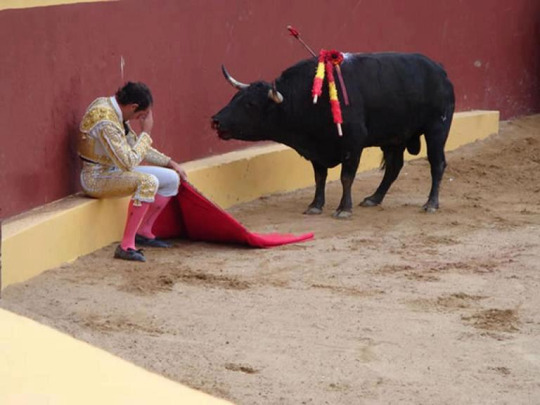
Enough bull


This incredible photo marks the end of Matador Torero Alvaro Munera’s career. He collapsed in remorse mid-fight when he realized he was having to prompt this otherwise gentle beast to fight. He went on to become an avid opponent of bullfights. Even grievously wounded by picadors, he did not attack this man.
Torrero Munera is quoted as saying of this moment: “And suddenly, I looked at the bull. He had this innocence that all animals have in their eyes, and he looked at me with this pleading. It was like a cry for justice, deep down inside of me. I describe it as being like a prayer - because if one confesses, it is hoped, that one is forgiven. I felt like the worst shit on earth.”


Good words to have

Null: Having no legal or binding force : invalid.  TheEnglish borrowed null from the Anglo-French nul, meaning "not any." That word, in turn, traces to the Latin word nullus, fromne-, meaning "not," and ullus, meaning "any."


Intractable:  Not easily handled, managed, or controlled. From Latin tractare (to handle), frequentative of trahere (draw). 

Word power

Quidnunc: A person who seeks to know all the latest news or gossip : busybody

Dour: Sullen; severe; gloomy; stubborn.  Probably from Latin durus (hard). Earliest documented use: 1425.


Omnipotent: Having virtually unlimited authority or influence. Ultimately derives from the Latin prefix omni-, meaning "all," and the word potens, meaning "potent." The omni- prefix has also given us similar words such as omniscient (meaning "all-knowing") and omnivorous (describing an animal that eats both plants and other animals). Although omnipotent is used in general contexts to mean "all-powerful" (as in "an omnipotent warlord"), its original applications in English referred specifically to the power held by an almighty God. The word has been used as an English adjective since the 14th century; since 1600 it has also been used as a noun referring to one who is omnipotent. 


Why Writers Love to Hate the M.F.A.


New York Times
By CECILIA CAPUZZI SIMONAPRIL 9, 2015

It was peak reading season, and Lan Samantha Chang, director of the Iowa Writers’ Workshop, was gamely juggling a call from a reporter, interruptions from her 7-year-old as well as a 10 percent surge in applications to the University of Iowa’s Master of Fine Arts program in creative writing. Ms. Chang was in the thick of decisions about who would fill 50 spots evenly divided between the fall fiction and poetry workshops.
“I’m deluged,” she said, surprised by the number of applications she was sorting through — 1,380 — especially in a year with a stronger economy, a condition that typically causes graduate school applications, never mind those to fine arts programs, to drop. “I have a tub of manuscripts,” she said. “It’s weird!”
Perhaps, she speculates, the surge is a result of the juggernaut HBO series called “Girls,” the one where the neurotic aspiring novelist Hannah Horvath, played by Lena Dunham, takes off to the Iowa cornfields and shines a bright light on the venerated program.
More likely, the swell in applications is not so weird.
“Explosive” is the word routinely used to describe the growth of M.F.A. programs in creative writing. Iowa was the first, established in 1936. By 1994, there were 64. By last year, that number had more than tripled, to 229 (and another 152 M.A. programs in creative writing), according to the Association of Writers and Writing Programs. Between 3,000 and 4,000 students a year graduate with the degree; this year, about 20,000 applications were sent out.
A graduate writing degree, unsurprisingly, turns out a lot of opinionated writing. Sample manifestoes from blogs and chat rooms: “Why you should hate the creative writing establishment (…as if you needed any more reasons)” and “14 Reasons (Not) to Get an M.F.A. in Creative Writing (and Two Reasons It Might Actually Be Worth It).” In scholarly circles, the boom and its implications have been a subject of heated debate since at least 2009, with the publication of Mark McGurl’s “The Program Era: Postwar Fiction and the Rise of Creative Writing.” In it, Dr. McGurl, a Stanford English professor, describes the M.F.A. as the single biggest influence on American literature since World War II, noting that most serious writers since then have come out of graduate-school incubators.
Chad Harbach followed with a 2010 essay, “MFA vs. NYC,” in the journal n+1. Last year, he edited a book of essays, with the same title, on the credential’s influence. Mr. Harbach describes two centers of American fiction: New York City, the traditional hub, and M.F.A., the encroaching university writing program, or “the M.F.A. beast,” as he calls it. Even writers without the degree, writes Mr. Harbach, who earned his from the University of Virginia, have “imbibed the general idea and aesthetic. We are all M.F.A.s now.”
That’s not necessarily a negative notion, according to Dr. McGurl and Mr. Harbach (who received a $650,000 advance for his first novel, “The Art of Fielding”). But it seems to trouble many others, especially aspiring novelists and poets. With so many highly tutored creative writers already out there, is success possible without the instruction and literary connections that are cultivated in M.F.A. programs and that a volatile publishing industry — now evolved around program graduates and sensibilities — has come to look for and expect?
To M.F.A. or not to M.F.A.?
“It is a deadly question,” says the literary critic Anis Shivani, author of the 2011 book “Against the Workshop: Provocations, Polemics, Controversies.” “Everyone who wants to be a writer in this country has to confront it, even if you rebel against the M.F.A.,” he says. “If you do the degree, opportunities open up.” Without it, he warns, you may be able to publish in small presses but are more likely to be “condemned to obscurity,” particularly if you write literary fiction and poetry. And your writing will change, he says, and not necessarily for the better.
Detractors like Mr. Shivani say the degree is responsible for so-called program fiction — homogenized, over-worskshopped writing void of literary tradition and overly influenced by the mostly upper- and middle-class values and experiences of its students. Others describe an inherently unfair system that all but requires aspiring writers to attend schools many cannot afford or otherwise access. They see a self-generating track to the literary establishment, on which the most fortunate jump to fellowships, writing colonies, agents, publishing deals and professorships, where they are indoctrinated into the status quo.
Of course, one doesn’t need an M.F.A. to write. “Just ask Samuel Delany, George R.R. Martin, J.K. Rowling, Colson Whitehead, Hilton Als and Emily St. John Mandel, who is not only M.F.A.-less, she’s B.A.-less,” says Junot Díaz, a Pulitzer Prize-winning author and M.F.A.-holder who has been a vocal critic of the degree.
With so much seemingly working against it, it is astounding the degree has gained traction at all. But there is another argument, and another list — prominent literary writers and poets with M.F.A.s and a diverse pool of work: Jhumpa Lahiri (Boston University), Phil Klay and Gary Shteyngart (Hunter College), Michael Chabon (University of California, Irvine), Ayana Mathis (Iowa), Jay McInerney (Syracuse University), Saeed Jones (Rutgers) Manuel Muñoz (Cornell), Ocean Vuong (New York University), David Foster Wallace (University of Arizona). The list could go on. And on.
In an essay in the book “MFA vs. NYC,” George Saunders, a professor in Syracuse’s program, writes that there are so many negative myths about the M.F.A. that they have become clichés. “Most critiques I read of creative writing programs or writing in the academy are kicking entities that don’t actually (in my experience) exist.”
Karen Russell, whose book “Swamplandia!” was a finalist for the 2012 Pulitzer Prize when she was 29, is similarly inured to the critics. What did Columbia’s M.F.A. program do for her? “Basically everything,” she says. “I’m not even sure what I’d be writing now if I hadn’t gone.”
Success stories like Ms. Russell’s or Mr. Harbach’s fuel the fantasy. “It’s no surprise that the promise of the M.F.A. — to make you, if you’re lucky, a famous, well-paid author — strikes so many people with even the smallest literary dream as utterly irresistible,” Mr. Díaz says.
Other realities conspire to make the M.F.A. one of the fastest growing graduate degrees. Among them: the pervasiveness of digital media and celebrity culture, where anyone with a blog feels like a best-selling novelist-in-waiting; the rise of memoirs, a natural extension of the online selfie writing culture; the popularity of magical realism and noir fiction novels, which have turned many 20-somethings on to literature; and changes in generational attitudes, aspirations and culture.
“The younger generation is making career choices determined by quality of life,” says Jeannine Blackwell, dean-in-residence at the Council of Graduate Schools and a professor at the University of Kentucky. That, she says, goes hand in hand with a focus on reinvigorating urban communities through theater, art installations, food culture and centers for literature and writing.
Jean McGarry, a chairwoman of the Writing Seminars at Johns Hopkins, says that the teaching of creative writing has taken on even more significance because the way we learn has changed. Evolution in the Hopkins program reflects that. The program started as a one-year Master of Arts and attracted students older than the average 26-year-old in today’s full-residency programs. They were mainly writers with material in need of guidance and derailed by career or family, says Ms. McGarry, who earned an M.A. at the school under John Barth in 1983. Mr. Barth, a National Book Award winner in 1973, called his students “advanced apprentices.”
M.F.A. students today, Ms. McGarry says, are less developed writers; faculty “are doing more of the work of writing” for them. She sees that as a reflection of undergraduate education that emphasizes specialization and pre-professionalism, with little room for the arts, reading or writing. Students have come to expect education to be prescriptive, she says. In 2006, Hopkins changed the program to an M.F.A., adding a year because students needed more time to develop.
“Our understanding of what it takes to be an artist is geared to an era’s myths,” Ms. McGarry says. What the rise of the M.F.A. tells us about our era’s myths, she says, is that “the arts are more inculcated than they were before. It’s no longer the genius coming out of the ground fully fledged.”
Every program has its own character. Hopkins is known to be cerebral; Brown, experimental; Boston University, at one year, intense; University of Arkansas, at four years, academic. The best provide a temporary respite from a fast-paced culture unsympathetic to the pursuit of art for art’s sake, and an opportunity to find a community of like-minded people who validate your work and motivations. They allow students to test their stamina (and talent) for what Timothy Donnelly, chairman of the Writing Program at Columbia, calls a “radical lifestyle choice.”
The best also hone technique and train students to read analytically. Ideally, as Mr. Donnelly puts it, students develop an appreciation for the “sensuous aspect of language” and the ability to translate their experience of life onto the page. “I look at this very idealistically,” he says. “And then I think, ‘Well, let’s roll up our sleeves.’
Creative writing programs are designed as studio or academic models. Often, programs combine aspects of both. They typically offer fiction and poetry tracks, though “creative nonfiction” is gaining ground, as are screenwriting and playwriting. Some distinguish themselves by focusing on thematic writing. Antioch University, Los Angeles, has a social justice emphasis; Chatham University in Pittsburgh emphasizes environmental writing; Pratt Institute in New York has social justice and environmental tracks.
About a fifth of M.F.A. programs are low-residency — they meet for about two weeks on campus or some other on-ground spot (New York University, for example, gathers low-residency students in Paris); the rest of the semester is conducted online.
Studio programs mimic conservatories and focus exclusively on the writing craft. Academic programs require other coursework, sometimes literature, foreign language or translation courses.
At the core of every program is the writing workshop, the so-called Iowa model because it originated there. In its strictest form, it works like this: Classmates evaluate and write detailed comments about students’ work, then sit around a table and “workshop” the piece. The writer sits silently while classmates comment first on what is working, then go back around to comment on what is not. The instructor weighs in. Only then can the author respond.
In the workshop, writing is deconstructed and put back together. Relationships are formed. A skilled instructor can point out flaws and suggest techniques it might otherwise take years to figure out. “You develop a keener sense of your readers,” Ms. Russell says. “When 14 people tell you something isn’t working, you listen.”
The workshop is so central to the experience that programs often screen out applicants who could be problematic. “We read the personal statement closely,” says Ellen Tremper, chairwoman of Brooklyn College’s English department. “We try to see if a person seems rational and, frankly, unneurotic, because if you get someone with a screw loose, it can be disruptive to the group.”
Achieving workshop harmony can be a challenge. John McNally, an Iowa graduate who based a satirical novel, “After the Workshop,” on a washed-up graduate of the Iowa program, has described his own experience there as affected by “bitter jealousies, competition” and writing to please instructors and classmates.
Writing can get “workshopped to death,” Mr. Shivani says. He also points out that criticism is coming primarily from peers who “are people who don’t know anything about writing, which is why they are in the program.”
The workshop can take getting used to. David Win-grave, a New York University student, says that at first the camaraderie, the attention on his work and the mounds of feedback were “thrilling.” But it was easy to lose focus and feel frustrated, and he learned to rely on only a few trusted readers.
Most famously, Junot Díaz wrote in a New Yorker essay last year about racial and ethnic insensitivity during his time in Cornell’s program in 1992. “Too white,” he wrote, “as in my workshop reproduced exactly the dominant culture’s blind spots and assumptions around race and racism (and sexism and heteronormativity, etc.).”
Cornell’s current director, J. Robert Lennon, says that while the program lacked a diverse faculty 23 years ago, half of today’s tenure-track faculty members are “writers of color” and split evenly between men and women. And, Mr. Lennon notes, Mr. Díaz’s student cohort was “100 percent writers of color,” which Mr. Díaz did not report.
“I don’t doubt that Junot had a hard time here; some students do,” Mr. Lennon says. “The workshop can be a contentious and at times hurtful environment, and I’d imagine that it can be particularly vexing for students who experience discrimination every day outside of class.”
One equalizer has been the availability of more financial aid. Some elite, smaller programs waive tuition and provide a stipend (Hopkins pays $30,000 a year, Cornell $26,000) for every student, typically requiring work in a related position, such as being a teaching assistant. Iowa, Syracuse University, Vanderbilt University, the University of Wisconsin and the University of Michigan also have fully funded programs.
With tuition high for a degree not known for its marketplace potential — on average $27,600 for a two-year program at a public university, $72,600 at a private — funding is often the deciding factor in program choice.
Financial aid at most M.F.A. programs is likely to be partial, if available at all. Low-residency programs typically offer no grants or T.A. slots.
Brooklyn College may seem a bargain at $14,580 in tuition for its two-year program ($20,700, out of state) but the program loses talent to schools that provide full tuition remission and stipends, Ms. Tremper says.
The class entering Boston University’s one-year creative writing program this fall will be the first in which all students receive a full tuition waiver and a $12,800 stipend. Before that, says Leslie Epstein, who was the director for 36 years before stepping down last year, it too lost students to schools with better aid packages, prompting it to up its game.
But Mr. Epstein and some others in the M.F.A. community get impatient with the discussion of whether it’s worth taking on debt for an M.F.A. Debt is important to consider, he says, but so is passion. “It’s art! It’s not so bad to make a sacrifice.”
Still, there is reality. Few will write the great American novel or, let’s face it, even publish work. In fact, the surge in M.F.A.s has intensified the competition.
The monthly magazine Poetry receives 100,000 submissions a year and publishes 300 poems. “The number of writers has increased, but the number of readers has not,” says Joseph Harrison, senior American editor for Waywiser Press. Mr. Harrison is coordinator of Waywiser’s Anthony Hecht Poetry Prize. This year, the competition drew 33 percent more submissions.
“We can only publish so much,” Mr. Harrison says. “I have to sound a cautionary note: M.F.A. programs make money off of people’s dreams. Everyone in the system is implicated. Writers, too. It’s a bit of a house of cards. One hopes people at least understand the odds and how difficult it can be.”
Including the odds of teaching at college, which many hope to do with the terminal degree. Last year, there were just 112 tenure-track creative writing positions.
Rahul Kanakia, who graduated from Hopkins’s M.F. A. program last May, says that once out of the cocoon, degree holders face a tough adjustment to the unstructured writing life, and the grind of sending work to multiple journals and receiving multiple rejections, if they hear back at all. “It’s like, is anybody out there even reading this stuff?” he says. “Often it doesn’t feel very productive.” (Mr. Kanakia is more fortunate than most, with pending publication of a young adult novel begun at Hopkins.)
Chris Brecheen, who blogs on the M.F.A. and is contemplating pursuing the degree, says: “What writers don’t understand is that there is little pragmatic about the M.F.A.” Of a dozen writer friends who went on to earn M.F.A.s, most, he says, are now doing “whatever they might have done before getting the degree,” including restaurant management, real estate and writing Web content. One person “leveraged” the M.F.A. to work as an organizer of literary open-mike events.
Perhaps the definition of post-M.F.A. success needs to include work like that of Dr. Ronald H. Lands, a professor at the University of Tennessee Graduate School of Medicine in Knoxville. He earned an M.F.A. from Queens University of Charlotte, in North Carolina, at 53; publishes stories and poems about patient experiences in JAMA and other journals; and created a course in narrative medicine for medical students. Or Jane Monteagle, an Antioch graduate, who pioneered creative writing programs in Los Angeles correctional facilities.
Many graduates, Ms. Tremper says, are likely to return to “normal jobs.” If highly motivated, they will try to squeeze in writing in hopes of the big break, and they will struggle. Prospective M.F.A. candidates, she says, need to ask: “Am I prepared for that kind of life?”
David Wingrave is willing to roll the dice to find out. He is finishing his first novel, will graduate from N.Y.U. in May and will then look for an agent.
“Before,” he says, “I had no contacts in the literary world, no sense of the process a book must go through, no ability to discuss the craft of literature, and on a day-to-day basis, no time to dedicate myself to it. At N.Y.U., I got those things.”
At the same time, he harbors no illusions about the road ahead. “I definitely need employment very soon,” he says. “Do you know of anything?”

Cecilia Capuzzi Simon teaches writing at American University’s School of Communication.