
Welcome

John William Tuohy lives in Washington DC
American Folk: Ian & Sylvia (Who are Canadian but...)

Ian & Sylvia were one of the most
successful folk duos of the 1960s and '70s. They worked with fellow Canadian
Gordon Lightfoot, and also recorded several original and traditional folk songs.
Could not agree more.
What can be better than to get a
book out on Saturday afternoon and thrust all mundane considerations away until
next week.- C.S. Lewis

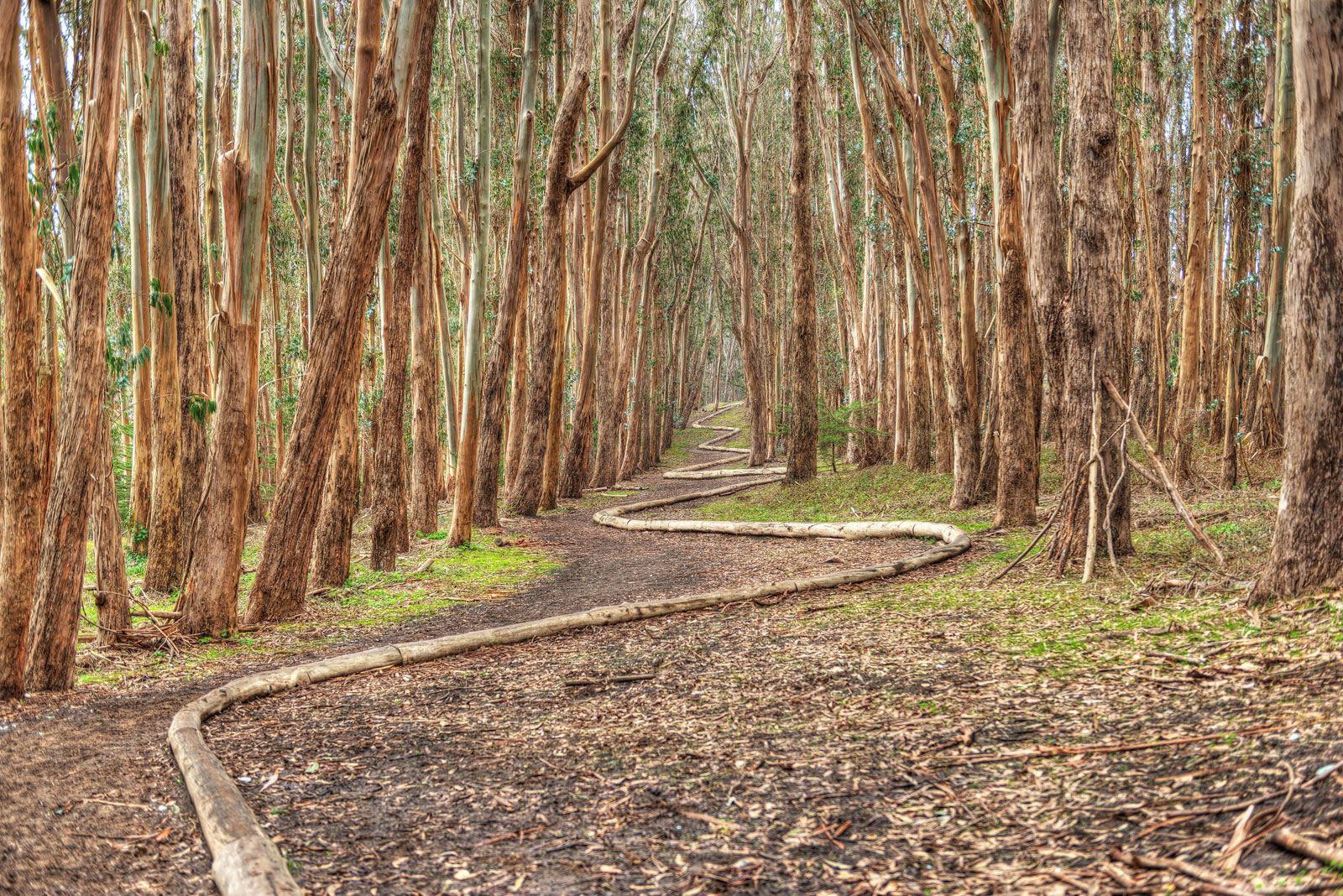
Andy Goldsworthy

Andy Goldsworthy OBE (born 26
July 1956) is a British sculptor, photographer and environmentalist who
produces site-specific sculptures and land art situated in natural and urban
settings. He lives and works in Scotland. From the age of 13 he worked on
farms as a laborer. He has likened the repetitive quality of farm tasks to the
routine of making sculpture: "A lot of my work is like picking potatoes;
you have to get into the rhythm of it."


Scientists reveal first-ever photo of a solar system like ours

Scientists have captured the
first direct image of a solar system that closely resembles our own. The new
image is a family portrait of sorts, showing two giant exoplanets orbiting a
young, sun-like star, roughly 300 light years away.
The picture was taken using the
European Southern Observatory's Very Large Telescope, located in Chile's
Atacama Desert. According to a new study in the Astrophysical Journal Letters,
the system will help astronomers better understand how our solar system formed
and evolved
The star, known as TYC 8998-760-1
and located in the Southern constellation of Musca, is only 17 million years
old, which researchers called a "very young version of our own sun."
Comparatively, the sun is roughly 4.6 billion years old.
Both planets orbiting the star,
dubbed TYC 8998-760-1b and TYC 8998-760-1c, are suspected to be gas giants,
meaning they are composed primarily of gases like helium and hydrogen. However,
they are much further away from their host star than our gas giants Jupiter and
Saturn, at distances of 160 and about 320 times the Earth-sun distance. They
are also much heavier than the gas giants in our solar system.
The image shows the two planets,
which appear as two bright points of light, distantly orbiting their parent
star, located in the upper left corner. Because they formed so recently, they
still glow brightly enough to be seen from Earth. This image, captured by the
SPHERE instrument on ESO's Very Large Telescope, shows the star TYC 8998-760-1
accompanied by two giant exoplanets. ESO/BOHN ET AL.
It marks the first time
astronomers have observed more than a single planet orbiting a star similar to
the sun. Only two similar systems have ever been previously observed — both
with stars uniquely different to ours.
"This discovery is a
snapshot of an environment that is very similar to our Solar System, but at a
much earlier stage of its evolution," lead researcher Alexander Bohn, a
PhD student at Leiden University in the Netherlands, said in a press release.
Co-author Matthew Kenworthy, an
associate professor at Leiden University, said that these kinds of direct
observations are crucial in the hunt for planets that can support life.
"Even though astronomers have indirectly detected thousands of planets in
our galaxy, only a tiny fraction of these exoplanets have been directly
imaged," he said.
Only a few dozen of the
exoplanets so-far discovered have been directly imaged, according to NASA.
Scientists hope that further research will reveal if the young planets formed
at their current location or migrated from somewhere else — and how they might
interact with each other.
Two Moons

AS WE TOPPED THE LOW, pine-clad
ridge and A looked into the hot, dry valley, Wolf Voice, my Cheyenne
interpreter, pointed at a little log cabin, toward the green line of alders
wherein the Rosebud ran, and said: "His house -- Two Moon."
As we drew near we came to a
puzzling fork in the road. The left branch skirted a corner of a wire fence,
the right turned into a field. We started to the left, but the waving of a
blanket in the hands of a man at the cabin door directed us to the right. As we
drew nearer we perceived Two Moon spreading blankets in the scant shade of his
low cabin. Some young Cheyennes were grinding a sickle. A couple of children
were playing about the little log stables. The barn-yard and buildings were
like those of a white settler on the new and arid sod. It was all barren and
unlovely -- the home of poverty.
As we dismounted at the door Two
Moon came out to meet us with hand outstretched. "How" he said, with
the heartiest, long-drawn note of welcome. He motioned us to be seated on the
blankets which he had spread for us upon seeing our approach. Nothing could exceed
the dignity and sincerity of his greeting.
As we took seats he brought out
tobacco and a pipe. He was a tall old man, of a fine, clear brown complexion,
big-chested, erect, and martial of bearing. His smiling face was broadly
benignant, and his manners were courteous and manly.
While he cut his tobacco Wolf
Voice interpreted my wishes to him. I said, "Two Moon, I have come to hear
your story of the Custer battle, for they tell me you were a chief there. After
you tell me the story, I want to take some photographs of you. I want you to
signal with a blanket as the great chiefs used to do in fight."
Wolf Voice made this known to
him, delivering also a message from the agents, and at every pause Two Moon
uttered deep-voiced notes of comprehension. "Ai," "A-ah,"
"Hoh,"-these sounds are commonly called "grunts," but they
were low, long-drawn expulsions of breath, very expressive.
Then a long silence intervened.
The old man mused. It required time to go from the silence of the hot valley,
the shadow of his little cabin, and the wire fence of his pasture, back to the
days of his youth. When he began to speak, it was with great deliberation. His
face became each moment graver and his eyes more introspective.
"Two Moon does not like to
talk about the days of fighting but since you are to make a book, and the agent
says you are a friend to Grinnell (George B. Grinnell, whom the Cheyennes,
Blackfeet, and Gros Ventres love and honor), I will tell you about it-the
truth. It is now a long time ago, and my words do not come quickly.
"That spring [1876] I was
camped on Powder River with fifty lodges of my people -- Cheyennes. The place
is near what is now Fort McKinney. One morning soldiers charged my camp. They
were in command of Three Fingers [Colonel McKenzie]. We were surprised and
scattered, leaving our ponies. The soldiers ran all our horses off. That night
the soldiers slept, leaving the horses one side; so we crept up and stole them
back again, and then we went away.
"We traveled far, and one
day we met a big camp of Sioux at Charcoal Butte. We camped with the Sioux, and
had a good time, plenty grass, plenty game, good water. Crazy Horse was head
chief of the camp. Sitting Bull was camped a little ways below, on the Little
Missouri River.
"Crazy Horse said to me,
`I'm glad you are come. We are going to fight the white man again.'
"The camp was already full
of wounded men, women, and children.
"I said to Crazy Horse, `All
right. I am ready to fight. I have fought already. My people have been killed,
my horses stolen; I am satisfied to fight'.
Here the old man paused a moment,
and his face took on a lofty and somber expression.
"I believed at that time the
Great Spirits had made Sioux, put them there," he drew a circle to the
right "and white men and Cheyennes here," -- indicating two places to
the left -- `expecting them to fight. The Great Spirits I thought liked to see
the fight; it was to them all the same like playing. So I thought then about
fighting." As he said this, he made me feel for one moment the power of a
sardonic god whose drama was the wars of men.
Northern Cheyenne War Chief Two
Moon in 1879, three years after the Battle of the Little Big Horn"About
May, when the grass was tall and the horses strong, we broke camp and started
across the country to the mouth of the Tongue River. Then Sitting Bull and
Crazy Horse and all went up the Rosebud. There we had a big fight with General
Crook, and whipped him. Many soldiers were killed -- few Indians. It was a
great fight, much smoke and dust.
"From there we all went over
the divide, and camped in the valley of Little Horn. Everybody thought, `Now we
are out of the white man's country. He can live there, we will live here.'
After a few days, one morning when I was in camp north of Sitting Bull, a Sioux
messenger rode up and said, `Let everybody paint up, cook, and get ready for a
big dance.'
"Cheyennes then went to work
to cook, cut up tobacco, and get ready. We all thought to dance all day. We
were very glad to think we were far away from the white man.
"I went to water my horses
at the creek, and washed them off with cool water, then took a swim myself. I
came back to the camp afoot. When I got near my lodge, I looked up the Little
Horn towards Sitting Bull's camp. I saw a great dust rising. It looked like a
whirlwind. Soon Sioux horseman came rushing into camp shouting: 'Soldiers come!
Plenty white soldiers.'
"I ran into my lodge, and
said to my brotherin-law, 'Get your horses; the white man is coming. Everybody
run for horses.'
"Outside, far up the valley,
I heard a battle cry, Hay-ay, hay-ay! I heard shooting, too, this way [clapping
his hands very fast]. I couldn't see any Indians. Everybody was getting horses
and saddles. After I had caught my horse, a Sioux warrior came again and said,
'Many soldiers are coming.'
"Then he said to the women,
'Get out of the way, we are going to have hard fight.'
"I said, `All right, I am
ready.'
"I got on my horse, and rode
out into my camp. I called out to the people all running about: `I am Two Moon,
your chief. Don't run away. Stay here and fight. You must stay and fight the
white soldiers. I shall stay even if I am to be killed.
"I rode swiftly toward
Sitting Bull's camp. There I saw the white soldiers fighting in a line [Reno's
men]. Indians covered the flat. They began to drive the soldiers all mixed up
-- Sioux, then soldiers, then more Sioux, and all shooting. The air was full of
smoke and dust. I saw the soldiers fall back and drop into the riverbed like
buffalo fleeing. They had no time to look for a crossing. The Sioux chased them
up the hill, where they met more soldiers in wagons, and then messengers came
saying more soldiers were going to kill the women, and the Sioux turned back.
Chief Gall was there fighting. Crazy Horse also.
"I then rode toward my camp,
and stopped squaws from carrying off lodges. While I was sitting on my horse I
saw flags come up over the hill to the east like that [he raised his
finger-tips]. Then the soldiers rose all at once, all on horses, like this [he
put his fingers behind each other to indicate that Custer appeared marching in
columns of fours]. They formed into three branches [squadrons] with a little
ways between. Then a bugle sounded, and they all got off horses, and some
soldiers led the horses back over the hill.
"Then the Sioux rode up the
ridge on all sides, riding very fast. The Cheyennes went up the left way. Then
the shooting was quick, quick. Pop-pop-pop very fast. Some of the soldiers were
down on their knees, some standing. Officers all in front. The smoke was like a
great cloud, and everywhere the Sioux went the dust rose like smoke. We circled
all round them -- swirling like water round a stone. We shoot, we ride fast, we
shoot again. Soldiers drop, and horses fall on them. Soldiers in line drop, but
one man rides up and down the line -- all the time shouting. He rode a sorrel
horse with white face and white fore-legs. I don't know who he was. He was a
brave man.
"Indians keep swirling round
and round, and the soldiers killed only a few. Many soldiers fell. At last all
horses killed but five. Once in a while some man would break out and run toward
the river, but he would fall. At last about a hundred men and five horsemen
stood on the hill all bunched together. All along the bugler kept blowing his
commands. He was very brave too. Then a chief was killed. I hear it was Long
Hair [Custer], I don't know; and then the five horsemen and the bunch of men,
may be so forty, started toward the river. The man on the sorrel horse led
them, shouting all the time. He wore buckskin shirt, and had long black hair and
mustache. He fought hard with a big knife. His men were all covered with white
dust.
I couldn't tell whether they were officers or not. One man all alone ran
far down toward the river, then round up over the hill. I thought he was going
to escape, but a Sioux fired and hit him in the head. He was the last man. He
wore braid on his arms. [Note: others said this was a suicide and the American
shot himself in the head after he had made his getaway.]
"All the soldiers were now
killed, and the bodies were stripped. After that no one could tell which were
officers. The bodies were left where they fell. We had no dance that night. We
were sorrowful.
"Next day four Sioux chiefs
and two Cheyennes and I, Two Moon, went upon the battlefield to count the dead.
One man carried a little bundle of sticks. When we came to dead men, we took a
little stick and gave it to another man, so we counted the dead. There were
388. There were thirty-nine Sioux and seven Cheyennes killed, and about a
hundred wounded.
"Some white soldiers were cut
with knives, to makes sure they were dead; and the war women had mangled some.
Most of them were left just where they fell. We came to the man with big
mustache; he lay down the hill towards the river. (Custer fell up higher on the
ridge.) The Indians did not take his buckskin shirt. The Sioux said, `That is a
big chief. That is Long Hair.' I don't know. I had never seen him. The man on
the white-faced horse was the bravest man.
"That day as the sun was
getting low our young men came up the Little Horn riding hard. Many white
soldiers were coming in a big boat, and when we looked we could see the smoke
rising. I called my people together, and we hurried up the Little Horn, into
Rotton Grass Valley. We camped there three days, and then rode swiftly back over
our old trail to the east. Sitting Bull went back into the Rosebud and down the
Yellowstone, and away to the north. I did not see him again."
The old man paused and filled his pipe. His story was done. His mind came
back to his poor people on the barren land where the rain seldom falls.
"That was a long time ago. I
am now old, and my mind has changed. I would rather see my people living in
houses and singing and dancing. You have talked with me about fighting, and I
have told you of the time long ago. All that is past. I think of these things
now: First, that our reservation shall be fenced and the white settlers kept
out and our young men kept in. Then there will be no trouble. Second, I want to
see my people raising cattle and making butter. Last, I want to see my people
going to school to learn the white man's way. That is all."
There was something placid and
powerful in the lines of the chief's broad brow, and his gestures were dramatic
and noble in sweep. His extended arms, his musing eyes, his deep voice combined
to express a meditative solemnity profoundly impressive. There was no anger in
his voice, and no reminiscent ferocity. All that was strong and fine and
distinctive in the Cheyenne character came out in the old man's talk. He seemed
the leader and the thoughtful man he really is -- patient under injustice,
courteous even to his enemies.
Two Moon's Story of the Battle, A
Cheyenne's account of the Battle of the Little Bighorn. From McClure's
Magazine, September, 1898.

Two Moons (1847–1917), was one of
the Cheyenne chiefs who took part in the Battle of the Little Bighorn and other
battles against the United States Army. (Including the Battle of the Rosebud
against General Crook on June 17, 1876, in the Montana Territory)
He the surrendered of his
Cheyenne band to Miles at Fort Keogh in April 1877 and enlisted as an Indian
Scout under General Miles. Amiable, humorous and with no animosity to whites, General Miles appointed him head Chief of the
Cheyenne Northern Reservation. As head Chief, Two Moons played a crucial role
in the surrender of Chief Little Cow's Cheyenne band at Fort Keogh.

Two Moons traveled on multiple
occasions to Washington, D.C., to discuss and fight for the future of the
Northern Cheyenne people and to better the conditions that existed on the
reservation. In 1914, Two Moons met with President Woodrow Wilson to discuss
these matters. He was also one of the models selected for James Fraser's famous
Buffalo Nickel. Two Moons died in 1917 at his home in Montana at the age of 70.
Isn't this wonderful?
Russia’s Ussuri Bay was once
labeled a hazard because it used to be a Soviet-era dumping ground for broken glass
and porcelain. Over time, years of water erosion
that transformed the jagged shards into smooth pebbles. Now a protected area,
‘Glass Beach,’ has become popular with tourists from all over the world.


So I got this in my email account and it concerned me until I took a closer look at the superior grammar skills of the sender
| |||
| Chase Online Banking Team | |||
 |
| ©2020 JPMorgan Chase & Co. |
We unable verify your Online Banking Account
*** OPPORTUNITIES FOR PLAYWRIGHTS ***
The Ringwald Theatre is sounding a call for new, original one-act plays to be performed at their annual Gay4Detroit Festival (previously the GPS Festival) in September 2020. The Detroit-area’s only LGBTQ+ short play festival is striving to provide early-career writers the opportunity to see their work produced, giving them what is oft-needed exposure.
The plays submitted should have a performance time of 30 minutes or less and deal directly with issues or characters that are identified as LGBTQ+, or contain a queer sensibility.
In addition, this year the scripts must exclusively be one- or two-person shows that deal specifically with the quarantine and/or the pandemic.
***
The Courtship of Winds publishes poetry, fiction, short dramatic pieces...
We are interested in short verse plays and one-act plays.
***
The Dorothy and Lewis B. Cullman Center for Scholars and Writers supports projects that draw on the research collections at The New York Public Library's Stephen A. Schwarzman Building (formerly the Humanities and Social Sciences Library). The Center looks for top-quality writing from academics as well as from creative writers and independent scholars. Visual artists whose projects require extensive use of Library collections are also encouraged to apply. The Center aims to promote dynamic conversation about the humanities, social sciences, and scholarship at the highest level—within the Center, in public forums throughout the Library, and in the Fellows' published work.
*** FOR MORE INFORMATION about these and other opportunities see the web site at https://www.nycplaywrights.org ***
*** ORIGINS OF WESTERN THEATER ***
What Is Theater? Crash Course Theater #1
Welcome to Crash Course Theater with Mike Rugnetta! In this, our inaugural week, we're going to ask the two classic questions about theater. 1.What is theater? And 2. Is it spelled -re or -er? Well, there's a clue to question two in the title of the video. The first question is a little trickier. We'll look at some of the historical definitions of theater, and investigate some of the ways people have thought about theater in different times and places in the world.
***
DITHYRAMB
A dithyramb was a choral hymn sung by fifty men or boys, under the leadership of an exarchon, to honor Dionysus. The dithyramb became a feature of Greek tragedy and is considered by Aristotle to be the origin of Greek tragedy, passing first through a satyric phase.
More...
***
THESPIS
November 23 marks the traditional date when the first ever human being to take the stage and portray someone else other than himself took place. This person, according to various sources, most notably Aristotle, was a man named Thespis of Icaria. (which is also where we get the word “thespian”, meaning “actor”) In his first performance as an actor, Thespis supposedly took the stage wearing a mask and portraying the god Dionysus, which was considered by many to be blasphemous.
Before Thespis, performers would take the stage as story tellers and the performances were often choral. According to Aristotle, Thespis would take the stage actually portraying a single character and would wear different masks, depending on what character he was at that moment portraying.
More...
***
TETRALOGY
The Athenian term given to the group of four plays which the poets produced in rivalry with each other at the dramatic contests held at the feast of Dionysus. After the introduction of the satyric drama, this, or a drama of a comparatively cheerful character (such as the Alcestis of Euripides), formed the fourth piece of three tragedies or of a trilogy. By a tetralogy is more particularly meant such a group of four dramas as had belonged to the same cycle of myths, and had thus formed a connected whole. Of such a kind were the tetralogies of Aeschylus. It is doubtful, however, whether he found this type of connected tetralogy already in use, or was the first to introduce it. Sophocles abolished the connexion between the several pieces, and Euripides followed his example. A complete tetralogy is not extant, although a trilogy exists in the Oresteia of Aeschylus, consisting of the tragedies Agamemnon, Choephoroe, and Eumenides; the satyric play appended to it was the Proteus.
***
DRAMA CONTEST
In classical Athens, the competitions in tragedy, comedy and dithyramb (choral lyric compositions, nominally in honour of Dionysus), at festivals such as the City Dionysia, were judged by ten-man panels selected by lot from longer lists of nominees; except by a rare accident, the judges would not be professional dramatists or poets, and such expertise as they might possess would only be that of the educated and experienced spectator (like all Athenians holding positions of public responsibility, they would have to be at least thirty years old). One of Aristophanes’ comic choruses can happily divide the judges into the two classes of “intellectuals” and “those who enjoy a laugh” (of course they solicit the votes of both groups alike). The judges were under oath to give a fair and impartial decision, but comedy generally assumes that they were very susceptible to evidence of the preferences of those sitting beyond and behind them.
More...
***
Deus Ex-Machina” Reconstruction in the theatre of Phlius
In some ancient Greek drama plays, the stage machine used to bring the gods or the heroes of the tragedy on stage, known with the Latin term deus-ex-machina, was used for the solution of an apparently insoluble crisis. A twin-facing stone base was found in the theater of Phlius in Corinthia, Greece, behind the stage building. The existence of similar foundations in other ancient theaters indicates their use for specific purposes connected with the needs of the play. An attempt to reconstruct the mechanism is presented based on archeological evidence and literary descriptions. The reconstructed mechanism was designed for path generation and comprised a single beam with ropes controlling its planar motion and a sidle twin lifting system.
More...
***
Cosmic Connection: The Satyr Plays
(Some Images Considered NSFW)
The Greek tragedies we have portray a world dominated by murder, incest, dragons, and fire—plays that were so jarring they were said to have caused miscarriages in the aisles. With that in mind it’s easy to forget that the Greeks also knew how to have a good time; and what better way to lighten the mood after finding out you’ve been sleeping with your mother than by performing a Satyr play? Satyr Plays, sometimes referred to as the Phallic Plays, are short comedic pieces that were used as a kind of comic relief in between tragedies, especially at competitions, and can be traced back to 500bc.
A satyr is a half-man half-goat creature that was portrayed as being drunk, very sexual, and generally quite bawdy. The satyr character would sing and dance, drink and orgy, which brings up one of the more important parts of the Satyr Plays: the use of phallic props. Many of the pictures we have now of Satyr plays show satyr creatures with hilariously long phallic props that drag on the ground or that stood completely erect and were used to whack the other satyr players on stage.
More...
You received this message because you are subscribed to the Google Groups "NYCPlaywrights" group.
To unsubscribe from this group and stop receiving emails from it, send an email to nycplaywrights_group+unsubscribe@googlegroups.com.
To view this discussion on the web visit https://groups.google.com/d/msgid/nycplaywrights_group/74e86f2f-dbac-4cb4-94d8-0f8ff55c35a5o%40googlegroups.com.
Aid from the Padre

Aid from the Padre June 4, 1962 by Hector Rondón Lovera. Priest and Navy chaplain, Luis Padilla, gives last rites to dying soldiers fatally wounded during a government revolt in Venezuela against President Betancourt in June 1962. More than 200 were killed before rebels were beaten. Venezuelan photographer Héctor Rondón Lovera covered the many compelling scenes during the short-lived conflict “I found myself in solid lead for forty-five minutes… I was flattened against the wall while bullets were flying, when the priest appeared. The truth is, I don’t know how I took those pictures, lying on the ground.” The photograph, won a Pulitzer prize in 1963.


Jean Sibelius – Finlandia, Op. 26
Edited from
Wikipedia
Finlandia, Op.
26, is a tone poem by the Finnish composer Jean Sibelius.
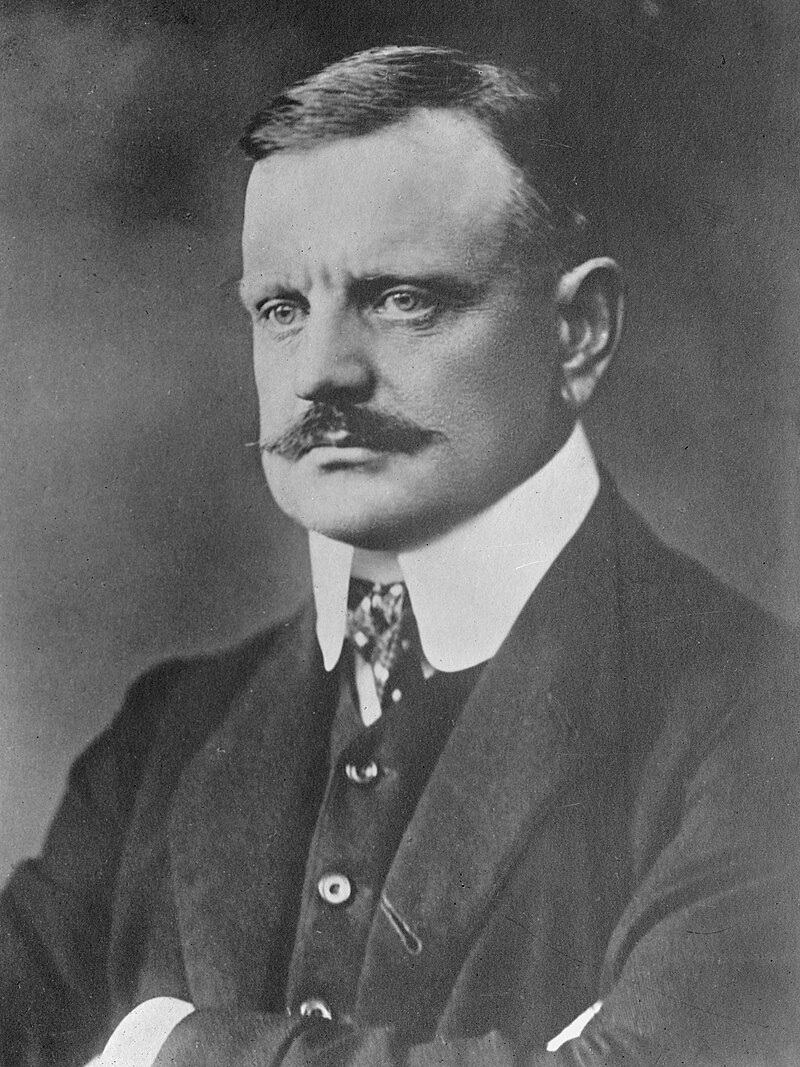
It was written in
1899 and revised in 1900.
The piece was
composed for the Press Celebrations of 1899, a covert protest against
increasing censorship from the Russian Empire, and was the last of seven pieces
performed as an accompaniment to a tableau depicting episodes from Finnish
history.
A typical
performance takes between 7½ and 9 minutes depending on how it is performed.
Most of the
piece is taken up with rousing and turbulent music, evoking the national
struggle of the Finnish people. Towards the end, a calm comes over the
orchestra, and the serene and melodic Finlandia Hymn is heard. Often
incorrectly cited as a traditional folk melody, the Hymn section is of
Sibelius' own creation.
Sibelius later
reworked the Finlandia Hymn into a stand-alone piece. This hymn, with words
written in 1941 by Veikko Antero Koskenniemi, is one of the most important
national songs of Finland. Today, during modern performances of the full-length
Finlandia, a choir is sometimes involved, singing the Finnish lyrics with the
hymn section.
Alexandra Danilova: beauty grace and discipline
Aleksandra Dionisyevna Danilova was a Russian prima ballerina who became an American citizen.


Manners by Elizabeth Bishop
For a Child of 1918
My grandfather said to me
as we sat on the wagon seat,
"Be sure to remember to
always
speak to everyone you meet."
We met a stranger on foot.
My grandfather's whip tapped his
hat.
"Good day, sir. Good day. A
fine day."
And I said it and bowed where I
sat.
Then we overtook a boy we knew
with his big pet crow on his
shoulder.
"Always offer everyone a
ride;
don't forget that when you get
older,"
my grandfather said. So Willy
climbed up with us, but the crow
gave a "Caw!" and flew
off. I was worried.
How would he know where to go?
But he flew a little way at a
time
from fence post to fence post,
ahead;
and when Willy whistled he
answered.
"A fine bird," my
grandfather said,
"and he's well brought up.
See, he answers
nicely when he's spoken to.
Man or beast, that's good
manners.
Be sure that you both always
do."
When automobiles went by,
the dust hid the people's faces,
but we shouted "Good day!
Good day!
Fine day!" at the top of our
voices.
When we came to Hustler Hill,
he said that the mare was tired,
so we all got down and walked,
as our good manners required.
Subscribe to:
Posts (Atom)