Welcome

Welcome
John William Tuohy lives in Washington DC

Françoise Sagan


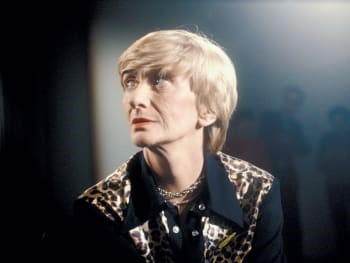
Françoise Sagan ( June 1935 – September 2004) was a French playwright, novelist, and screenwriter, best known for works with strong romantic themes involving wealthy and disillusioned bourgeois characters. Remarkably, her best-known novel was her first – Bonjour Tristesse (1954)  written when she was a teenager and considered scandalous at the time. The characters from that book, over the decades, became icons for millions of disillusioned French teenagers, similar to those of J. D. Salinger in the United States. The novel was an international success and Sagan, due to her talent and age, became a star within a few months. The book also made her rich. She quickly ran through most of the money “wasting it indifferently on racing cars, gambling and night life with her beloved brother Jacques and a group of wild friends whom she supported for years.”
Her son added “The money slipped through her fingers. Her publisher would pay all the bills and channel the necessary sums; our lives were conducted on a high level and with generosity toward that gang of parasites who surrounded her. Most of the time she would read, walk around and dream. She loved to wander around flea markets and discover small and dusty Impressionist oil paintings. She would come home with them, we would clean them together and then look for the artist's signature in the hope that we had found a lost treasure. For the most part she would give away her paintings - even those that were very valuable - to those who loved them. When the publisher called and warned that the money was running out she would closet herself and write another book. She wasn't lazy, it was just that she knew how to make an impression of enjoying an endless vacation, of nonchalance"
Born to a prosperous family, she took the  pseudonym "Sagan" taken from a character named Princesse de Sagan in Marcel Proust's À la recherche du temps perdu (In Search of Lost Time).
In the 1960s, Sagan she began to write regularly and became a devoted playwright and  novelist. Sagan produced dozens of works, many of which have been tureen into films The conversations between her characters are often considered to contain existential undertones. In addition to novels, plays, and an autobiography, she wrote song lyrics and screenplays.
Sagan had an interesting personal life. She was married to Guy Schoeller, an editor, who was 20 years older than Sagan and then to Bob Westhoff, a young American playboy and would-be ceramicist.  


Westhoff was born in Minnesota and enlisted in the U.S. Air Force at the age of 16 with forged papers, it was easy for him. He  was handsome, of above-average intelligence, original and charming.
After military service in Alaska, he ended up in Canada, where he joined the ice ballet troupe Holiday on Ice. Afterwards he studied plastic arts in Mexico City and modeled for fashion photos.
"One day he decided to visit Paris for only two weeks," says his son, "but he stayed there until the end of his life. On the boat that brought him to France my father met the young aristocrat Charles de Rohan-Chabot, who was known for loving men," writes Denis Westhoff. "My father had no objection to such affairs either, and the two became close friends.
Rohan-Chabot was a close friend of Francoise Sagan, who at the time was intimate with Paola Saint-Just, a rich and beautiful woman, and primarily - a lover of women. Paola and Charles Rohan-Chabot decided to marry for 'business' reasons and came to spend their honeymoon with my mother at her home in Normandy. Charles was joined by his American friend Bob. When quarrels erupted between the new couple, and the plates flew in all directions, my mother and Bob would get into Francoise's Lamborghini and flee to the forests or the beach. That's how the love story between them began, a story than lasted for about a decade, and for about another two years after the divorce. Bottom of Form
"I was born to a happy and loving couple, who celebrated by night and slept by day. My godfathers were dancer Jacques Chazot and Paola, my mother's friends. Jacques chose my name, Denis. My parents got along very well and decided to divorce for practical reasons only: He returned to men only, my mother to women mostly.
"My father was a sculptor, and an opera lover, who was a great expert on the subject. He arrived in France without knowing a word of French, but within a short time he became an expert on the language, someone who was more meticulous about rules of grammar than any Frenchman. He modeled, sculpted, translated, continued to love men and was famous for his elegance, his personal charm, and his pleasant behavior. Unfortunately, he died at a relatively early age from an illness."
Sagan also had an on-again-off again relationship with 1970s fashion stylist Peggy Roche, who reinvented Sagan’s look. Roach, a former model, was the wife of French actor Claude Brasseur.
Sagan and Roach were together for fifteen years and in some part, she helped to raise Sagan’s son who wrote  “Between these two women, it was a mixture of passion, tenderness, mutual admiration, mutual recognition, friendship and collusion as my mother never knew, in my memory, neither before nor after her.”  However, Sagan never publicized her bisexuality and during her affair with Roach kept their relationship in absolute discretion.
There were also relationships with Bernard Frank, a married essayist obsessed with reading and eating. Aside from Roche and Frank there was also a long-term affair with the French Playboy editor Annick Geille.

A 1957 car accident in the US almost killed Sagan and left in a coma for weeks and then confined her to her bed for months. It was at the point that she became addicted to morphine and despite several hospitalizations to end the addiction, she repeatedly returned to it until her death.

She returned to France after her recovery.
"In 1959, my mother, who was already famous and being chased by paparazzi, tired of the annual vacation in Saint Tropez, which had become too popular and crowded. She looked for a quieter place for herself and her friends and rented a house in a Normandy village for one month, from July 8 to August 8. The place was dangerously close to the casino in the vacation village of Deauville and to the roulette table. Sagan and her friends, author Bernard Frank and dancer Jacques Chabot, really did end up spending their nights in the casino.
"On the last night of the vacation, and after having dropped huge sums in the casino during the course of the month, Sagan won 80,000 francs. She gathered up the money and toward morning the three returned home drunk and lighthearted and went to sleep. When the landlord arrived as planned on August 8 in order to check the condition of the house, Francoise, too tired and sleepy to undergo the inspection, asked him whether he wanted to sell it. 'Yes,' replied the owner.' 'How much?' asked Francoise. '80,000 francs.' She pulled out the sum she had won the previous night, bought the house, and went back to sleep. That was on the eighth day of the eighth month at 8 A.M., and the house cost 80,000 francs."
"Peggy (Roach) took over the running of the house and the accounts, kept away the exploiters, the cheats, the drug dealers and the parasites who surrounded my mother, and even fired some of the devoted servants who had been with us throughout the years. There were some who accused her of total domination of [Sagan's] life, but it suited my mother and she was happy. ... Peggy ran the household, created a calm atmosphere and shielded Sagan from everyday worries. They moved frequently, and then too Peggy took care of everything; my mother would go to live in a hotel during the transition period and when the house was ready, she would come, get a key and a tour of the new place: 'Your room is here, your clothes are hanging here,' etc.
"My mother also financed Peggy's professional adventures. Peggy opened a fashion house in a trendy location on the Left Bank, but despite her talent and her refined taste in fashion, she knew nothing about business. After my mother had financed several collections and lost a fortune, the company failed."
Roach’s death in 1991 devastated Sagan "With the disappearance of Peggy” her son wrote “it was as if my mother had been torn to shreds, that we would have torn pieces of her alive" And so began a long descent for her into drug and debt. She had simply lost control of her complicated life with out Peggy Roach there to manage and protect her.  Her spending increased unguarded, her debts rose, and her use of coke increased. She was charged with and convicted of possession of cocaine several times including one arrest for drug dealing because of the  large quantity found in her possession.
The French Tax office hounded her for back payment. For a while she was protected by the French President François Mitterrand “a friend and a lover of literature” shielded her. That ended when an international businessman named  Andre Guelfi, succeeded in convincing Sagan to ask  intervene with François Mitterrand for the sake of his oil business in Uzbekistan. In return, Guelfi promised to pay for the renovation of her house in Normandy. Sagan had no head for business and naively wrote to Mitterrand asking for help.  Shortly afterwards it turned out that the business deal involved fraud, Sagan was accused of tax evasion.
Her health declined badly in the in the 2000s. In 2002, she was unable to appear at a trial that convicted her of tax fraud in a case involving the François Mitterrand. (She received a suspended sentence.)
Sagan with a nurse at a rest home where she went to recuperate 

Her last relationship, a destructive one, was with Ingrid Mechoulam, the much younger wife of a Mexican Jewish billionaire Felix Mechoulam. Ingrid lived in a luxury apartment on trendy Avenue Foch in Paris (It was one of five residences) and freely spent her husband’s money.
Ingrid and Sagan

Sagan had Ingrid snap this photo after she crashed her jaguar 

Ingrid fell in love with Sagan, and after her husband's death, when Sagan was broke and ill, (suffering from osteoporosis and pelvic fractures, was confined to her bed most of the time) moved into her house. But Ingrid was a big cocaine user, which Sagan didn’t need at that point in her life and her dependency on Ingrid cut her off from all her friends and her son.


 Sagan, 69,  died of a pulmonary embolism in Honfleur, Calvados, on  September 24, 2004. At her own request she was buried in Seuzac (Lot), close to her beloved birthplace, Cajarc.
Her son, Denis Westhoff, wrote “When she died in 2004 my mother left behind a debt of over a million euros. She died ill, penniless. The house in Normandy, the furniture, the personal items, the many paintings she collected during her life, the manuscripts - everything was seized or sold at public auction. Had I agreed to accept this 'inheritance,' I would have found myself within a few months in exactly the same catastrophic situation that she had been in. All my property - and there isn't much - would have been taken away from me, the authorities would have pursued me. Only after years of negotiations with the Finance Ministry and the Culture Ministry was I able to reach a repayment arrangement that enabled me to receive the rights to her books and to ensure that they would be reprinted in France and abroad”
Sagan, of course, being a writer, wrote her own obituary for the Dictionary of Authors "Appeared in 1954 with a slender novel, Bonjour tristesse, which created a scandal worldwide. Her death, after a life and a body of work that were equally pleasant and botched, was a scandal only for herself."


"She was wonderful, full of humanity, generous, refined, warm.” Her son wrote of her  “I'm not saying that because she was my mother - it's simply that everyone who knew her well knows that. She loved night life and mainly the people you meet over a glass of whiskey on smoke-filled nights of drinking. She knew that night people tend to tell tall tales about themselves but claimed that they were far more interesting and entertaining. 'I prefer them to those who tell the boring truth,' she said.  She had a weakness for outsiders, for wanderers, for adventurers. She hated any form of racism, and I recall a dinner when I was a child, with people I didn't know, where someone made anti-Semitic comments. She suddenly got up, grabbed my hand, and said, 'Come, Denis, we're leaving!' and left without saying a word. My mother hated loud and vulgar quarrels. She frequently handed out huge sums of money to beggars - she simply couldn't tolerate poverty. She also trusted people endlessly and that's why she eventually suffered so much from the betrayals of those who called themselves 'friends.'
   

Art must take reality by surprise. 

One can never speak enough of the virtues, the dangers, the power of shared laughter.  

It seems to me that there are two kinds of trickery: the 'fronts' people assume before one another's eyes, and the 'front' a writer puts on the face of reality.

To jealousy, nothing is more frightful than laughter.

Of course the illusion of art is to make one believe that great literature is very close to life, but exactly the opposite is true. Life is amorphous, literature is formal.

Every little girl knows about love. It is only her capacity to suffer because of it that increases.
Writing is a question of finding a certain rhythm. I compare it to the rhythms of jazz. Much of the time life is a sort of rhythmic progression of three characters. If one tells oneself that life is like that, one feels it less arbitrary.

  
Jazz music is an intensified feeling of nonchalance.

After Proust, there are certain things that simply cannot be done again. He marks off for you the boundaries of your talent.

Marriage? It's like asparagus eaten with vinaigrette or hollandaise, a matter of taste but of no importance.

I had a strong desire to write and some free time.

For me writing is a question of finding a certain rhythm. I compare it to the rhythms of jazz.
Much of the time life is a sort of rhythmic progression of three characters. If one tells oneself that life is like that, one feels it less arbitrary.

I've tried very hard and I've never found any resemblance between the people I know and the people in my novels.

It would be bad form for me to describe people I don't know and don't understand.

All my life, I will continue obstinately to write about love, solitude and passion among the kind of people I know. The rest don't interest me.

I dreamt of being a writer once I started to read. I started to write 'Bonjour Tristesse' in bistros around the Sorbonne. I finished it, I sent it to editors. It was accepted.

I've read Proust and Stendhal. That keeps you in your place.

You should celebrate the end of a love affair as they celebrate death in New Orleans, with songs, laughter, dancing and a lot of wine.

I always believe things are going to work out.

Every time I see a film about Joan of Arc I'm convinced she'll get away with it. It's the only way to get through life.

The house is 6,200 feet on three fours with four acres and my dogs sleep inches away from each other.


This recipe is for 4 lamb shanks. We cooked two of them and it wasn’t enough meat, so make at least four of them for two people.


1 tsp each salt and pepper

2 - 3 tbsp olive oil , separated

1 cup onion , finely diced (brown, yellow or white)

3 garlic cloves , minced

1 cup carrot , chopped in circles

1 cup celery , finely diced

2 1/2 cups red wine , full bodied

28 oz /can crushed tomatoes

2 tbsp tomato paste

2 cups / chicken stock

5 sprigs of thyme or 2 tsp dried thyme

2 dried bay leaves

Preheat the oven to 350F/180C.


Sailboats, 1921, David Kakabadze.


Davit' Kakabadze (August 20, 1889 May 10, 1952) was one of the leading Georgian avant-garde painter, graphic artist and scenic designer. A multi-talent, he was also an art scholar and innovator in the field of cinematography as well as an amateur photographer. Kakabadze's works are notable for combining innovative interpretation of European "Leftist" art with Georgian national traditions.

The stragglers


 “To this soldier, duty took precedence over personal sentiments. Onoda has shown us that there is much more in life than just material affluence and selfish pursuits. There is the spiritual aspect, something we may have forgotten.” The Mainichi Shimbun, a Tokyo newspaper.

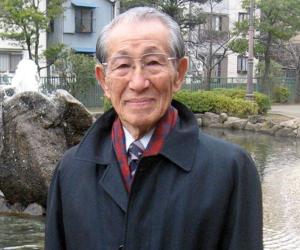
Hirō "Hiroo" Onoda was an Imperial Japanese Army intelligence officer who remained at his jungle post on an island in the Philippines for 29 years, refusing to believe that World War II was over. Onoda spent 29 years hiding out in the Philippines until his former commander traveled from Japan to formally relieve him from duty by order of Emperor Shōwa in 1974. (Another holdout,  Teruo Nakamura, surrendered later in 1974.)
Lieutenant Onoda, an intelligence officer trained in guerrilla tactics, and three enlisted men with him found leaflets proclaiming the war’s end, but believed they were enemy propaganda.

Onoda trained as an intelligence officer in the commando class "Futamata, was sent to Lubang Island and was ordered to do all he could to hamper enemy attacks on the island, including destroying the airstrip and the pier at the harbor. Onoda's orders also stated that under no circumstances was he to surrender or take his own life.
Onoda’s last order in early 1945 was to stay and fight. Loyal to a military code that taught that death was preferable to surrender, he remained behind on Lubang Island, 93 miles southwest of Manila, when Japanese forces withdrew in the face of an American invasion.
Onoda, who had been promoted to lieutenant, ordered the men to take to the hills. They command built bamboo huts, pilfered rice and other food from a village and killed cows for meat; they were tormented by tropical heat, rats and mosquitoes, and they patched their uniforms and kept their rifles in working order.
Considering themselves to be at war, they evaded American and Filipino search parties and attacked islanders they took to be enemy guerrillas.  One of the enlisted men, Yuichi Akatsu, left the others in 1949, and surrendered to Filipino forces  in 1950 after six months on his own.
This seemed like a security problem to the others and they became even more cautious. In 1952 letters and family pictures were dropped from aircraft urging them to surrender, but the three soldiers concluded that this was a trick.
Hirō "Hiroo" Onoda (小野田 寛郎 Onoda Hirō,... - A Glance into the ...

Another man, Shimada, was shot in the leg during a shoot-out with local fishermen in June 1953, after which Onoda nursed him back to health. On 7 May 1954, Shimada was killed by a shot fired by a search party looking for the men. Enlisted man Kozuka was killed by two shots fired by local police on 19 October 1972, when he and Onoda, as part of their guerrilla activities, were burning rice that had been collected by farmers. Onoda was now alone. He was officially declared dead in 1959.
In 1974, Onoda was found by Norio Suzuki, a student  who was traveling around the world, looking for "Lieutenant Onoda, a panda, and the Abominable Snowman, in that order"
Suzuki found Onoda after four days of searching. Onoda recalled "This hippie boy Suzuki came to the island to listen to the feelings of a Japanese soldier. Suzuki asked me why I would not come out ..."
Onoda with Norio Suzuki, 1974

 However the lieutenant rejected Suzuki’s pleas to go home, insisting he was still awaiting orders.  Suzuki returned with photographs, and the Japanese government sent a delegation, including  lieutenant Onoda’s brother and his former commander, Major Yoshimi Taniguchi, who had since become a bookseller, to formally relieve him of duty. Taniguchi met with Onoda and fulfilled a promise he had made back in 1944: "Whatever happens, we'll come back for you".

Onoda turned over Arisaka Type 99 rifle, 500 rounds of ammunition and several hand grenades, as well as the dagger his mother had given him in 1944 to kill himself with if he was captured.


In Manila, lieutenant Onoda, wearing his tattered uniform, presented his sword to President Marcos, who pardoned him for crimes (Murder and shoot outs with national police. Onoda he and his comrades had killed about 30 Filipinos after World War II ended) committed while he thought he was at war.


Onoda was already a national hero when he arrived in Tokyo, for his patriotism and admiration for his grit. He was met by his aging parents and huge flag-waving crowds. “I am sorry I have disturbed you for so long a time,” Onoda told his brother, Toshiro.

His story dominated the news in Japan for days, evoked waves of nostalgia and melancholy. Japan fell further in love with the 52-year-old soldier when he spoke earnestly of duty and seemed to personify a devotion to traditional values that many Japanese thought had been lost. “I was fortunate that I could devote myself to my duty in my young and vigorous years,” he said. Asked what had been on his mind all that time in the jungle, he said, “Nothing but accomplishing my duty.”
 

After his national welcome in Japan, Onoda was examined by doctors, who found him in amazingly good condition. He was given a military pension and signed a $160,000 contract for a ghostwritten memoir, “No Surrender: My-Thirty Year War.”

They New York Times described his return perfectly when it wrote “Caught in a time warp, Mr. Onoda, a second lieutenant, was one of the war’s last holdouts: a soldier who believed that the emperor was a deity and the war a sacred mission; who survived on bananas and coconuts and sometimes killed villagers he assumed were enemies; who finally went home to the lotus land of paper and wood which turned out to be a futuristic world of skyscrapers, television, jet planes and pollution and atomic destruction.”


The Japanese government offered him a large sum of money in back pay, which he refused. When money was pressed on him by well-wishers, he donated it to Yasukuni Shrine.

Onoda was overwhelmed with all the attention and was troubled by what he saw as the withering of traditional Japanese values. In April 1975, he followed his elder brother Tadao and left Japan for Brazil, where he raised cattle.

He married in 1976 and assumed a leading role in Colônia Jamic (Jamic Colony), the Japanese community in Terenos, Mato Grosso do Sul, Brazil. Onoda also allowed the Brazilian Air Force to conduct trainings in the land that he owned.


After reading about a Japanese teenager who had murdered his parents in 1980, Onoda returned to Japan in 1984 and established the Onoda Shizen Juku ("Onoda Nature School") educational camp for young people, held at various locations in Japan.

Onoda revisited Lubang Island, where he had held out, in 1996, donating $10,000 (US) to the local school there.  For many years, he spent three months of the year in Brazil where he was awarded the Merit medal of Santos-Dumont by the Brazilian Air Force on 6 December 2004. On February 21, 2010, the Legislative Assembly of Mato Grosso do Sul awarded him the title of Cidadão ("Citizen").

Onoda died of heart failure on January 16, 2014, at St. Luke's International Hospital in Tokyo, due to complications from pneumonia

Hiroo Onoda - Bio, Facts, Family Life of Imperial Japanese Army ...

A few months after Lt. Onoda came in from the jungle, Japanese Private Teruo Nakamura was found  on December 18, 1974 in Indonesia, but his story was much different from Onoda’s. Nakamura, an Amis aborigine, was a Taiwanese soldier from the Imperial Japanese Army who fought for Japan in World War II.

Nakamura was enlisted into a Takasago Volunteer Unit of the Imperial Japanese army in November 1943. He was stationed on Morotai Island in Indonesia shortly before the island was overrun by the Allies in September 1944 in the Battle of Morotai.

Nakamura was declared dead on November 13 1945 by the Imperial Japanese army. However, he was very much alive and lived with other stragglers on the island until well into the 1950s, while going off for extended periods of time on his own. In 1956, he apparently decided to cut himself off from the remaining holdouts on the island and built his own, fenced camp.
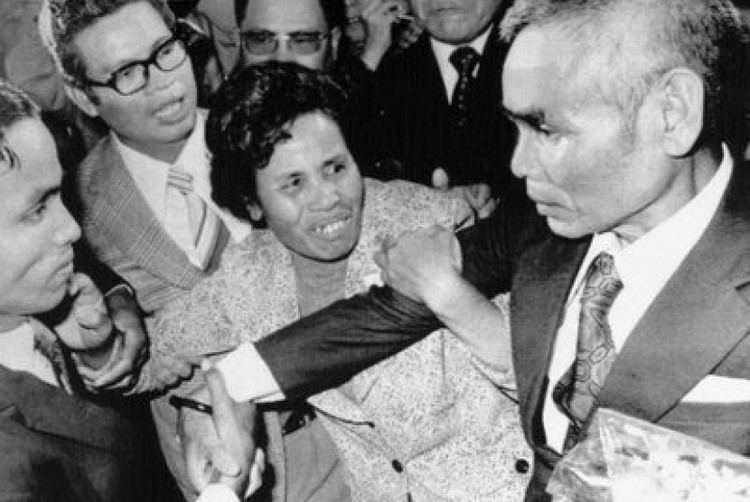
Photo] Attun Palalin returning to his home town, Taitung, Taiwan ...

Nakamura's hut was accidentally discovered by a pilot in mid-1974.  At the request of the Japanese Embassy in Jakarta the Indonesian government organizing a search mission, which was conducted by the Indonesian Air Force on Morotai. Nakamura was found and, unlike Onoda was arrested and handcuffed by Indonesian soldiers on  December 18, 1974.
He was flown to Jakarta and hospitalized and repatriated to Taiwan. 
The Taiwanese Kuomintang government downplayed his return because they considered Nakamura a Japanese loyalist.  A change in the Japanese law in 1953, essentially stripped him of his pension and back pay but did grant him about $1,200 a month to live on. His wife, assuming that Nakamura had died, had long since remarried. His son was a stranger to him.  


Teruo Nakamura Kisah Nakamura Prajurit Jepang yang Bersembunyi 30 Tahun


Private Nakamura died of lung cancer in Taiwan,  five years after he left the jungle,  on 15 June 1979.

Architecture: I want this. I don't need it. But I want it.


Look! You're home!


One photograph, well take and well thought out, can tell a thousand stories.


  "Don't shoot what it is. Shoot what it fells like"

Remember this, and you'll be all set.


The Roman Empire at its height.


There was a time when being a print journalist meant you were the best of the best......

"The tech CEO found dismembered in his luxury New York City apartment this week suffered multiple stab wounds to the neck and body, the city's chief medical examiner said Thursday. "

....you mean his COMPLETE dismemberment wasn't suicide?


Ella Havelka photographed by Aaron Francis


American Folk. The Carter Family


The music of the Carter Family helped inspire folks like Bob Dylan. Woody Guthrie's "This Land is Your Land" melody was taken from an old Carter Family tune.


The formula.


In our country, we learn, wrongly, that success bring happiness. In fact, they’ll tell you, success is the very key to happiness. Well no, not at all. Success and happiness are only thinly related.  Happiness is the key to success. Let me say that again, happiness can make you successful. If you are doing something you absolutely love to do for a living, you will be successful.


I wasn't able to find out much about this wonderful, magnificent structure. It may have been in Venice California,

I would pay money to eat here.


Cesare Pavese


Cesare Pavese was an Italian novelist, poet, short story writer, translator, and literary critic. Just before the start of World War Two, Pavese took an antifascist stance, dangerous in the time of Mussolini and Hitler. Predictably, he was arrested and convicted for having letters from a political prisoner. He was tossed into a cell for several months and then sent into internal exile in Southern Italy. He returned to Turin about a year later and worked for the left-wing publisher Giulio Einaudi as editor and translator. When the Nazi’s arrived, he took to the hills with partisans, although he didn’t fight due to severe asthma.
 After the war, Pavese joined the Italian Communist Party and worked on the party's newspaper, L'Unità and at the same time turned to writing. In 1950 he won the Strega Prize for La Bella Estate, comprising three novellas: 'La tenda', written in 1940, 'Il diavolo sulle colline' (1948) and 'Tra donne sole' (1949). His last book was 'La Luna e i Falò', published in Italy in 1950 and translated into English as The Moon and the Bonfires by Louise Sinclair in 1952. Struck by chronic depression and a failed love affair with the actress Constance Dowling, he committed suicide by an overdose of barbiturates

Creation


I’m alive and at daybreak I’ve startled the stars.
My companion continues to sleep unaware.
All companions are sleeping. The day is a clear one
and stands sharper before me than faces in water.

In the distance an old man is walking to work
or enjoying the morning. We aren’t so different,
we both breathe the same faint glimmer of light
as we casually smoke, beguiling our hunger.
The old man, too, must have a body that’s pure
and vital—he ought to stand naked facing the morning.

Life this morning flows out over water
and in sunlight: around us the innocent splendor
of water, and all the bodies will soon be uncovered.
There’ll be a bright sun and the sharpness of sea air
and the harsh exhaustion that beats down in sunlight
and stillness. And my companion will be here—
a shared secret of bodies, each with its own voice.

There’s no voice to break the silence of water
at dawn. And neither is anything moving
beneath this sky. There’s only a star-melting warmth.
One shudders to feel the morning trembling
so virginally, as if none of us here were awake.


Imagine the worlds that are there....


Astronomers discover huge galactic wall hidden behind Milky Way


Scientists have discovered a celestial structure made of galaxies more than 1.4 billion light-years long and 600 million light-years deep in the skies over the South Pole.”The South Pole Wall” as it has been dubbed, is situated along the southern border of the cosmos (from the perspective of Earth) and consists of thousands of galaxies, hydrogen gas, dust and dark matter. It's one of the largest known structures in the universe.

The wall is among a number of structures that make up the cosmic web, including the Great Wall, the Bootes Void, the comparably sized Sloan Great Wall and the Hercules Corona-Borealis Great Wall, the largest known structure at 10 billion light-years wide. That’s about a tenth of the diameter of the observable universe

The South Pole Wall, however, is half the distance from the Earth to the Hercules Corona-Borealis Great Wall – 500 million light-years – and was hidden by the brightness of the Milky Way in an area called the Zone of Avoidance. It was discovered when scientists saw galaxies in different directions around it were affected by its gravitational pull.

Tutelage


The Latin verb tueri means "to look at" or "to guard." When tutelage first began appearing in print in the early 1600s, it was used mainly in the protective sense of tueri, as writers described serfs and peasants of earlier eras as being "under the tutelage of their lord." Over time, however, the word's meaning shifted away from guardianship and toward instruction.


Kafka and the lost doll


At 40, Franz Kafka (1883-1924), who never married and had no children, walked through the park in Berlin when he met a girl who was crying because she had lost her favorite doll. She and Kafka searched for the doll unsuccessfully.
Kafka told her to meet him there the next day and they would come back to look for her.
The next day, when they had not yet found the doll, Kafka gave the girl a letter "written" by the doll saying "please don't cry. I took a trip to see the world. I will write to you about my adventures."
Thus began a story which continued until the end of Kafka's life.
During their meetings, Kafka read the letters of the doll carefully written with adventures and conversations that the girl found adorable.
Finally, Kafka brought back the doll (he bought one) that had returned to Berlin.
"It doesn't look like my doll at all," said the girl.
Kafka handed her another letter in which the doll wrote: "my travels have changed me." the little girl hugged the new doll and brought her happy home.
A year later Kafka died.
Many years later, the now-adult girl found a letter inside the doll. In the tiny letter signed by Kafka it was written:
"Everything you love will probably be lost, but in the end, love will return in another way."

Antonín Dvořák – Slavonic Dance No. 2, Op. 72


The Slavonic Dances are a series of 16 orchestral pieces composed by Antonín Dvořák in 1878 and 1886 and published in two sets as Op. 46 and Op. 72.  The Slavonic Dances were inspired by Johannes Brahms's own Hungarian Dances, are  lively and full of national character, were well received at the time and today are considered among the composer's most memorable works, occasionally making appearances in popular culture.