Welcome

Welcome
John William Tuohy lives in Washington DC

But in reading great literature /Quite from C.S. Lewis


But in reading great literature I become a thousand men and yet remain myself.
                                                                                                                         C.S. Lewis


Word origins


The word Opusculum comes from Latin, where it serves as the diminutive form of the noun opus, meaning "work." In English, opus can refer to any literary or artistic work, though it often specifically refers to a musical piece. Being a diminutive of opus, opusculum logically refers to a short or minor work. Unlike its more famous relation, however, opusculum is most often used for literary works. The Latin plural of opus is opera, which gave us (via Italian) the word we know for a musical production consisting primarily of vocal pieces performed with orchestral accompaniment.

Despot: A ruler with absolute power and authority/one exercising power tyrannically: a person exercising absolute power in a brutal or oppressive way. In the past, the word was mainly used to identify some very specific rulers or religious officials, and the title was an honorable one: it comes from a Greek word meaning "lord" or "master" and was originally applied to deities. That situation changed toward the end of the century, perhaps because of French Revolutionists, who were said to have been "very liberal in conferring this title," considered all sovereigns to be tyrannical. When democracy became all the rage, despot came to be used most often for any ruler who wielded absolute and often contemptuous and oppressive power.

The word head is from Old English heafod (top of the body).

Jell-O: The word gelatin (a substance formed by boiling bones, skin, ligaments, etc.) is from Latin gelare (to freeze). Ultimately from the Indo-European root gel- (cold; to freeze), which also gave us jelly, chill, glacier, cold, and congeal. Earliest documented use: 1935.

Parthian. Relating to, or characteristic of ancient Parthia or its people./ Or having the effect of a shot fired while in real or feigned retreat.  The adjective Parthian, which often shows up in the phrase "Parthian shot," has its roots in the military strategies of the ancient Parthians. One of the fighting maneuvers of Parthian horsemen was to discharge arrows while in real or feigned retreat. The maneuver must have been memorable because "Parthian shot" continues to be used for a "parting shot," or a cutting remark made by a person who is leaving, many centuries after the dissolution of the Parthian empire.

Bone is from Old English ban (bone)


Good fiction creates empathy.


Good fiction creates empathy. A novel takes you somewhere and asks you to look through the eyes of another person, to live another life. -Barbara Kingsolver, novelist, essayist, and poet.


Words origins

Sashay: From the French word chassé, meaning  "to chase." The word worked its way into English, badly mispronounced as Sashay.  

Words (That's F. Scott Fitzgerald in the film below)

Pelf: noun: Money or wealth, especially when acquired in a dishonorable manner. From Old French pelfre (booty), which also gave us the word pilfer. 


Word origins Polyglot


Polyglot:  Speaking or writing several languages: multilingual. The prefix poly comes from Greek and means "many" or "multi-." Glot comes from the Greek term glōtta, meaning "language" or "tongue." (Glōtta is also the source of glottis, the word for the space between the vocal cords.) 
  
The French word étiquette means "ticket" or "label attached to something for identification." In 16th-century Spain, the French word was borrowed (and altered to etiqueta) to refer to the written protocols describing orders of precedence and behavior demanded of those who appeared at court. Eventually, etiqueta came to be applied to the court ceremonies themselves as well as the documents which outlined the requirements for them. Interestingly, this then led to French speakers of the time attributing the second sense of "proper behavior" to their étiquette, and in the middle of the 18th century English speakers finally adopted both the word and the second meaning from the French


Romero and Juliet/ Well that's a different point of view...


A poem by Richard Brautigan


Kafka’s Hat 


With the rain falling
surgically against the roof,
I ate a dish of ice cream
that looked like Kafka’s hat.
It was a dish of ice cream
tasting like an operating table
with the patient staring
up at the ceiling.


Richard Brautigan


Take notice/ Kurt Vonnegut

Despite his success later in life, Kurt Vonnegut marched through some awful times in his life, including being forced to search and bury the dead after the bombing of Dresden. So when he wrote this, he wasn’t just some guy trying to fill space.


Why the world needs editors


What passes for a death match between labradors


Poet Li-Young Lee: From Blossoms

Li-Young Lee (born August 19, 1957) is an American poet. He was born in Jakarta, Indonesia, to Chinese parents. His maternal great-grandfather was Yuan Shikai, China's first Republican President who attempted to make himself emperor. Lee's father, who was a personal physician to Mao Zedong while in China, relocated his family to Indonesia, where he helped found Gamaliel University. In 1959 the Lee family fled Indonesia to escape widespread anti-Chinese sentiment and after a five-year trek through Hong Kong and Japan, they settled in the United States in 1964. Li-Young Lee attended the University of Pittsburgh and the University of Arizona, and the State University of New York at Brockport.


From Blossoms
BY LI-YOUNG LEE

From blossoms comes
this brown paper bag of peaches
we bought from the boy
at the bend in the road where we turned toward  
signs painted Peaches.

From laden boughs, from hands,
from sweet fellowship in the bins,
comes nectar at the roadside, succulent
peaches we devour, dusty skin and all,
comes the familiar dust of summer, dust we eat.

O, to take what we love inside,
to carry within us an orchard, to eat
not only the skin, but the shade,
not only the sugar, but the days, to hold
the fruit in our hands, adore it, then bite into  
the round jubilance of peach.

There are days we live
as if death were nowhere
in the background; from joy
to joy to joy, from wing to wing,
from blossom to blossom to
impossible blossom, to sweet impossible blossom.


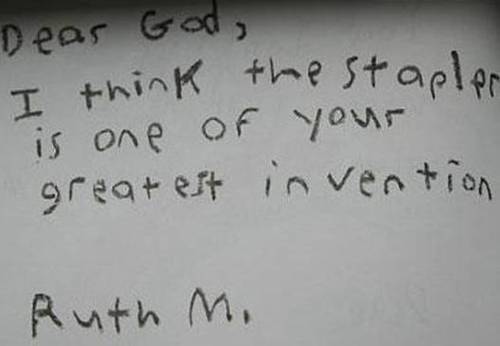
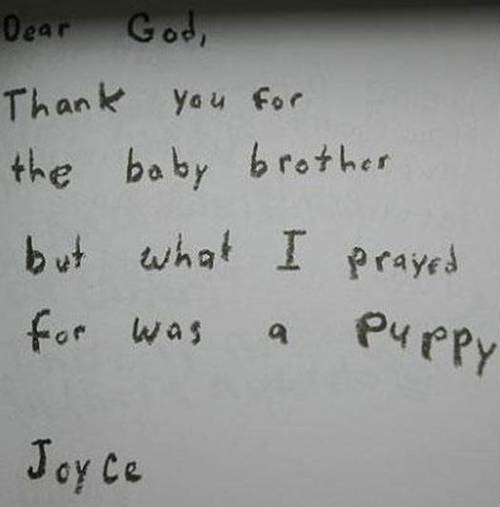
Dear God


A poem: Yesterday

Yesterday
W. S. Merwin, 1927 – 2019

My friend says I was not a good son
you understand
I say yes I understand

he says I did not go
to see my parents very often you know
and I say yes I know

even when I was living in the same city he says
maybe I would go there once
a month or maybe even less
I say oh yes

he says the last time I went to see my father
I say the last time I saw my father

he says the last time I saw my father
he was asking me about my life
how I was making out and he
went into the next room
to get something to give me

oh I say
feeling again the cold
of my father’s hand the last time
he says and my father turned
in the doorway and saw me
look at my wristwatch and he
said you know I would like you to stay
and talk with me

oh yes I say

but if you are busy he said
I don’t want you to feel that you
have to
just because I’m here

I say nothing

he says my father
said maybe
you have important work you are doing
or maybe you should be seeing
somebody I don’t want to keep you

I look out the window
my friend is older than I am
he says and I told my father it was so
and I got up and left him then
you know

though there was nowhere I had to go

and nothing I had to do


I will always be a die-hard fan of Richard Brautigan


Revenge of the Lawn: Stories 1962-1970 is a collection of 62 short stories written by the American author Richard Brautigan from 1962 to 1970. Like most of Brautigan's works, the stories are whimsical, simply themed, and often surreal. Many of the stories were originally published elsewhere. The book also contains two missing chapters from his work Trout Fishing in America, "Rembrandt Creek" and "Carthage Sink".


Book Of A Lifetime: Revenge of the Lawn, By Richard Brautigan
Reviewed by Sarah Hall
The Independent
Friday 19 June 2009

Many attempts have been made to define Richard Brautigan's work - Beat, scat, Zen Buddhist, magical-realist, hippie, cult, outsider, naïve, pacific, lunatic. Nowhere is his work's resistance to categorical designation more apparent than in Revenge of the Lawn: Stories 1962-1970. I came across this oddest collection in my late teens, which might be a perfect age to discover Brautigan. The vim and originality of tones and images, the berserk plots and off-the-wall incidents, seemed perfectly pitched to appeal to a rebellious, youthful sense of humour. The language was deceptively informal, poetic, "hip". Back then I was a troubled reader, full of north-west rain and rural loneliness. Books felt like portals into even remoter worlds - papery oubliettes where no one else existed and the author was absent. I wanted company, not a textual abstract.
But here was a sudden, slender volume that was host to a multitude of companionable voices. Some of the pieces were startlingly brief; I could open the pages and hop in and out. More than this: amid the rabble of characters was a singular presence – the writer was there, in some state or other. He was there, playing around, often exposed and steering the narrative the way authors were not supposed to. I could imagine verbal and metaphysical light bulbs going on above his head. I could see him crafting these extraordinary, joyful, lovelorn gifts of prose and handing them over to me, the reader. And what gifts! I loved the operatic, whisky-cooking grandmothers, the man who replaces his plumbing with poetry only to end up in a fist-fight with the verses of Emily Dickinson, and that little old lady who demands a pound of liver from the butcher for her bees. I loved the strings of words: "ragged black toothache sky", "wheelbarrow-sized pile of steaming dragon shit", "April in God-damn".
I was moved by the difficult human exchanges, heartbreaks and eroticisms. I was charmed by the disorderly conduct, wrong-footed by tales that seemed to be about banking, and then were about corpses, and then were about banking again. This was the imagination unbound; on the page, literally anything was possible.
What appealed to me then appeals to me now. Brautigan is a folk-artist, a master storyteller, and a master rule-breaker. He isn't coy or transparent. He is enormously ambitious and because of this, occasionally falls off the wire – with exuberant, random metaphors that don't quite work and sentences employed simply to justify a previous whimsy.
But I don't care. I like heart and imperfection. And because of it, the stories never loose their freshness. Revenge of the Lawn remains vibrant, radical and generous: 25 years after his death, Brautigan is still, like his poverty-stricken Oregon typist, "pounding at the gates of American literature".

Contents
"Revenge of the Lawn"
"1692 Cotton Mather Newsreel"
"1/3, 1/3, 1/3"
"The Gathering of a Californian"
"A Short Story About Contemporary Life in California"
"Pacific Radio Fire"
"Elmira"
"Coffee"
The Lost Chapters of Trout Fishing in America: "Rembrandt Creek" and "Carthage Sink"
"The Weather in San Francisco"
"Complicated Banking Problems"
"A High Building in Singapore"
"An Unlimited Supply of 35 Milimetre Film"
"The Scarlatti Tilt"
"The Wild Birds of Heaven"
"Winter Rug"
"Ernest Hemingway's Typist"
"Homage to the San Francisco YMCA"
"The Pretty Office"
"A Need for Gardens"
"The Old Bus"
"The Ghost Children of Tacoma"
"Talk Show"
"I Was Trying to Describe You to Someone"
"Trick or Treating Down to the Sea in Ships"
"Blackberry Motorist"
"Thoreau Rubber Band"
"44:00"
"Perfect California Day"
"The Post Offices of Eastern Oregon"
"Pale Marble Movie"
"Partners"
"Getting to Know Each Other"
"A Short History of Oregon"
"A Long Time Ago People Decided to Live in America"
"A Short History of Religion in California"
"April in God-damn"
"One Afternoon in 1939"
"Corporal"
"Lint"
"A Complete History of Germany and Japan"
"The Auction"
"The Armoured Car"
"The Literary Life in California/1964"
"Banners of My Own Choosing"
"Fame in California/1964"
"Memory of a Girl"
"September California"
"A Study of California Flowers"
"The Betrayed Kingdom"
"Women When They Put Their Clothes On in the Morning"
"Hallowe'en in Denver"
"Atlantisburg"
"A View from the Dog Tower"
"Greyhound Tragedy"
"Crazy Old Women are Riding the Buses of America Today"
"The Correct Time"
"Holiday in Germany"
"Sand Castles"
"Forgiven"
"American Flag Decal"

"World War I Los Angeles Aeroplane"