Welcome

Welcome
John William Tuohy lives in Washington DC

Lost


“We construct a narrative for ourselves, and that’s the thread that we follow from one day to the next. People who disintegrate as personalities are the ones who lose that thread” Paul Auster

By seeking and blundering we learn.


By seeking and blundering we learn.

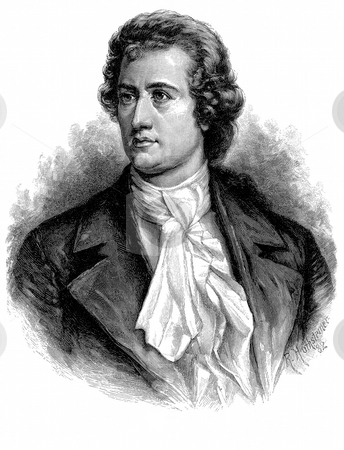
Johann Wolfgang Von Goethe, noted smart person 

"Filch"

"Filch" derives from the Middle English word "filchen" ("to attack" or "to steal") and perhaps from Old English "gefylce" ("band of men, troop, army"). As a noun, "filch" once referred to a hooked staff used by thieves to snatch articles out of windows and from similar places, but this use is now obsolete.

Words


Behest first appeared in 12th century Old English as "behǽs," which is formed from the prefix "be-" and the Old English verb "hātan" ("to command" or "to promise"). While "behest" was originally used only in the sense of "promise," it acquired the additional sense of "command" among speakers of Middle English. Among contemporary English speakers, "behest" is no longer used in the sense of "promise" but rather denotes an authoritative or urgent request or command. Old English "hātan" also gave English the now-archaic words "hest" (meaning "command") and "hight" ("being called or named").


Words and stuff


Ruck: From Old Norse hrukka (wrinkle, fold). Ultimately from the Indo-European root sker- (to turn or bend), which is also the source of ranch, rank, shrink, circle, circa, crisp, corolla, search, ring, curb, ridge, curve, corolla, and coronary.

"Writhe" wound its way to English from the Old English verb "wrīthan" ("to twist") and is akin to the Old English verb "wrigian" ("to turn or go"). "Wrigian" gave us our words "wriggle," "awry," and "wry."

Following Fitzgerald: The Iceberg: A Story by Zelda Fitzgerald

Following Fitzgerald: The Iceberg: A Story by Zelda Fitzgerald: In 1918, Zelda Sayre, later Zelda Fitzgerald, won a prize for this story, which she published in the Sidney Lanier High School Literary...

Vivacious


Vivacious means "full of life," it can be traced back to the Latin verb "vivere," meaning "to live." The word was created around the mid-17th century using the Latin adjective "vivax," meaning "long-lived, vigorous, or high-spirited." Other descendants of "vivere" in English include "survive," "revive," and "victual"—all of which came to life during the 15th century—and "vivid" and "convivial," both of which surfaced around the same time as "vivacious." Somewhat surprisingly, the word "live" is not related; it comes to us from the Old English word "libban."

twas the night


I love this stuff

Midriff.  The "riff" in "midriff" comes from Old English "hrif" ("belly, womb"). "Hrif" is akin to Old High German "href" ("womb") and probably also to Latin "corpus" ("body").

Your success and happiness lies in you.

Your success and happiness lies in you. Resolve to keep happy, and your joy and you shall form an invincible host against difficulties. Helen Keller.


powerful your thoughts

If you realized how powerful your thoughts are, you would never think a negative thought. PeacePilgrim


“Authority has every reason to fear the skeptic, for authority can rarely survive in the face of doubt.” Robert Lindner

Charles Dickens: On this day in history in 1859, Charles Dickens pu...

Charles Dickens: On this day in history in 1859, Charles Dickens pu...: On this day in history in 1859, Charles Dickens published the final installment of A Tale of Two Cities. “It is a far, far better thing t...

enormity

enormity \ih-NOR-muh-tee\
 noun.
 1:        great wickedness
 2:        an outrageous or immoral act or offense
 3 :       very large size
 4 :       the quality of great impact or importance


Although "enormity" has been used since the late 1700s to denote large size, this usage continues to be disparaged by various language commentators who argue that "enormity" should be reserved for senses related to "great wickedness." It is "enormousness," they insist (a hefty and considerably less common word), that should be used in reference to great size, despite the fact that, like "enormity," it too originally was used to denote wickedness or divergence from accepted moral standards. For better or worse, this proscription has been widely ignored by many English speakers, including professional writers. However one chooses to use them, "enormity" and "enormous" can both be traced back to the Latin "enormis," from the prefix "e-" ("out of") and "norma" ("rule," "pattern," or "carpenter's square").


We are what our thoughts have made us

We are what our thoughts have made us; so take care about what you think. Words are secondary. Thoughts live; they travel far.  Swami Vivekananda