Welcome

Welcome
John William Tuohy lives in Washington DC

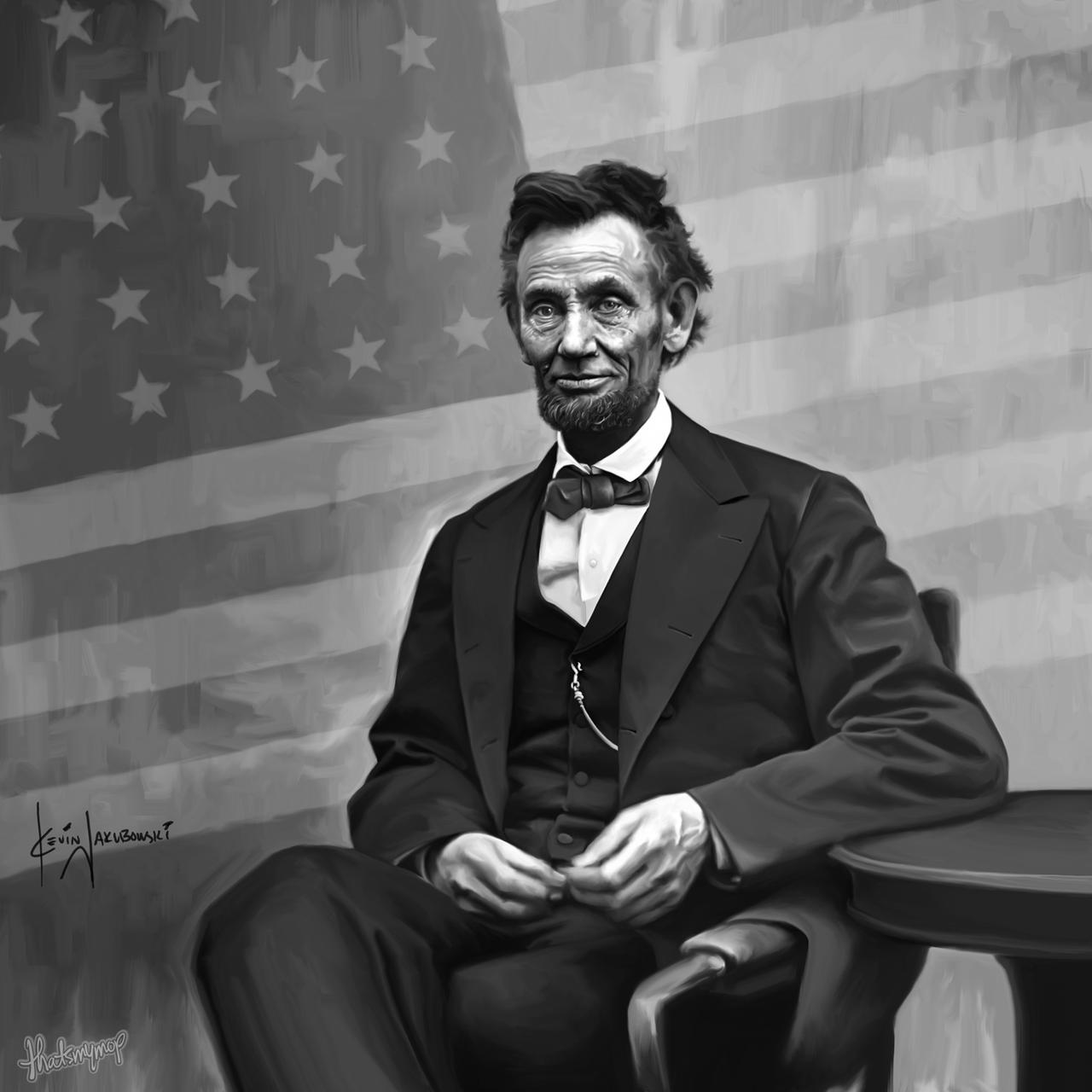
Probably the greatest example of persistence is Abraham Lincoln.


Probably the greatest example of persistence is Abraham Lincoln. If you want to learn about somebody who didn't quit, look no further. Born into poverty, Lincoln was faced with defeat throughout his life. He lost eight elections, twice failed in business and suffered a nervous breakdown. He could have quit many times - but he didn't and because he didn't quit, he became one of the greatest presidents in the history of our country. Lincoln was a champion and he never gave up. Here is a sketch of Lincoln's road to the White House:

1816 His family was forced out of their home. He had to work to support them.
1818 His mother died.
1831 Failed in business.
1832 Ran for state legislature - lost.
l832 Also lost his job - wanted to go to law school but couldn’t get in.
1833 Borrowed some money from a friend to begin a business and by the end of the year he was bankrupt. He spent the next 17 years of his life paying off this debt.
1834 Ran for state legislature again - won.
1835 Was engaged to be married, sweetheart died and his heart was broken.
1836 Had a total nervous breakdown and was in bed for six months.
1838 Sought to become speaker of the state legislature - defeated.
1840 Sought to become elector - defeated.
1843 Ran for Congress - lost.
1846 Ran for Congress again - this time he won - went to Washington and did a good job.
1848 Ran for re-election to Congress - lost.
1849 Sought the job of land officer in his home state - rejected.
 1854 Ran for Senate of the United States - lost.
1856 Sought the Vice-Presidential nomination at his party’s national convention - get less than 100 votes.
1858 Ran for U.S. Senate again - again he lost.
1860 Elected president of the United States. 

Have a big happy Easter


Restless mind


What helps luck is a habit of watching for opportunities, of having a patient, but restless mindof sacrificing one's ease or vanity, of  uniting a love of detail to foresight, and of passing through hard times bravely and cheerfully.-- Charles Victor Cherbuliez, French Novelist


"Know what you want. Become your real self." David Harold Fink

William Zinsser and good writing as art


By George Will


When asked to explain the brisk pace of his novels, Elmore Leonard said, “I leave out the parts that people skip.” You will not want to skip anything in William Zinsser’s short essays written for the American Scholar magazine’s Web site and now collected in “The Writer Who Stayed,” a book that begins with him wondering why “every year student writing is a little more disheveled.”
One answer is that too few have read Zinsser’s earlier book “On Writing Well.” His answer is: “People now get their information mainly from random images on a screen and from random messages in their ears, and it no longer occurs to them that writing is linear and sequential, sentence B must follow sentence A.”
Tooting his own trumpet is not the style of this self-effacing and decorous WASP, who never leaves his Manhattan apartment or boards a plane or train without a jacket (J. Press, of course) and tie. Others, however, who cherish the craft of writing should toot it for him, lest young writers miss exposure to lapidary sentences such as: “I doubt if I’m the only person who has never quite understood what postmodern means, or how long post is supposed to last; the word floats in a vast sea of postness.”
Style reflects sensibility, and Zinsser’s style of clarity and economy derives from a sensibility that recoils from blurry words that carry deplorable thinking the way mosquitoes carry malaria. When his broker tells him a new person will be the “assistant assigned to your relationship,” Zinsser wonders whether he has relationships with his barber and with Maria at the coffee shop. “Cole Porter,” he notes, “didn’t write, ‘let’s do it, let’s have a relationship.’ “ And nobody, nowadays, is too young to have issues:
“Toddlers have sandbox issues. Issues are what used to be called the routine hills and bumps of getting from morning to night. They have been around a long time; Job had issues. By calling them issues we wrap ourselves in the palliative language of therapy. We no longer phone or visit friends who are in trouble; we reach out to them. That way we can find closure.”
Then there is sharing, “the word I most loathe in the feel-good lexicon.” Beginning in the 1970s, “share” crept on little lizard feet into conversations, a signal that the speaker is about to tell you some personal matter about which he should remain reticent. Now, Zinsser says, “share” is a synonym for “tell”: “ ‘Did Rick share with you that we’re coming for dinner tonight?’ He did. He told me.”
“Writing,” Zinsser says, “is learned by imitation; we all need models.” This columnist has had two, columnist Murray Kempton and novelist P.G. Wodehouse.
Kempton’s 75-word sentence about President Eisenhower’s 1956 campaign visit to Florida is probably too labyrinthine to be navigated by brains whose circuitry has been shaped by 140-character tweets: “In Miami, he had walked carefully by the harsher realities, speaking some 20 feet from an airport drinking fountain labeled ‘Colored’ and saying that the condition it represented was more amenable to solution by the hearts of men than by laws, and complimenting Florida as ‘typical today of what is best in America,’ a verdict which might seem to some contingent on finding out what happened to the Negro snatched from the Wildwood jail Sunday.”
The American painter Robert Henri once said: “You should paint like a man coming over the top of the hill singing.” Zinsser says such enjoyment is “a crucial ingredient in writing.” Wodehouse was enjoying himself when he began “Leave it to Psmith” this way: “At the open window of the great library of Blandings Castle, drooping like a wet sock, as was his habit when he had nothing to prop his spine against, the Earl of Emsworth, that amiable and boneheaded peer, stood gazing out over his domain.”
Some of Zinsser’s models were lyricists of the Great American Songbook. A few were WASPs; Cole Porter went to Yale. Many were Jews, such as Israel Baline from Siberia who became Irving Berlin, immigrants who, Zinsser says, embraced the American language with fierce love. Or E.Y. “Yip” Harburg, who saw infinite possibilities “Over the Rainbow,” where happy little bluebirds fly and troubles melt like lemon drops.
Our “endlessly supple” English language will, Zinsser says, “do anything you ask it to do, if you treat it well. Try it and see.” Try him and see

Malala Yousufzai, girl shot by Taliban for writing, undergoes two operations in U.K.


We should never forget this brave soul.


LONDON -- A Pakistani schoolgirl who was shot in the head by the Taliban is in stable condition after undergoing two successful operations to reconstruct her skull and restore her hearing, the British hospital treating her said Sunday.
Birmingham's Queen Elizabeth Hospital said doctors for 15-year-old Malala Yousufzai, who was targeted for advocating girls' education, were "very pleased" with her progress after five hours of skull reconstruction and ear surgery on Saturday.
"She is awake and talking to staff and members of her family," the hospital said in a statement, adding that she would continue to recover in the hospital until she is well enough to be discharged.
The teenager drew the world's attention when she was shot by Taliban militants on Oct. 9 on her way home on a school bus in northwestern Pakistan. The Islamist group said they targeted her because she promoted girls' education and "Western thinking" and criticized the militant group's behavior when it took over the scenic Swat Valley where she lived.
At age 11, Malala began to write a blog under a pseudonym for the BBC about life under the Taliban in the Swat Valley. After Pakistan's military ousted the militants in 2009, she began publicly speaking out about the need for girls' education. She appeared frequently in the media and was given one of the country's highest civilian honors for her bravery.
The shooting sparked outrage in Pakistan and around the world, and her story has captured global attention for the struggle for women's rights in Pakistan. In a sign of her reach, the teen made the shortlist for Time magazine's "Person of the Year" for 2012.
Malala was airlifted to Britain from Pakistan in October to receive specialized medical care and protection against further Taliban threats. She is expected to remain in the U.K. for some time after her father, Ziauddin, was given a diplomatic post based in the English city of Birmingham.
So far, doctors say she has made very good progress. She was able to stand, write and return home, and doctors said they have seen minimum signs of brain damage. 

Do things with passion...........


A 7 year old and a 6 year old are raking the yard. The 6 year old says, " I think it's about


A 7 year old and a 6 year old are raking the yard. The 6 year old says, " I think it's about time we started learning to cuss, when we go in for breakfast, I'm gonna say something with hell and you say something with ass."  The 6 year old agrees with enthusiasm.
When the mother walks into the kitchen and asks the 6 year old what he wants for breakfast, he replies, "Aw, hell, Mom, I guess I'll have some Cheerios.”
The mother gives the boy a whack on the rear end and sends him to his room without breakfast.
She then turns to the 6 year old and asks, "And what do you want for breakfast, young man?"
"I don't know," he says, "but you can bet your ass it won't be Cheerios!"

New book on Roger Touhy


Carol Touhy, Roger Touhy's niece has reiussed Roger's book "The Stolen Years" and it is available now on Amazon


Roger Touhy The Stolen Years: Over 100 photographs

Authors Guild Wants $750 Per Book Google Scanned


Last week, the Authors Guild requested that a judge order Google to pay $750 per book in penalties for illegal copying of the works it had scanned for its Google Books project. (At 20 million books, that could add up pretty quickly.) The Authors Guild also wants a ruling definitively stating that copying books is not fair use.
$750 is an interesting figure, as Mike Masnick points out on Techdirt that it is actually the minimum statutory damage possible under the law. The Guild would be entitled to ask for up to $150,000 per work, which gets ridiculous pretty quickly. Of course, even $750 per book would total $15,000,000,000—that’s fifteen billion dollars.
Meanwhile, Google insists there is no evidence that its scanning has harmed even a single author, and that it has actually helped many—and that in creating an index rather than making the works available in whole form, it is making a transformative fair use.
Of course, by a strict reading of the law without exception, Google would be in trouble. It doesn’t deny that it did completely copy books that didn’t even belong to it. But the fair use defense exists to allow for uses that would ordinarily be violations but turn out to have beneficial uses that qualify them for exceptions. The crux of this case is whether Google Books qualifies for such an exception.
It kind of reminds me around some of the legal arguments in the early years of cable TV, that I learned about when I was studying broadcasting at college. Cable TV started out as networks of antennas designed to bring broadcast TV to people who lived in valleys that couldn’t get signal, and grew out from there.
And as cable TV operators found money in it, the cable TV operators and the TV station operators each claimed that the other was unfairly benefiting from its own effort: the station owners felt that the cable operators were making money from their content, and the cable operators felt the station owners were leeching a wider viewership from their network build-out. “You should pay us for the use of our stuff!” each side told the other.
To make a long story short, cable TV networks are still around today, no matter how much TV station owners once thought they were unfair. I suspect that Google Books will prove transformative enough that the courts will, eventually, deem it a fair use, at least to some extent.
Authors Guild Wants $750 Per Book Google Scanned is post from The Digital Reader